


Cyclone Murasu Hits Andhra Pradesh, Forcing Mass Evacuations

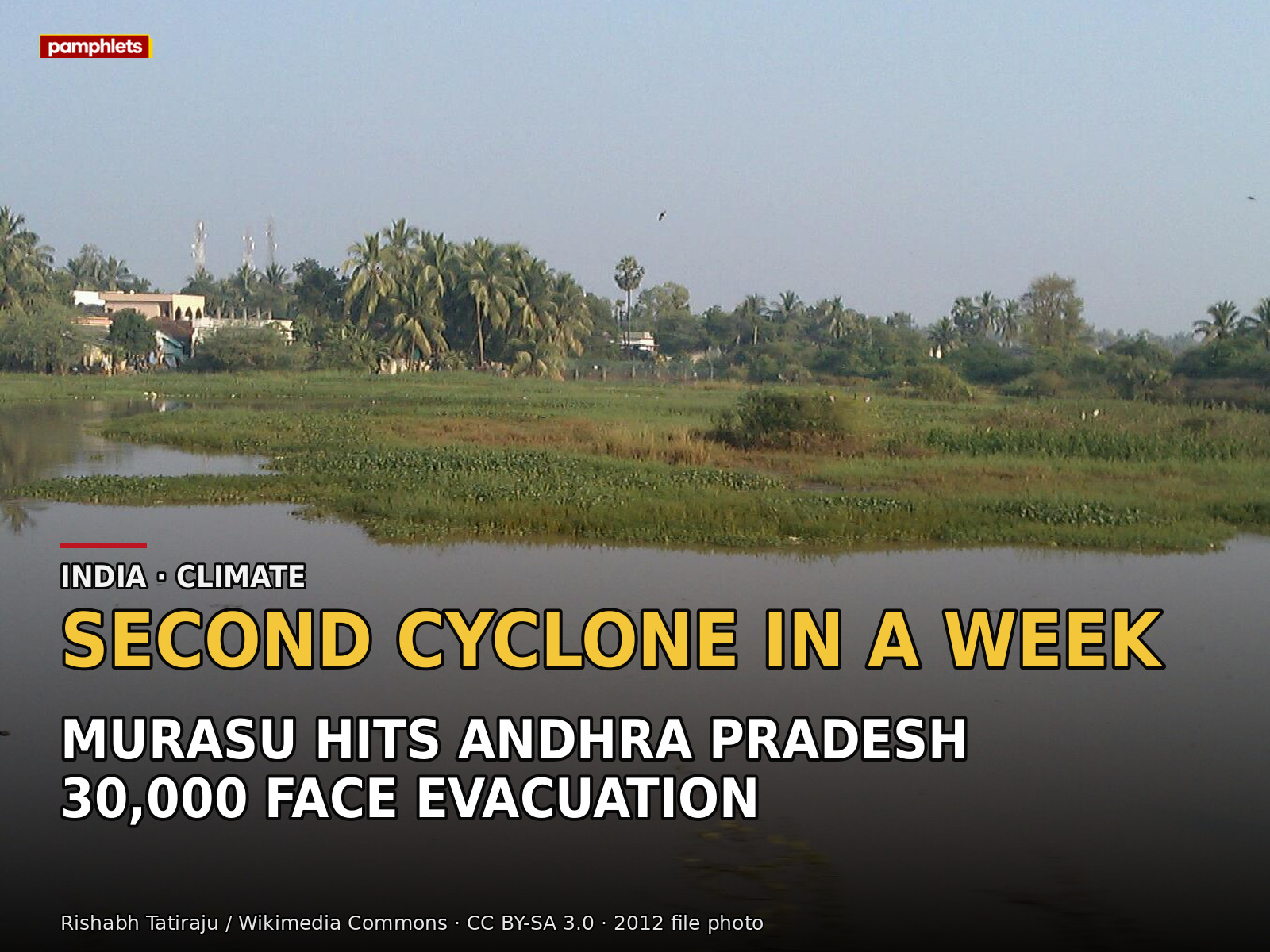
Cyclone Murasu crashed into India’s southeast coast before dawn Tuesday, driving thousands of people from their homes and striking Andhra Pradesh before communities had recovered from another cyclone less than a week earlier.
The India Meteorological Department said Murasu crossed the coast near Ongole between 3:30 and 5:30 a.m. local time on November 3. Sustained winds reached 100 to 110 kilometres per hour, with gusts up to 120 kph. Authorities planned to move about 30,000 people out of the storm’s path, according to Reuters.
No deaths or injuries had been reported from Murasu by early Tuesday. Officials did report uprooted trees and power poles. That absence of an early death toll matters, but it does not end the emergency: heavy rain continued after landfall, low-lying districts faced flooding, and the IMD warned that the coast could see a storm surge of up to 1.5 metres.
Andhra Pradesh closed schools in vulnerable districts, halted some trains and flights, and suspended fishing and shipping operations. Those measures turned weather forecasts into a mass public operation. They also revealed the scale of exposure along a densely settled coast where fishing families, agricultural workers and informal settlements absorb the first blow from every evacuation order.
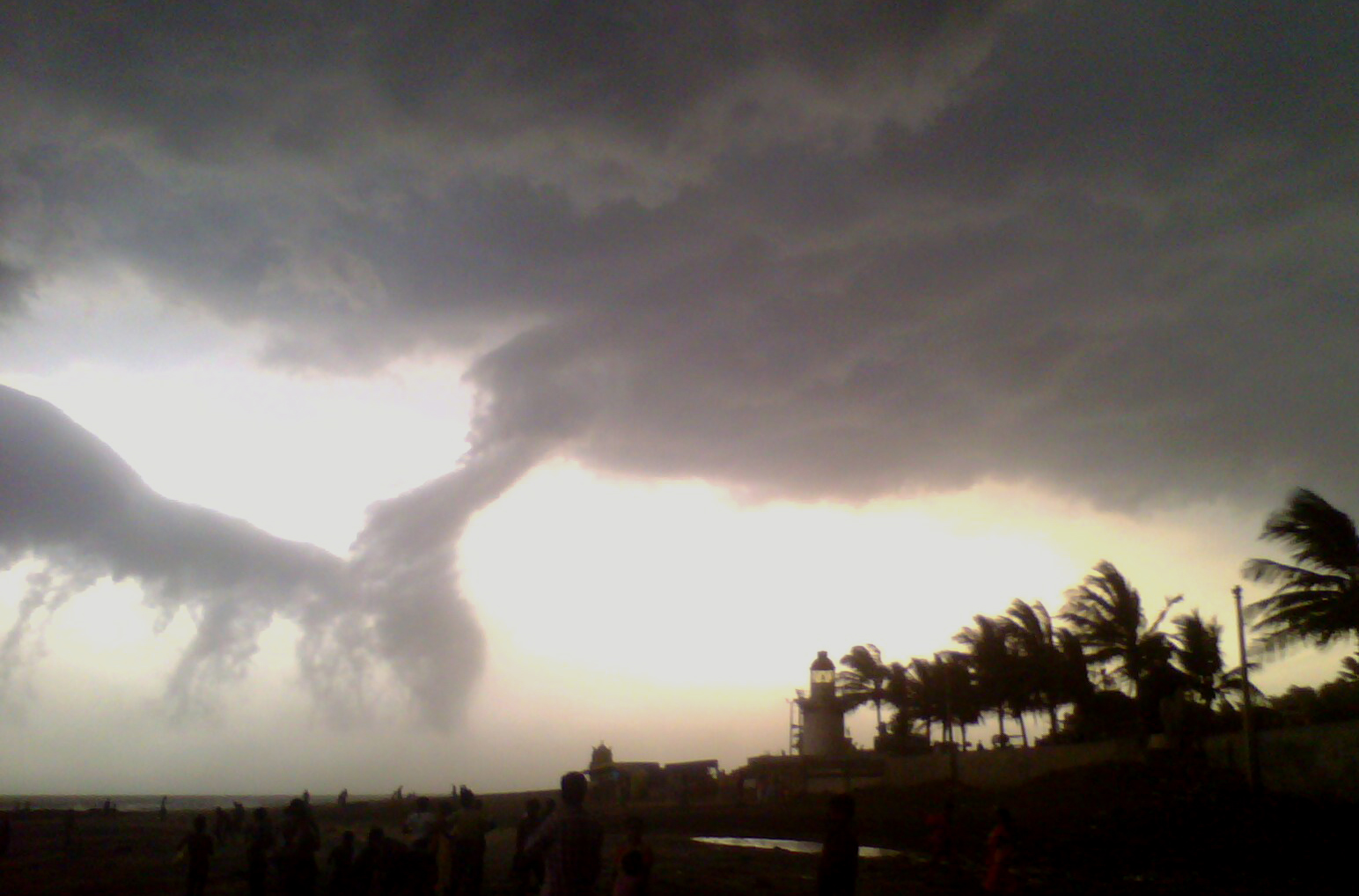
Murasu is the second cyclone to hit the region in seven days. Cyclone Arnab made landfall on October 28 with stronger winds, killed at least five people and inundated roughly 200,000 acres of cropland. Homes and public infrastructure were still damaged when the new storm formed over the Bay of Bengal.
That sequence makes Murasu more dangerous than its wind speed alone suggests. A second storm falls on saturated ground, weakened power systems and households that may have already lost crops, tools, savings or shelter. Even when evacuation prevents mass casualties, repeated displacement can strip workers of income and push small farmers deeper into debt.
The state’s response shows why public forecasting and evacuation capacity save lives. The IMD issued repeated red-message bulletins before landfall, while disaster authorities moved people from exposed areas and positioned emergency crews. Schools and transport shut before the winds peaked, not after roads became impassable.
But evacuation is only the first line of defence. Families need safe shelters, drinking water, medicine and a credible route home. Farmers need rapid crop-loss assessments and compensation. Fishers need income support for every day the sea remains closed. Electricity crews need protection and equipment to restore power without adding workplace deaths to the storm’s toll.
The Bay of Bengal has produced some of South Asia’s deadliest cyclones. Its warm waters can intensify storms quickly, leaving governments little time to move millions of people across India, Bangladesh and Myanmar. Murasu’s landfall does not by itself prove a climate trend, but the one-week double strike demonstrates the compounding risk that coastal planning must now assume.
This disaster also tests how India distributes protection. Early warnings mean little if a family cannot afford transport, fears losing its home to theft, or reaches a shelter without food and sanitation. The official count of evacuated people should therefore mark the beginning of accountability, not the end of it.
Murasu weakened after crossing the coast, but rain remained the immediate threat. The decisive questions now move from the eye of the storm to the flooded road, the damaged field and the relief camp: who receives help first, how quickly power returns, and whether families hit twice in one week are left to carry the losses alone.
Sources and photo credits
India Meteorological Department cyclone bulletins, November 3, 2026 — landfall timing, wind speeds and post-landfall warnings.
Andhra Pradesh State Disaster Management Authority — red-message warning and state threat information.
Reuters, November 3, 2026 — evacuation plan, infrastructure damage and previous cyclone context.
Associated Press, November 3, 2026 — closures, storm surge warning and cropland losses.
Hero photograph — Rishabh Tatiraju / Wikimedia Commons, CC BY-SA 3.0; November 11, 2012 file photograph.
Inline photograph — Srichakra Pranav / Wikimedia Commons, CC BY-SA 3.0; April 7, 2013 file photograph.


Comments