


Democrats Retake Senate as House Projection Ends Trump’s Grip on Congress

WASHINGTON — American voters broke Republican control of Washington on Tuesday, handing Democrats the Senate and pushing them across the line in the House, according to major news projections. The result ends President Donald Trump’s one-party grip on Congress and installs a hostile legislature for the final two years of his presidency. It is the night’s decisive political fact: the administration will no longer write laws, fund wars, confirm judges and bury investigations with the same congressional majority.
The Associated Press called Democratic control of the Senate after an extraordinary run through states Republicans once treated as secure. Democrats entered election day needing a net gain of four seats against a 53–47 Republican majority. They won Republican-held seats in Iowa, Kansas, Texas, South Carolina, Ohio and North Carolina while defending Jon Ossoff’s seat in Georgia and replacing retiring Democrat Jeanne Shaheen with Chris Pappas in New Hampshire.
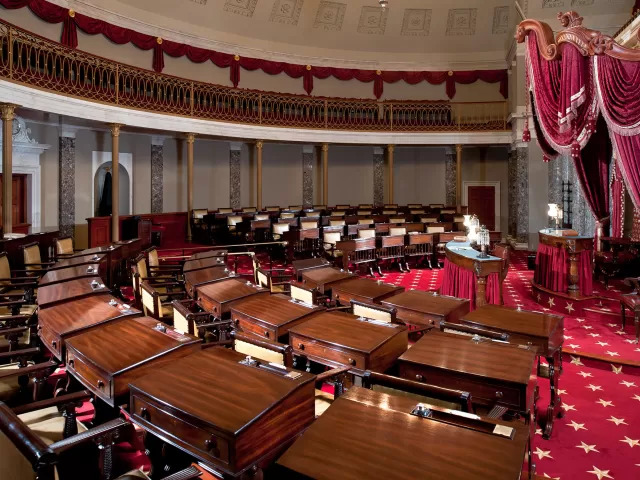
The restored Old Senate Chamber. Credit: Architect of the Capitol / U.S. government.
That map matters as much as the raw number. Josh Turek won Iowa, Adam Hamilton defeated Republican Senator Roger Marshall in Kansas, and James Talarico carried Texas. Annie Andrews broke a Democratic drought in South Carolina, Sherrod Brown returned to the Senate from Ohio, and former governor Roy Cooper captured North Carolina’s open seat. Democrats did not merely collect suburban swing districts. They cracked statewide Republican coalitions across the Midwest and South.
The House followed. Reuters reported at 3:18 a.m. UTC on November 4 that U.S. media had projected Democrats would win a majority there as well. All 435 seats were on the ballot, and Democrats needed only a net gain of three. The AP had already recorded seven Democratic flips as counting continued. Those calls remain projections rather than certified returns, but they establish the governing balance that will take effect in January.
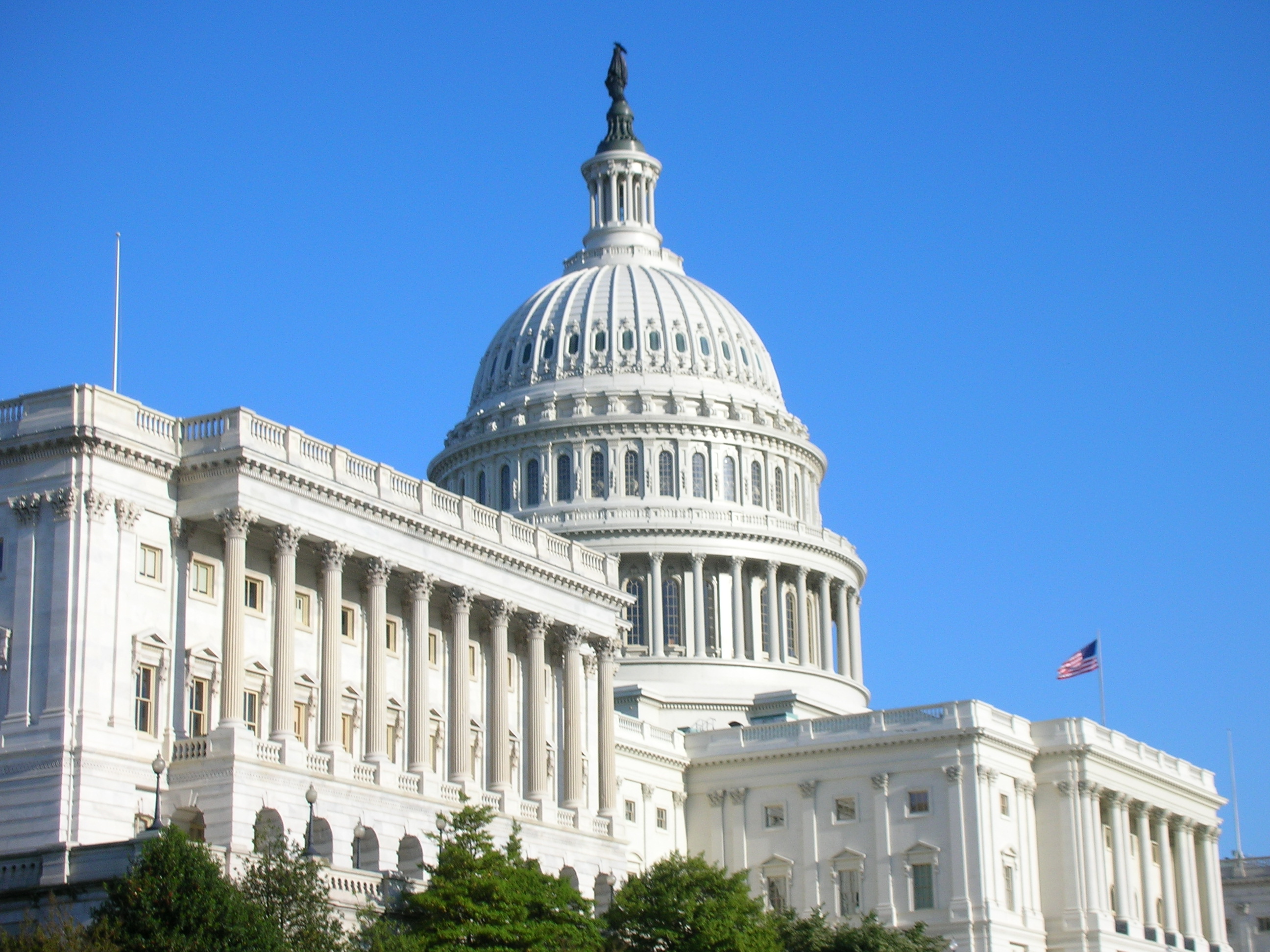
The U.S. Capitol dome. Credit: Wadester16 / Wikimedia Commons / CC BY 3.0 / May 2007.
A Democratic Senate can halt Trump’s nominees, control the confirmation calendar and chair committees with subpoena power. A Democratic House can rewrite appropriations bills, expose executive misconduct and initiate impeachment proceedings. Trump retains the veto, so the immediate result may be confrontation and gridlock rather than a flood of Democratic legislation. But the era of automatic congressional approval is over.
The vote also carried a material message. The AP Voter Poll found roughly three-quarters of voters angry or dissatisfied with the country’s direction. About eight in ten said inflation had caused severe or moderate hardship. Cost of living and government corruption ranked as crucial concerns for roughly half the electorate, while the war in Iran added another burden to an administration already struggling with high fuel prices and public exhaustion.
Trump asked voters to treat the midterms as a referendum on him. When the losses mounted, he tried to separate himself from the ballot. “I wasn’t on the Ballot and if I was, we would have won IN A LANDSLIDE!” he wrote on social media, according to the AP. That retreat cannot erase months of campaigning in conservative states or his demand that Republican candidates bind themselves to his presidency.
Democratic victory does not resolve the party’s contradictions. Its coalition ranges from antiwar progressives to incumbents who supported much of Washington’s military and corporate agenda. A majority gives the party power; it does not guarantee that leaders will use it against soaring living costs, war spending, union suppression or concentrated wealth. Voters supplied a mandate to check Trump, but they also demanded relief from the conditions that made his return possible.
For now, the institutional shift is unmistakable. Republicans began the night controlling the presidency and both chambers. They leave it facing a Democratic Congress elected from states they had counted as safe. Certification, recounts and remaining district calls will refine the margins. They will not soften the verdict: voters ended Trump’s congressional shield.
Sources


Comments