


Fighting Drives 50,000 From Ethiopia Into Kenya as Aid System Strains

Southern Ethiopia’s regional fighting has pushed as many as 50,000 people across the border into Kenya in barely a week, turning a local power struggle into one of the Horn of Africa’s fastest-growing displacement emergencies.
The United Nations refugee agency said on October 28 that significant crossings into Moyale began on October 22. Local authorities estimate that up to 50,000 people have entered Kenya, although registration teams are still checking the number as more families arrive. The total jumped from 36,000 reported a day earlier.
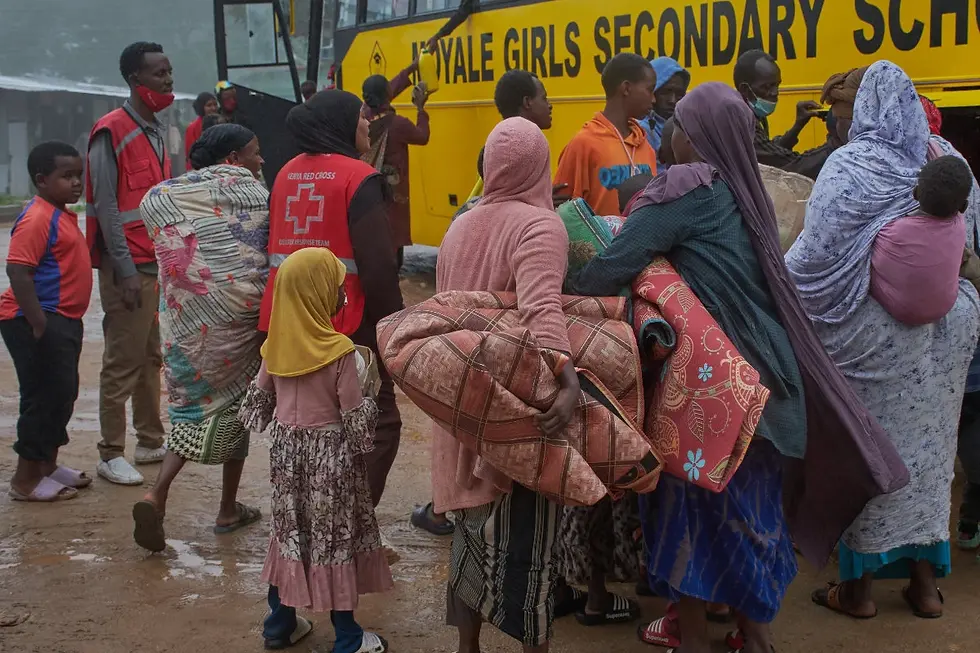
That acceleration matters. It means thousands of people are reaching a dry, politically sensitive border zone faster than the aid system can register, shelter and feed them. UNHCR says many are women and children. Some have moved in with relatives or host families; others are sleeping in schools, churches and other temporary sites.
“Food remains the most urgent need,” UNHCR said, listing safe drinking water, shelter, sanitation and health care immediately behind it. The agency has sent an emergency team to Moyale and is working with Kenya’s refugee authorities, county officials, the International Organization for Migration, UNICEF, the World Food Programme and the Kenya Red Cross.
The relief operation still falls far short of the reported scale. UNHCR said it was mobilizing household supplies and temporary shelter materials for nearly 12,000 people—less than one quarter of the estimated arrivals. The agency is now looking for safer accommodation farther from the frontier as fighting and stray gunfire threaten to follow people across it.
The crisis began as a territorial dispute between Ethiopia’s Oromia and Somali regional administrations flared around Moyale, a divided city that straddles the international border. The Associated Press reported that the conflict intensified after the killing of a 13-year-old girl in an area administered by the Somali region. AFP reported that the raising of a Somali regional flag in the city on October 20 triggered the latest confrontation.

Those accounts describe the immediate spark. The deeper fuel lies in Ethiopia’s federal order, which organizes political power and territory along ethnic lines. Borders between regional states can determine access to land, policing, local government and public resources. When officials or armed units contest those boundaries, civilians pay first.
Moyale adds another danger: the conflict sits directly on an international crossing. Kenyan police recorded three incidents involving stray bullets last week, according to AP. Local leaders in Marsabit County warned that violence could spill into Kenya while the new arrivals overwhelm communities already struggling with food and water scarcity.
The Kenya Red Cross says displaced families are spread across six camps and surrounding villages. Volunteers are preparing hot meals and providing health services and basic household items. But emergency kitchens cannot substitute for a durable response when the displaced population has risen by tens of thousands in days.
The Kenyan government and aid agencies now face two linked tests. They must move families away from the shooting line and prevent shortages from creating a second crisis inside host communities. That requires rapid registration, protected shelter, reliable water supply and enough food for both newcomers and the people receiving them.
Ethiopian authorities also face a political choice. They can treat the exodus as a temporary border-management problem, or confront the regional struggle that produced it. Fifty thousand people crossing into another country is not a rumor or a distant warning. It is evidence that the violence has already broken national boundaries—and that civilians are carrying the cost.
Sources


Comments