


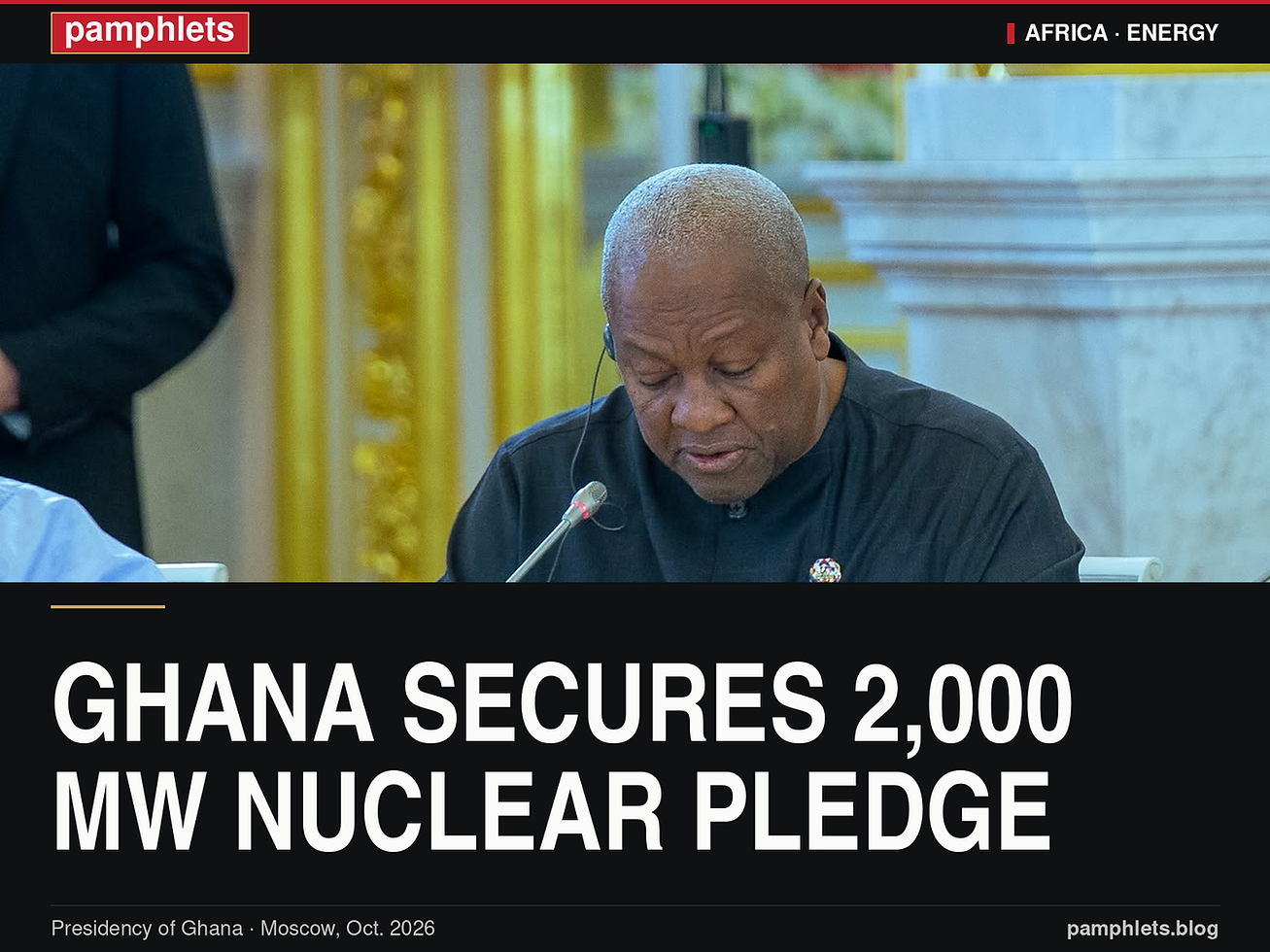
Ghana Revives Nkrumah’s Nuclear Dream With 2,000 MW Russia Pledge

Ghana has secured a Russian pledge to work toward a 2,000-megawatt nuclear power plant, reviving an industrial ambition first set in motion under Kwame Nkrumah and broken by the 1966 coup.
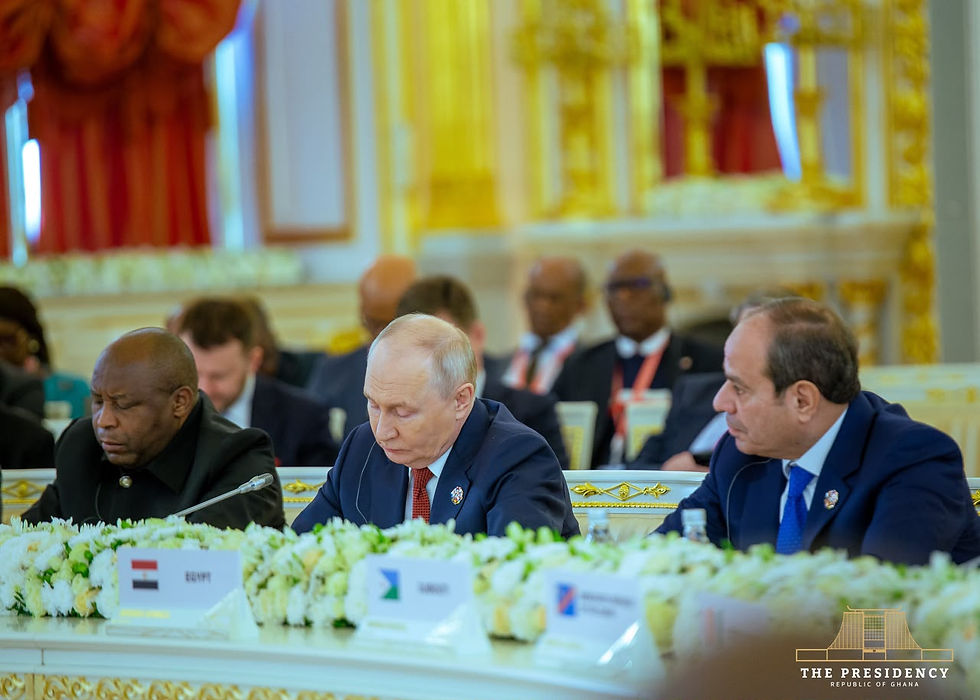
Foreign Minister Samuel Okudzeto Ablakwa announced the commitment on Saturday after President John Dramani Mahama met Vladimir Putin at the Russia-Africa summit in Moscow. The plan would make nuclear power a pillar of Ghana’s drive for reliable electricity, industrial capacity and greater energy sovereignty.
The scale matters. Two gigawatts would represent a major addition to Ghana’s power system, capable of supporting factories, mines, transport and public infrastructure for decades. It would also bind Ghana to one of the world’s dominant nuclear vendors through financing, fuel, maintenance, safety and training arrangements that can outlast any government.
A pledge, not yet a plant
The announcement marks political intent, not the start of construction. Neither government disclosed a final construction contract, financing package, reactor design, site or commissioning schedule. Ghana and Russia must still turn summit diplomacy into bankable terms, regulatory approvals and a project the national grid can absorb.
Mahama had already confirmed the opening move on Thursday: “We have initiated discussions with Rosatom on the establishment of Ghana’s first nuclear power station.” One day later, Rosatom chief Alexei Likhachev said the state corporation was discussing large nuclear plants with Ghana, Uganda, Ethiopia and Egypt.
Africa’s nuclear imbalance explains the appeal. South Africa’s Koeberg station remains the continent’s only operating commercial nuclear plant. Egypt is building the 4,800-megawatt El Dabaa complex with Rosatom. Dozens of countries need dependable power, but imported fuel costs, fragile grids and expensive borrowing have repeatedly blocked industrial expansion.
Ghana’s nuclear ambition predates the current scramble for African energy markets. Nkrumah established the country’s atomic-energy program in the 1960s as part of a broader project of scientific and economic independence. The coup that removed him on February 24, 1966, severed that strategy from the industrial transformation it was meant to serve.
Sovereignty will live in the contract
Nuclear power can supply steady low-carbon electricity, but the reactor itself does not guarantee sovereignty. Ghana must negotiate the price of capital, ownership, local content, technology transfer, waste management, fuel supply and long-term liability. A cheap headline can become an expensive dependency if a foreign vendor controls the financing, expertise and replacement parts.
The wider package announced after the summit shows that Accra and Moscow are building more than an energy project. The governments agreed to develop a new defense pact, deepen agricultural cooperation, expand scholarships and convene a joint commission. Putin also pledged to stop irregular recruitment and voluntary enlistment of Ghanaians into Russia’s war in Ukraine.
That breadth gives Ghana leverage, but it also raises the stakes. Mahama told the summit that Africa seeks “mutually beneficial partnerships, not aid dependency.” The nuclear proposal will test that principle more severely than any speech. Ghana needs transparent costs, parliamentary scrutiny, independent safety regulation and enforceable commitments to train Ghanaian engineers and workers.
If those terms put Ghanaian development first, the 2,000-megawatt pledge could restore a path abandoned six decades ago. If they remain hidden or subordinate public power to vendor debt, Nkrumah’s dream will return only as branding. The summit produced a promise. Ghana must now decide who will own its consequences.


Comments