


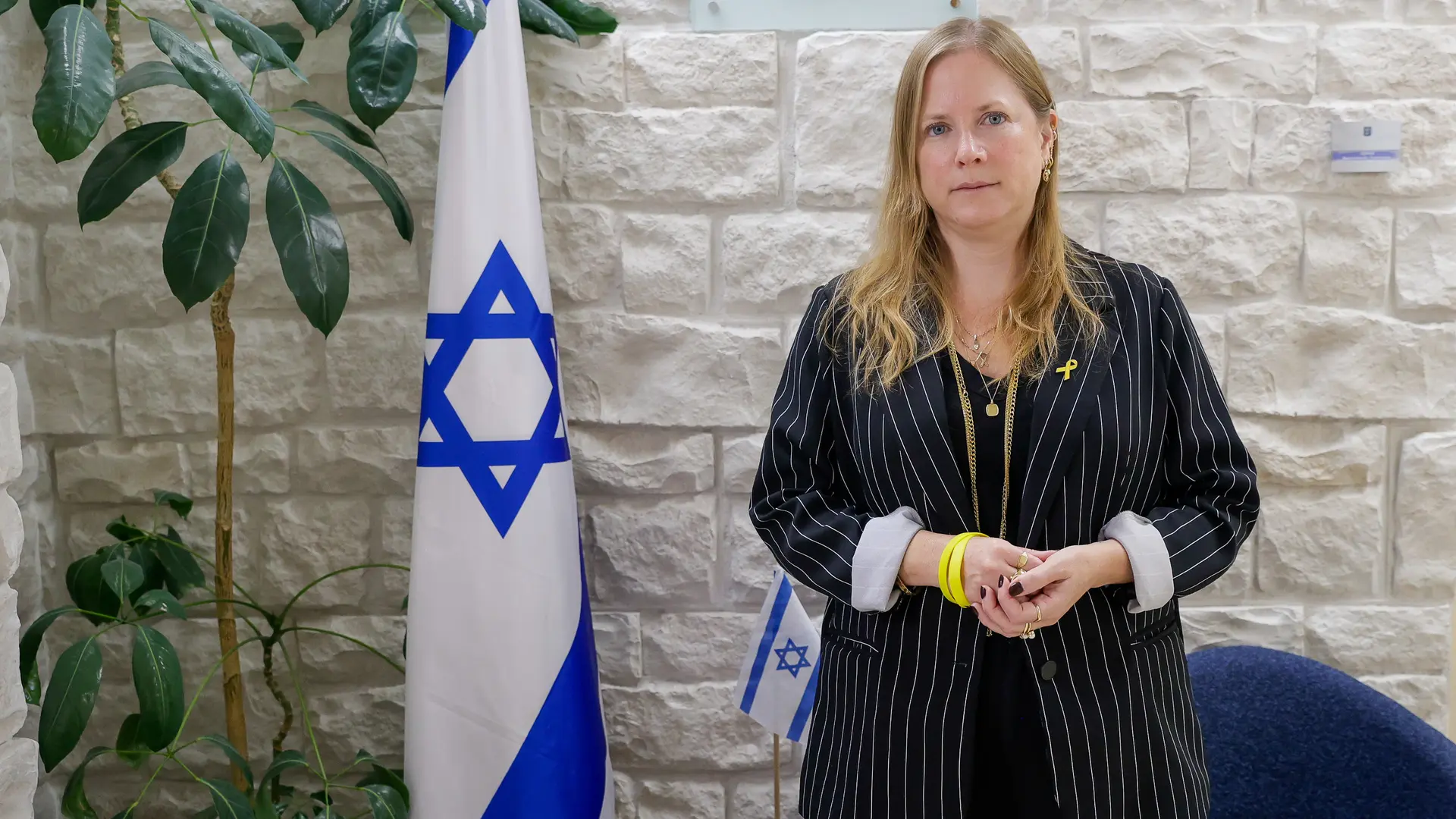
Israeli Envoy's 'Pay a Price' Warning Resurfaces After Spain's Deadly Train Disaster

MADRID, October 29, 2026 — Spain is mourning the victims of the October 28 high-speed train disaster near Urda, Toledo. As the reported death toll reached 69, a pointed warning made weeks earlier by Israel's senior diplomat in Madrid — that breaking defense cooperation with Israel carries a 'price' for Spanish citizens — began circulating again in political debate over the catastrophe.
The renewed attention is understandable: Dana Erlich, Israel's chargé d'affaires, publicly suggested on September 10 that Spain's policies could jeopardize Spaniards' security. But the timing of her warning and this week's deadly collision does not demonstrate a connection. No published evidence establishes that Israel or an Israeli contractor caused, sabotaged, or contributed to the Urda disaster.
The urgent questions are about what failed inside Spain's rail system — and separately, about a foreign diplomat invoking the safety of Spanish citizens as leverage against Madrid's political stance on Israel and Palestine. Those questions deserve to be investigated, not collapsed into an unsupported accusation.
The Urda disaster: 69 reported dead, investigations underway
On October 28 a Renfe AVE train struck an Iryo service that was stopped on the Madrid–Seville high-speed line near Urda. By October 29, Spain's public broadcaster RTVE and EFE were reporting 69 deaths, with many more injured. The number was provisional as recovery work continued. Prime Minister Pedro Sánchez declared three days of official mourning, October 29–31, and promised a full accounting of the failures.
Early reporting from EFE, RTVE and El País identifies a failure of the German-designed LZB train-protection system around 8:30 a.m. as an important part of the sequence. The system's shutdown initially brought trains to a halt. Investigators are examining what happened when the Adif control center authorized a Renfe train to resume movement while an Iryo train remained stopped ahead, including contradictory accounts of the instructions, backup systems, and compliance with safety protocols.
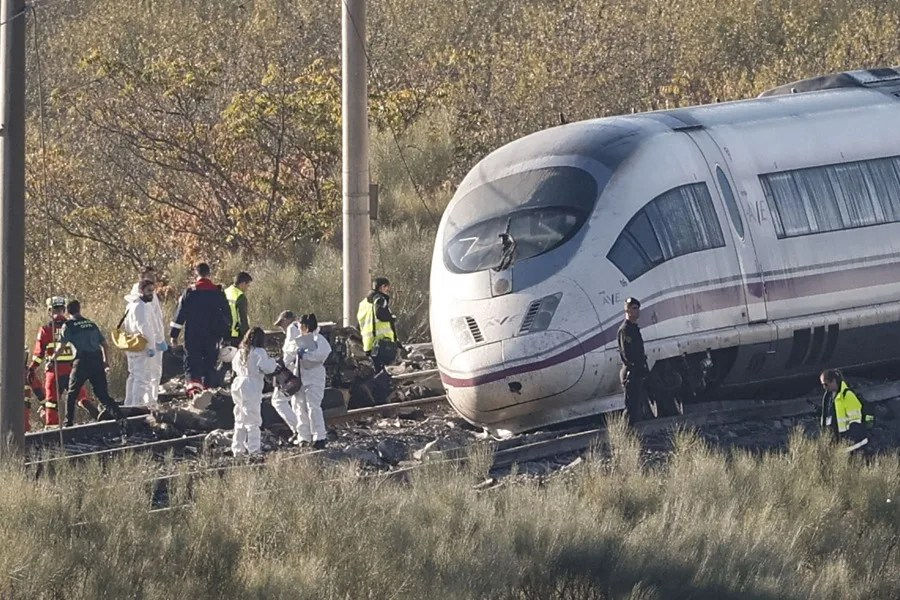
Urda, Toledo, October 29, 2026: emergency and forensic teams work at the scene of the train collision. Photo: EFE / J. J. Guillén.
Spain's independent accident-investigation authority said October 29 that all hypotheses remained open and urged against premature conclusions. That includes a need to distinguish an established technical malfunction from the precise causal chain that permitted a collision.
Claims about Israeli firms are circulating — without proof
In an October 29 post on X, commentator José Vico said rail safety systems had failed and asserted that security was controlled by Israeli-linked companies, connecting that accusation to earlier Israeli warnings against Pedro Sánchez's pro-Palestinian government. The claim reflects anger and suspicion, but is not an established finding of the crash inquiry.
The Spanish fact-checking outlet Maldita.es examined viral allegations naming Cylus, Israel Aerospace Industries and ICTS. It found no demonstrated direct role for Cylus or IAI in Spain's railway protection systems. It identified three Renfe contracts involving I-SEC, a Spanish subsidiary of ICTS, but said none concerned the technical safety systems of trains or railway infrastructure. Maldita had sought comment from Renfe, Adif and the transport ministry but reported no replies when its analysis was published.
The LZB system at the heart of the reported failure is a German railway technology, not evidence of Israeli control. These findings do not pre-empt the independent investigation, but they do not support the online allegation that Israeli security firms engineered the collision. Treating the deaths as proof of foreign sabotage would be irresponsible to the victims and could obstruct scrutiny of the failures actually documented.
The diplomatic warning is real — and still demands an answer
A warning wrapped in the language of security
Erlich did not explicitly threaten military retaliation, an attack or Israeli sabotage. Her stated argument was about dependence on Israeli technology. In earlier and later interviews, she asserted that replacing Israeli systems with supposedly inferior alternatives could damage Spanish public safety. She cited electronic monitoring bracelets as an example, but did not establish that the Spanish government's overall policy had caused a demonstrable security breakdown.
The distinction matters. There is no verified basis in these statements to claim Israel caused the July migration crisis in Ceuta, and Erlich expressly denied that allegation. What is documented is political pressure: an Israeli official repeatedly arguing that Spanish citizens could suffer because Madrid refuses to preserve its previous relationship with Israel.
Spain's government is under no obligation to accept that framing. Every state has a right to choose procurement partners and to determine whether weapons trade serves its legal obligations, national interests or foreign-policy principles.
Spain's embargo was a political decision — and a legal one

Pedro Sánchez announces measures addressing Israel and Gaza on September 8, 2025. Photo: Pool Moncloa / Borja Puig de la Bellacasa (archival).
The government of Prime Minister Pedro Sánchez moved in September 2025 to legally consolidate restrictions on military trade with Israel amid Israel's assault on Gaza. The Spanish law prohibited categories of arms imports and exports and restricted the transit of certain military-use fuels, while allowing limited exceptions. Spain's Congress validated the decree on October 8, 2025.
The policy was not a mysterious act of hostility against Spanish citizens. It followed a public debate over international humanitarian law, Spain's recognition of Palestinian statehood and mounting demands for accountability over the destruction and deaths in Gaza. One can debate whether the embargo is comprehensive enough, but its basic logic is plain: Spain sought to avoid contributing weapons and military technologies to the Israeli war effort.
Erlich has described the diplomatic relationship as being at a 'critical moment' and called for a change in the Spanish government's statements and policies to restore normal relations. Her September appearance was introduced by former Spanish prime minister José María Aznar, who urged Madrid to normalize relations with Israel, calling it an important strategic ally.
Security dependency as leverage
The deeper question is whether a foreign military-technology supplier should be able to turn a democratic government's human-rights policy into an argument that its own population must suffer. Erlich's comments are not proof of a covert Israeli operation. They are evidence of a blunt diplomatic sales pitch: cooperation with Israel is presented not just as beneficial but as something Spain cannot safely refuse.
That reasoning deserves scrutiny, especially when the state applying it is directly affected by the embargo. The fear of losing specialized systems can be real; procurement transitions require planning and testing. But claims that alternatives are 'inferior' should be supported by verifiable technical evidence, not treated as settled because a foreign diplomat says so.
For Spain, the choice is ultimately political. It can invest in alternatives and maintain essential domestic security without allowing the government whose actions it is protesting to define its foreign policy. Independence is not demonstrated by accepting every claim of risk made by the supplier one is trying to leave.
What the record shows
Erlich's September 10 warning was publicly reported by EFE and Europa Press. In a March 2026 interview with El Confidencial, she also argued that boycotts and restrictions involving Israel would leave Spaniards paying a price. In a subsequent interview published in October, she clarified that her warning referred to Israeli technology and cited electronic monitoring devices. The September comments should therefore not be misrepresented as a fresh October declaration or as a confirmed threat of violence.
This is a continuing confrontation over Spain's right to break military ties with Israel — and over the claim that its citizens must bear the costs of that independence.
Sources and documentation
EFE, September 10, 2026: https://efe.com/espana/israel-espana-relaciones/
Europa Press, September 10, 2026: https://www.europapress.es/nacional/noticia-israel-asegura-no-antepone-marruecos-espana-aliado-gobierno-le-usa-cortina-humo-20260910110246.html
Spain's Official State Gazette, Royal Decree-Law 10/2025: https://www.boe.es/diario_boe/txt.php?id=BOE-A-2025-18831
EFE, October 8, 2025, parliamentary vote: https://efe.com/latest-news/2025-10-08/spanish-parliament-approves-arms-embargo-on-israel/
El Confidencial, March 31, 2026: https://www.elconfidencial.com/espana/2026-03-31/entrevista-embajadora-funciones-israel-dana-erlich_4330213/
Archival hero photograph: Dana Erlich in Madrid, 2025; source: 20minutos. This photo is not from the September 10 speech.
Spain public broadcaster RTVE, October 29, 2026: https://www.rtve.es/noticias/20261029/fallo-urda-ave-embistiera-otro-tren-avisado-parado/17288771.shtml
EFE, rail collision reconstruction, October 29, 2026: https://efe.com/espana/2026-10-29/claves-accidente-trenes-urda-toledo/
Europa Press, accident authority leaves hypotheses open, October 29, 2026: https://www.europapress.es/economia/transportes-00343/noticia-autoridad-investiga-accidente-mantiene-abiertas-todas-hipotesis-20261029214015.html
Maldita.es, contracts and claims about Israeli rail-security companies, October 29, 2026: https://maldita.es/desinfo/20261029/las-empresas-israelies-cylus-e-israel-aerospace-industries-iai-estan-relacionadas-con-la-seguridad-tecnica-de-los-trenes-de-renfe/
La Moncloa, Pedro Sánchez announces three days of national mourning, October 28, 2026: https://www.lamoncloa.gob.es/presidente/actividades/Paginas/2026/281026-sanchez-visita-accidente-tren.aspx
José Vico, October 29 X post (unverified allegation): https://x.com/josevico4/status/2115831189218955475
EFE photograph, October 29, 2026, J. J. Guillén: https://efe.com/espana/2026-10-29/claves-accidente-trenes-urda-toledo/


Comments