


Record Rice Prices in Indonesia Put Everyday Meals Further Out of Reach

Rice is the daily anchor of meals across Indonesia. Reuters reported that rice prices had reached record levels and described a Jakarta parking attendant whose simple meal of rice, tempeh, and tofu rose from roughly 7,000–8,000 rupiah to 15,000 rupiah. That account is one worker’s experience, not a national price average. It shows how a staple-price increase can force people living on modest earnings to spend more for the same meal—or eat less.
The pressure reaches beyond the rice bowl. Higher fuel and fertilizer costs raise the price of producing and moving food. Reuters also reported that local flour mills were running below capacity as wheat imports fell, while delayed rains and El Niño threatened supply. When those costs converge, low-paid urban workers and rural households with thin reserves have little protection. Every market shock takes money from transport, school needs, medicine, and rent.
A food system should not make families absorb every disruption alone. Public agencies can release timely price and stock data, strengthen rice procurement and reserves, and direct help to households whose food spending has outgrown their income. Support should reach informal and day-wage workers as well as registered employees. Better storage, irrigation, and transport links can reduce losses and keep seasonal shortages from turning into sudden price spikes.
Indonesia has a strong case for protecting domestic producers while keeping essential food affordable. That means stable public purchasing, accessible credit and inputs for small farmers, and transparent decisions on imports when local supply falls short. Consumers need targeted relief now; farmers need the infrastructure and bargaining power to earn a fair return over time. Food security depends on both. Workers should not have to choose between a full meal and getting to work.
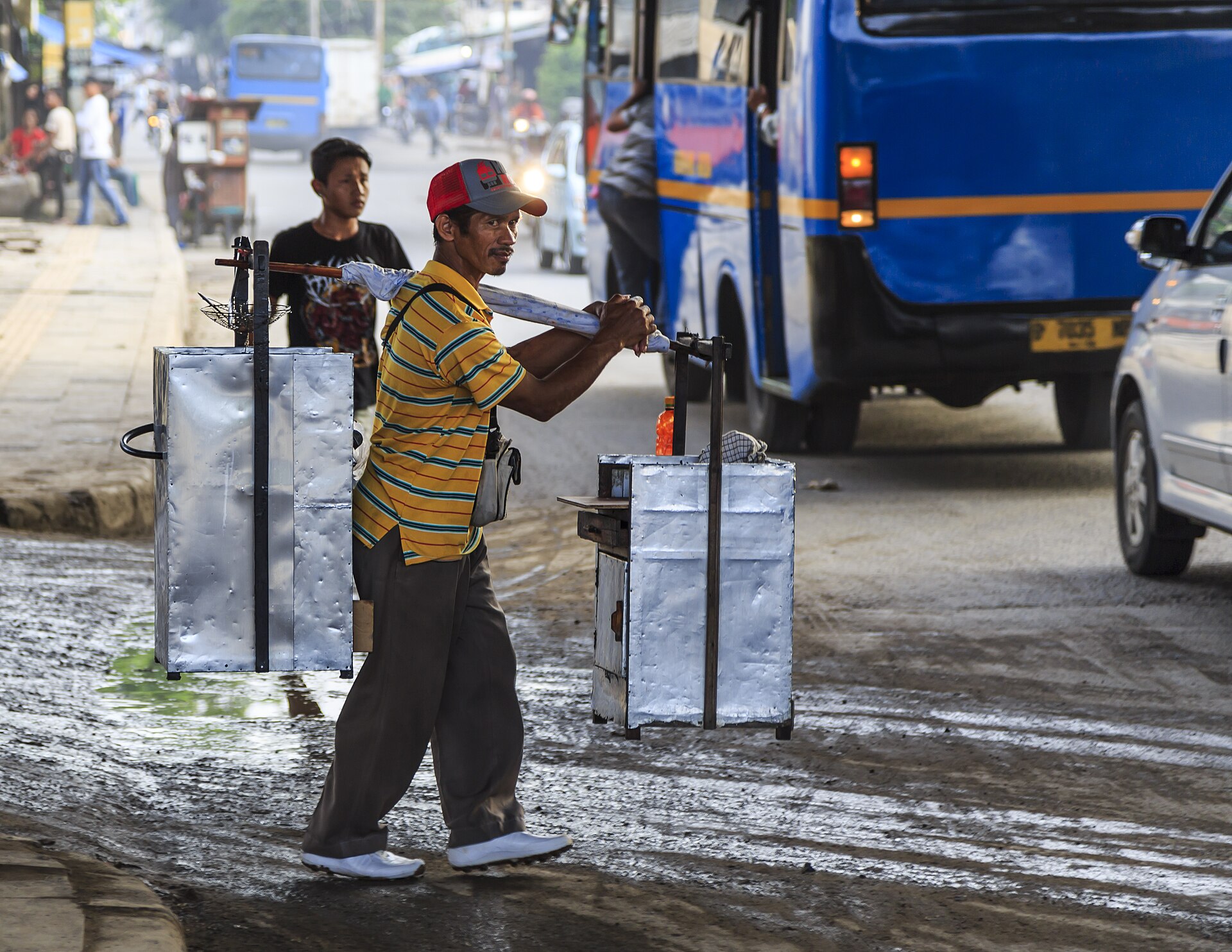
Photo credits: Cover, Midori, “Indonesian rice vendor,” October 2006, CC BY-SA 3.0, Wikimedia Commons. Inline image, CEphoto, Uwe Aranas, “Jakarta, Indonesia: Hawkers in Kota Jakarta,” February 2015, CC BY-SA 3.0, Wikimedia Commons. These archival photographs illustrate food markets and street vendors; they do not depict the current price report.
Source: Reuters, October 19, 2026, “Global food inflation is expected to intensify as supply shocks pile up” — https://www.reuters.com/world/americas/global-food-inflation-is-expected-intensify-supply-shocks-pile-up-2026-10-19/ .



Comments