


Romania freezes pensions while NATO military budget rises 16.6% and inflation leads the EU

BUCHAREST — Romania is imposing austerity on civilian incomes while expanding its military budget to meet NATO commitments. Public wages and pensions have been frozen in nominal terms for 2025 and 2026, the European Commission says. Its Ministry of Defence, meanwhile, has secured a 49.426 billion lei budget for 2026 — 16.62% above preliminary 2025 spending.
The numbers land amid the European Union's most severe current consumer-price inflation. Eurostat's 16 October release puts Romania's September 2026 annual inflation at 6.5%, higher than any other EU member state, compared with the EU average of 3.8%.
49.426 billion lei for the military
Romania's Defence Ministry announced on 20 March that parliament had adopted its 2026 allocation of 49.426 billion lei, around 2.45% of gross domestic product under the ministry's budget definition. Of that sum, 18.832 billion lei — 38.10% — is assigned to major military equipment purchases.
The ministry specifically links its programme to the NATO decisions adopted at the June 2025 Hague summit and the objective of reaching core defence expenditure of 3.5% of GDP by 2035. The 16.62% rise is measured against preliminary execution in 2025, not an inflation-adjusted comparison of identical accounting categories.
Its budget covers much more than weapons purchases, including personnel, operations, infrastructure and obligations to international organisations. Still, its scale and rapid nominal growth show the priority the government has assigned to expanding military capabilities.
For pensioners and public workers, pay stands still
Romania's civilian fiscal programme runs in the opposite direction. The European Commission's May economic forecast records a nominal freeze on public-sector wages and pensions in both 2025 and 2026, together with tax increases introduced through successive consolidation packages. European institutions say the measures were intended to reduce the country's large budget deficit.
A nominal freeze is not the same thing as a frozen cost of living. When prices keep increasing, an unchanged monthly payment purchases less. Inflation at 6.5% does not imply every household faces an identical bill, but it makes the squeeze unmistakable for people living on fixed incomes.
The Commission projected that Romania's economy would grow just 0.1% in 2026, after only 0.7% growth in 2025, and expected unemployment to rise moderately to around 6.3% in 2026. Those are forecasts, not final annual results. It projected that fiscal tightening and elevated prices would reduce consumption and real disposable income.

Above: allied Polish troops take part in Romania's National Day military parade in 2024. Archival photograph; this is not an image of the 2026 budget vote.
The choices are simultaneous, not an invented transfer
The wage and pension freezes were adopted as deficit-reduction measures, not identified by the government as direct transfers to the armed forces. It would be inaccurate to say that every frozen pension finances a particular aircraft or military vehicle. The published record supports a sharper and more verifiable conclusion: civilian income restraint and an expanding military allocation are being pursued together.
Romania also has legitimate security concerns, particularly given the war across the border in Ukraine and the wider pressure on Black Sea security. The government's case is that deterrence and allied military readiness require higher spending. That rationale belongs in the debate; it does not erase the economic costs faced by households.
The unresolved question is distributional. Who is asked to absorb inflation while the state protects rising expenditure elsewhere? The defence ministry has published its numbers and a timetable reaching toward 2035. Pensioners and public workers have already experienced a nominal freeze in the middle of a cost-of-living crisis.
A public budget can serve more than one purpose. But budget priorities become visible when some commitments accelerate and others are held back. Romania's 2026 figures put that tension in plain sight.
Sources and image credits
Romanian Ministry of National Defence — 2026 budget adopted by parliament, 20 March 2026 — https://www.mapn.ro/cpresa/19178_Bugetul-Ministerului-Apararii-Na%C8%9Bionale-pentru-anul-2026-a-fost-adoptat-de-Parlament
Eurostat — September 2026 annual inflation, released 16 October 2026 — https://ec.europa.eu/eurostat/en/web/products-euro-indicators/w/2-16102026-ap
European Commission — Economic forecast for Romania, 21 May 2026 — https://economy-finance.ec.europa.eu/economic-surveillance-eu-member-states/country-pages-including-country-reports/romania/economic-forecast-romania_en
European Commission — Romania fiscal consolidation and pension freeze — https://eur-lex.europa.eu/legal-content/EN/TXT/?uri=celex%3A52026DC0223
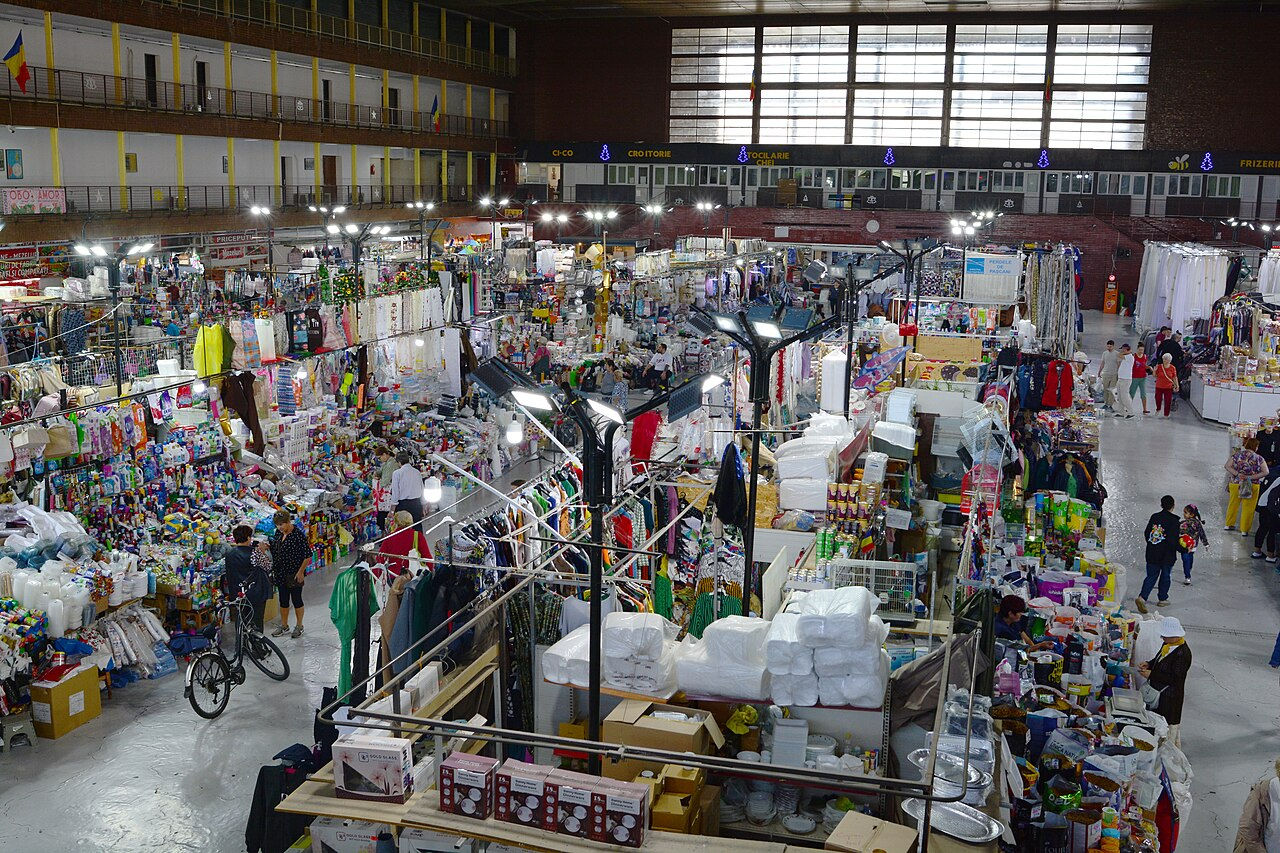
Lead photo — Joe Mabel, Obor Market, 2024, CC BY-SA 4.0, Wikimedia Commons — https://commons.wikimedia.org/wiki/File:Bucharest_-_Obor_Market_2024_-_01.jpg
Body photo — US Army Pfc. Nathan Arellano Tlaczani, 2024, public domain, Wikimedia Commons — https://commons.wikimedia.org/wiki/File:Romania%27s_National_Day_Military_Parade_2024_(8777622).jpg


Comments