


Russia Says It Downed 856 Ukrainian Drones as Yaroslavl Refinery Burns

The air war between Russia and Ukraine crossed another threshold overnight, reaching from hospitals in Kharkiv to an oil refinery hundreds of kilometres inside Russia.
Russia’s Defence Ministry said its forces destroyed 856 Ukrainian fixed-wing drones across 14 regions, occupied Crimea and the Black Sea during the night of November 2–3. The figure, which could not be independently verified, would make the attack one of the largest Ukrainian drone barrages of the war.
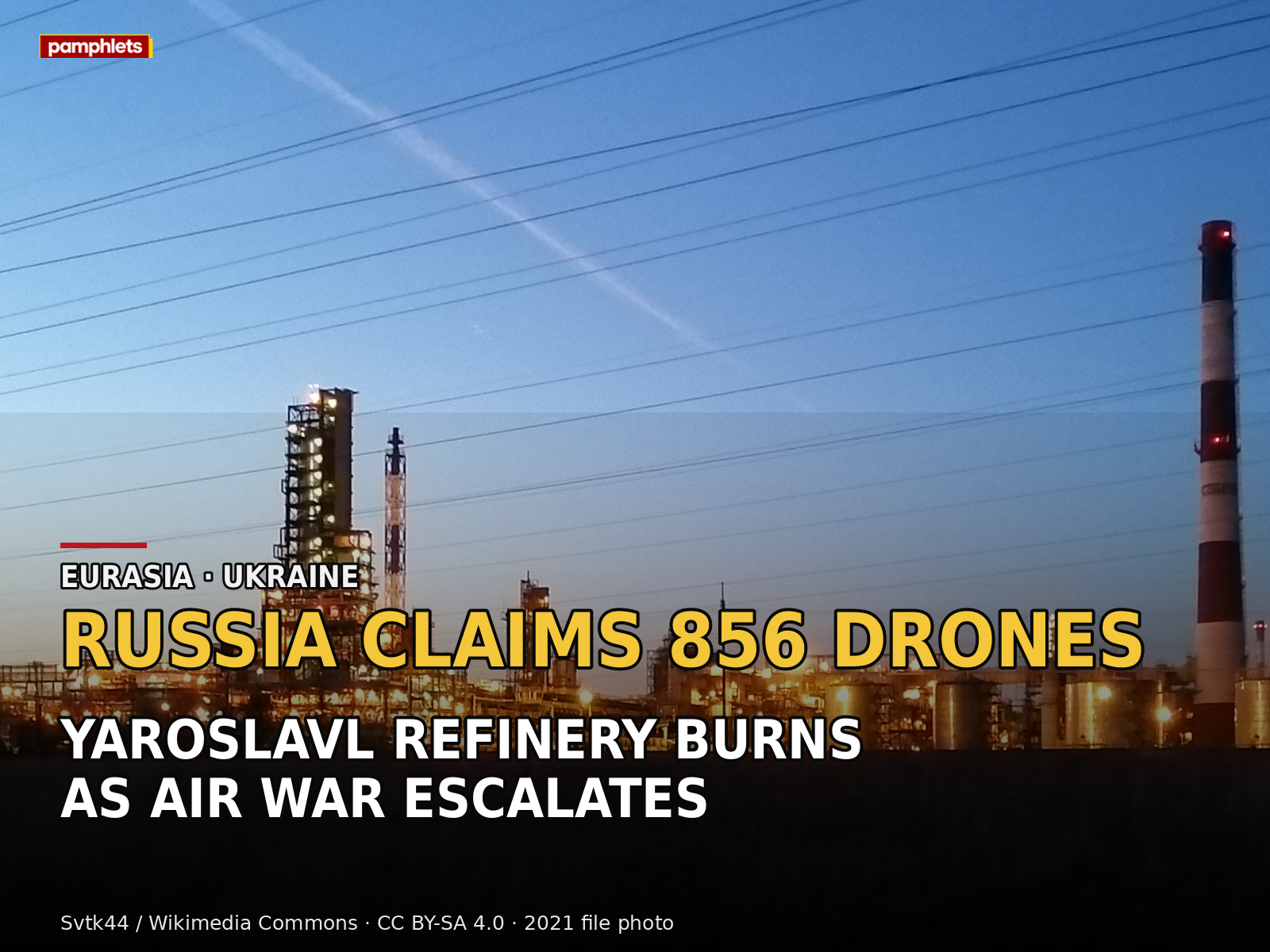
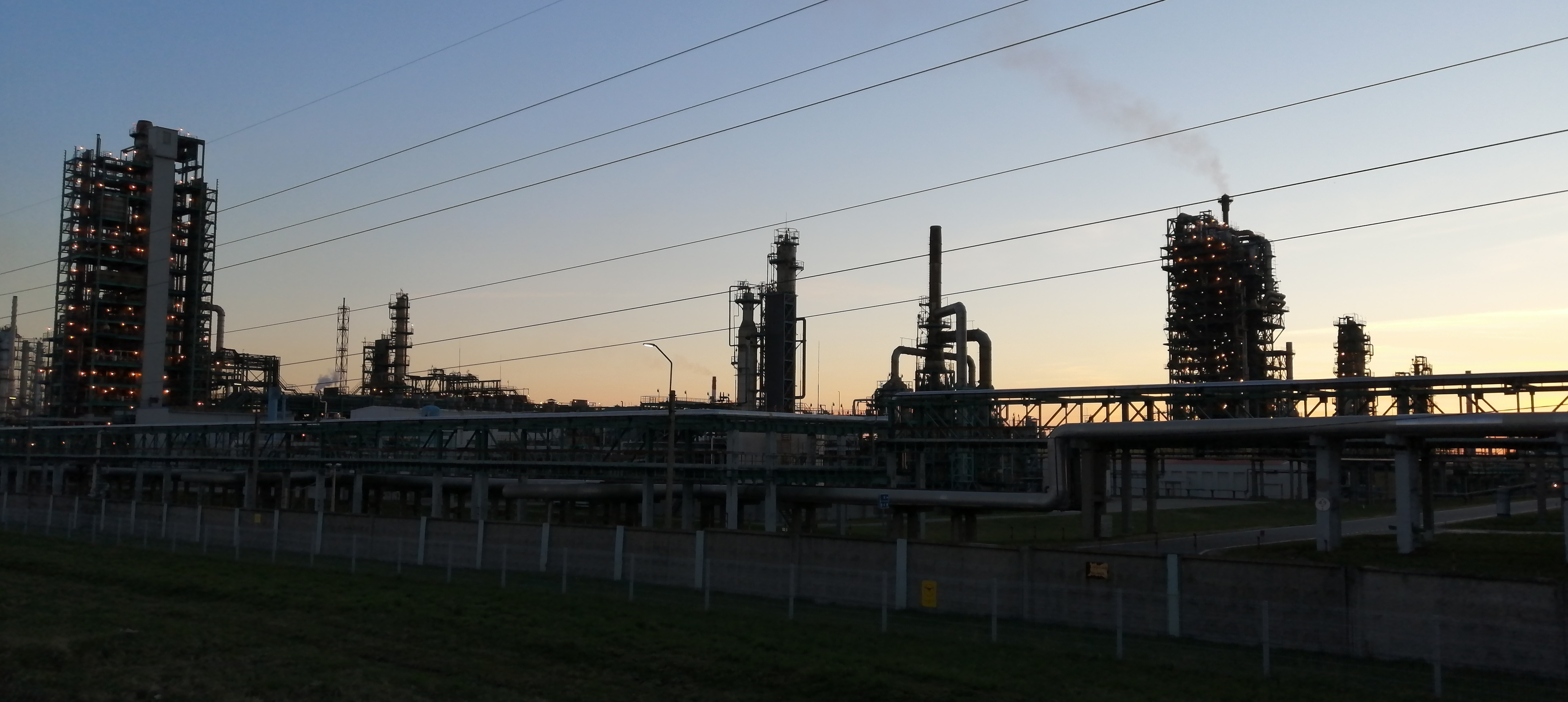
The defences did not prevent damage. Yaroslavl regional governor Mikhail Yevrayev said 124 drones targeted the Slavneft-YANOS refinery, injuring two workers with shrapnel, damaging infrastructure and starting a fire. Falling debris also broke windows in homes and damaged cars, he said. Kyiv did not immediately claim responsibility.
The refinery is one of Russia’s five largest by processing capacity. Its position far beyond the border makes the strike strategically significant: Ukraine has continued extending the reach and volume of its drone campaign even as Washington has pressed Kyiv to limit attacks on Russian fuel infrastructure.
The Russian claims require caution. Air-defence totals can include drones destroyed far from their targets, and neither side routinely provides evidence sufficient to verify every interception. Moscow Mayor Sergei Sobyanin said 493 drones were directed toward the capital and 184 were destroyed near it. Russian officials described the overnight raid as one of the largest attacks on Moscow in six months.
The same night brought a major Russian assault on Ukraine. Ukrainian officials reported 289 drones, 17 ballistic missiles and 59 cruise missiles across nine regions. In Kharkiv, strikes wounded at least 62 people, damaged a medical facility and apartment buildings, and forced more than 200 patients to move to other hospitals. Attacks around Dnipro killed one person and wounded 17, according to regional officials.
Russia said its strikes hit energy facilities supplying Ukraine’s military-industrial sector and port infrastructure used for military purposes. Ukrainian authorities reported damage to civilian medical and residential sites. Both claims belong in the record; neither cancels the documented harm to workers, patients and residents.
The scale of the exchanges shows how the war’s geography has changed. Long-range drones now allow both states to impose costs far beyond the front without gaining control of the air. Refineries, power stations, ports and logistics hubs have become recurring targets because they sustain military production and national revenue. The result is not a clean separation between military and civilian systems. It is an expanding zone of risk around infrastructure that millions of people depend on.
Ukraine’s campaign also challenges the idea that distance shields Russia’s industrial heartland. Yaroslavl lies northeast of Moscow, beyond the border regions that have absorbed most attacks. A raid involving the numbers claimed by Moscow forces Russia to expend interceptors, disperse air defences and protect infrastructure across a vast territory.
But the barrage does not by itself prove a strategic breakthrough. Russia says most drones were intercepted. The refinery fire was serious enough to injure workers and require an emergency response, yet authorities had not reported the duration of any production disruption. Claims circulating online about extensive destruction remained unverified when this article was published.
The reciprocal escalation also complicates diplomacy. Negotiators are preparing for new Russia–Ukraine contacts in Abu Dhabi, while European governments rehearse a possible postwar force. Each side is trying to improve its position before those talks by demonstrating that it can still reach the other’s critical systems.
That logic carries its own danger. Larger barrages create more chances for debris, navigation failures or misidentification to hit homes, hospitals or neighbouring territory. They also encourage retaliation before investigators can establish what happened.
The night’s clearest fact is not that one side gained decisive advantage. It is that the war’s air campaign has become broader, denser and harder to contain. Yaroslavl’s burning refinery and Kharkiv’s evacuated patients belong to the same escalation—and civilians and workers are absorbing its consequences.
Sources and photography
Reuters, November 3, 2026 — Yaroslavl refinery damage and Russian interception claim.
Associated Press, November 3, 2026 — overnight Russian and Ukrainian strike totals and casualty reporting.
Interfax, November 3, 2026 — Russian Defence Ministry claim and affected regions.
Anadolu Agency, November 3, 2026 — regional statements, casualties and hospital transfers.
Meduza, November 3, 2026 — refinery scale and documented fire imagery.
Reuters, October 30, 2026 — context on reported U.S. pressure over refinery attacks.
Hero photograph — Svtk44 / Wikimedia Commons, CC BY-SA 4.0, May 11, 2021 file photograph.
Inline photograph — Svtk44 / Wikimedia Commons, CC BY-SA 4.0, May 10, 2021 file photograph.


Comments