


Russian and Ukrainian Envoys Meet at White House After Oleshky Truce

Russian and Ukrainian officials appeared together at the White House on Thursday, November 5, after a six-day humanitarian ceasefire in the occupied Ukrainian city of Oleshky moved food and medicine across the front and allowed hundreds of civilians to leave. The meeting did not produce a wider truce. It did preserve a rare channel through which both governments had already stopped firing long enough to save lives.
Russian presidential envoy Kirill Dmitriev joined Davyd Arakhamia, the parliamentary leader of President Volodymyr Zelenskyy’s party, and Ukrainian human-rights ombudsman Dmytro Lubinets at an event hosted by First Lady Melania Trump. The delegates marked an agreement signed October 23 and implemented from October 27 through November 1 around Oleshky and parts of the Kherson region.
The local pause became the longest ceasefire of its kind since Russia’s full-scale invasion began in 2022. It allowed crews to clear routes, deliver supplies and organize departures from a city where electricity, heat, running water and medicine had become scarce.

Trump said nearly 800 people left Oleshky during the operation, choosing destinations in Ukrainian- or Russian-controlled territory. Ukrainian authorities have withheld a full breakdown, citing the safety of residents who remained and the need to protect possible future missions.
At the White House, Dmitriev thanked Trump for what he called her “distinguished humanitarian role” and said President Vladimir Putin had personally issued instructions for the operation. Arakhamia praised the result and asked her “to find new missions and to de-escalate more as much as possible.” Lubinets had previously said both sides upheld their commitments throughout the ceasefire.
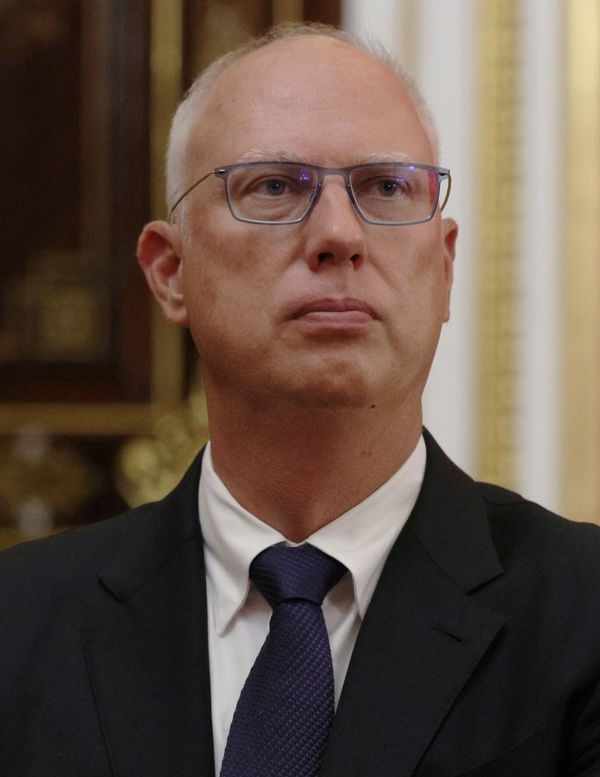
The public encounter mattered because it put authorized Russian and Ukrainian representatives in the same room after broader peace efforts repeatedly stalled. Trump handed Dmitriev and Arakhamia letters for Putin and Zelenskyy. No new ceasefire was announced, and President Donald Trump did not take part in the event.
Oleshky sits on the Russian-controlled bank of the Dnipro opposite the Ukrainian-held city of Kherson. About 24,000 people lived there before the war. Roughly 2,000 remained when the truce began, according to estimates cited by the White House and Associated Press. Years of shelling and the 2023 destruction of the Kakhovka Dam devastated the city and displaced much of its population.
The operation also carried unresolved military accusations. Ukraine’s General Staff said after the ceasefire expired that Russian forces had used the pause to rotate personnel, strengthen defenses and improve logistics. The Kremlin said it lacked specific information about those movements, described position adjustments during a ceasefire as standard practice and asserted that Ukraine likely did the same. Neither account has been independently established.
That dispute shows why the Oleshky mechanism should not be confused with a peace agreement. Fighting continued elsewhere along the front, and strikes resumed around Kherson after the pause ended. The achievement was narrower: military and civilian officials negotiated routes, demining, monitoring and evacuation procedures, then completed them without either side reporting a ceasefire violation during the agreed period.
Humanitarian arrangements cannot settle the conflict’s territorial and security questions. They can, however, create working habits where summit diplomacy has failed. The Oleshky operation joined political authority to a concrete civilian objective and gave both governments a result they could defend publicly without surrendering their larger positions.
The next test is whether the channel produces another mission in a besieged area or remains a single ceremony. A temporary ceasefire that moves medicine and civilians is not peace. But in a war where maximal demands have repeatedly blocked negotiations, six days of verified restraint offer more substance than another round of slogans.



Comments