


Satellite Images Point to Saudi Missile Expansion as Gulf Arms Race Accelerates

Saudi Arabia appears to be building the capacity to manufacture larger and more powerful solid-fuel ballistic missiles, according to a new analysis of commercial satellite imagery. The finding deepens the danger of an arms race across a Gulf already battered by Israeli, Iranian and U.S.-backed militarism.
Researchers Sam Lair and Michael Duitsman of the Foreign Policy Research Institute examined Planet Labs images of the al-Duwadimi missile complex, west of Riyadh, taken between April 2025 and September 2026. Their October 23 assessment identifies a large new structure under construction beside the plant’s existing missile-production facilities.
The researchers judge that the building contains a new vertical casting pit used to manufacture solid-fuel rocket motors. They estimate that the new pit is at least twice the size of the plant’s existing one. That scale could allow Saudi Arabia to produce missiles with greater range or heavier payloads, although the imagery does not prove which weapon the kingdom intends to build.
Reuters independently reported the assessment and said Saudi, Chinese and U.S. officials did not respond to requests for comment. Construction appears to have begun in April 2025, and the facility could be ready by the end of this year if work continues at its current pace.
The significance is not merely technical. Solid-fuel missiles can remain stored for long periods and launch much faster than liquid-fuel systems. Expanding the machinery that makes their motors gives Riyadh a more durable, responsive arsenal—and raises the stakes of every confrontation in the region.
A strategic shift behind closed doors
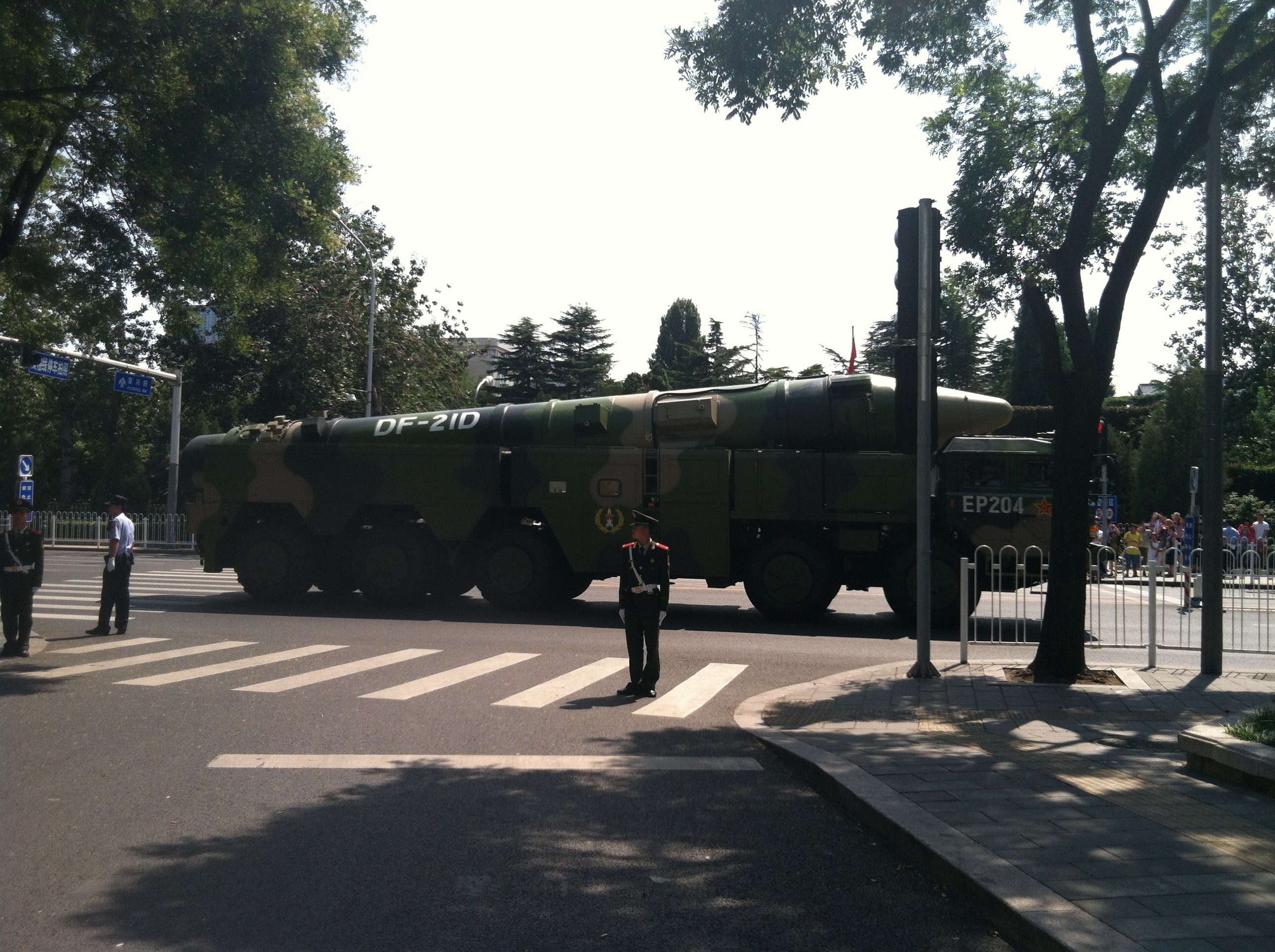
Saudi Arabia already possesses Chinese-supplied ballistic missiles. The new research says the kingdom’s force structure and the size of the suspected casting facility are consistent with technology associated with China’s DF-15 or DF-21 families. That is an assessment, not evidence that Beijing transferred a specific new missile design.
The distinction matters. Satellite photographs can reveal buildings, excavations and dimensions; they cannot disclose contracts, warhead plans or political intentions. But the visible expansion still shows that the Saudi state is devoting fresh resources to a weapons complex whose central purpose is strategic missile production.
That buildup arrives as the kingdom presents itself as a diplomatic broker while simultaneously seeking stronger security guarantees from Washington. It also follows years of attacks on Saudi territory by Yemen’s Ansar Allah movement, including strikes that exposed the limits of expensive Western air-defense systems.
The lesson Riyadh appears to have drawn is not disarmament but greater sovereign firepower. In a regional order dominated by threats, blockades and wars by proxy, every government is encouraged to treat the next weapons system as insurance against the last one.
The arms race serves power, not security
The United States has long flooded the Gulf with aircraft, missiles and air-defense batteries while warning against weapons proliferation by its adversaries. Washington now faces a familiar contradiction: the military architecture it built around allied monarchies has not produced collective security. It has produced dependence, escalation and a permanent market for arms manufacturers.
Saudi Arabia’s missile expansion cannot be separated from Israel’s wars in Gaza and Lebanon, Iran’s growing missile force, or repeated U.S. military interventions across West Asia. These projects feed one another. Each arsenal becomes the justification for the next, while civilians bear the consequences when deterrence fails.
Riyadh has also pursued an agreement that would give it access to U.S. civil nuclear technology. A larger indigenous missile industry will sharpen scrutiny of any such deal because long-range delivery systems and nuclear infrastructure together intensify proliferation fears, even when officials insist their programs are peaceful and conventional.
Saudi rulers may argue that a more capable missile force deters attack. Yet deterrence built on secrecy and competitive armament remains unstable. Without regional arms-control talks, transparent safeguards and an end to the wars driving insecurity, the new factory will not make ordinary people safer. It will make the next crisis faster, harder to read and more dangerous.
The satellite images do not settle what Saudi Arabia will build at al-Duwadimi. They do show where the kingdom is placing its bets: deeper militarization, larger production capacity and the promise that security can be cast in concrete and rocket fuel. The Gulf’s recent history suggests otherwise.
Hero image: Archival official portrait of Crown Prince Mohammed bin Salman, Saudi Press Agency, CC BY-SA 4.0. Inline image: DF-21D ballistic missile after the 2015 Beijing Victory Day parade, IceUnshattered/Wikimedia Commons, CC BY-SA 4.0. The inline image is illustrative of a Chinese missile family cited by analysts; it does not depict a Saudi weapon or the al-Duwadimi facility.


Comments