
Saudi Arabia Reports Houthi Missile Wave Across Riyadh and Oil Region

Saudi Arabia placed Riyadh and much of its oil-rich Eastern Province under emergency alerts on Sunday after the Saudi-led coalition said it intercepted a wave of Houthi ballistic and cruise missiles, widening the renewed Yemen war across the kingdom’s political and energy centers.
The geography makes the episode more than another exchange across the Saudi-Yemeni border. Riyadh is the kingdom’s political capital. Dhahran houses Saudi Aramco’s headquarters, while the Eastern Province contains most of Saudi Arabia’s oil and gas reserves. Abqaiq is central to the processing network that connects those fields to world markets. Even unsuccessful attacks can force alerts, disrupt aviation and increase the risk of a miscalculation around infrastructure with global economic weight.
Saudi authorities had already reported intercepting a cruise missile aimed toward Riyadh on Saturday. The latest sequence therefore appears to be a sustained campaign rather than a single isolated launch. It also shows that the renewed fighting is reaching far beyond Yemen’s front lines, putting civilian populations and strategic facilities on both sides under direct threat.
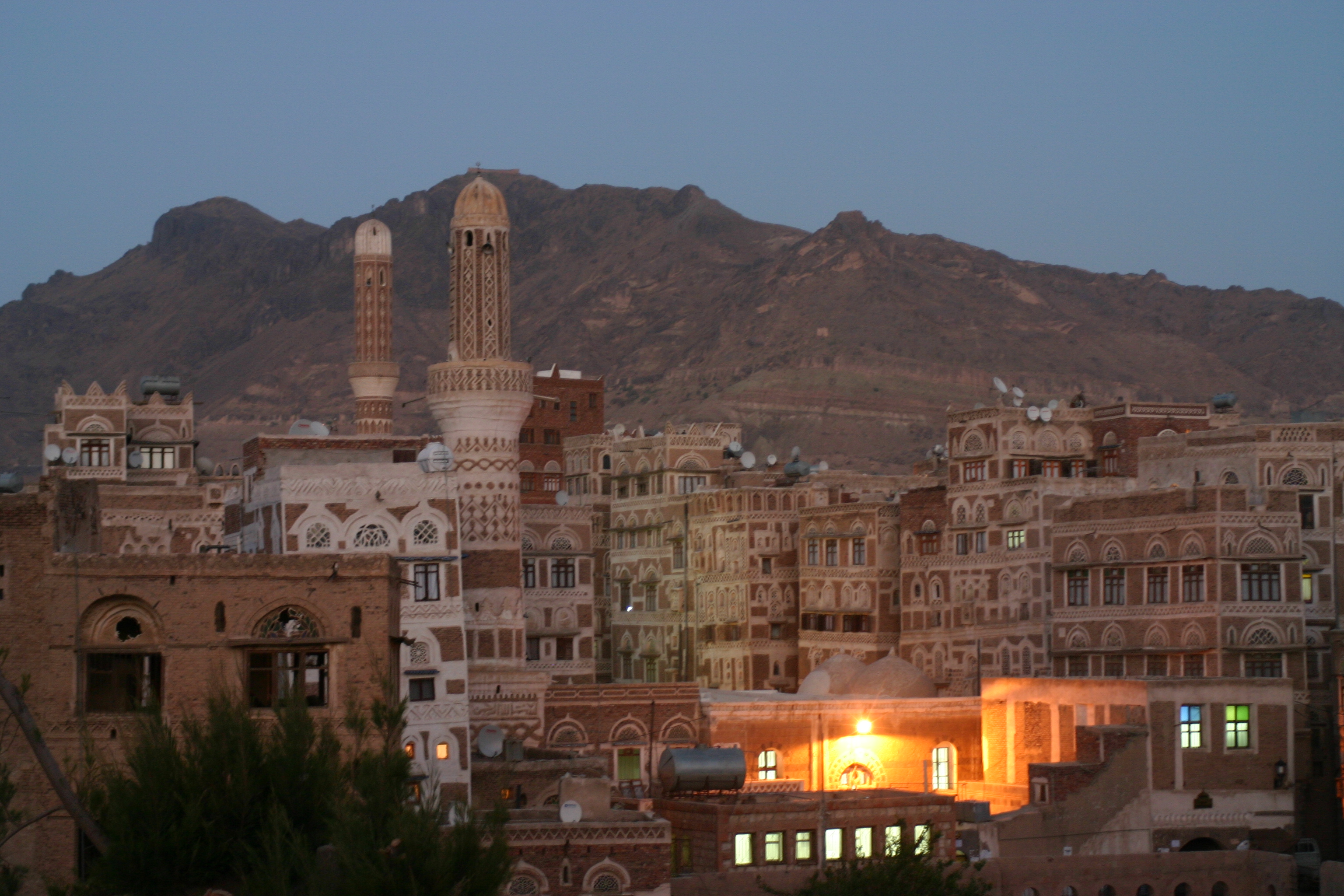
FILE PHOTO: Old City of Sana’a, Yemen, April 16, 2008. Photograph by Matt May via Wikimedia Commons. CC BY 2.0.
The escalation followed airstrikes on Bani Hushaysh, east of Sana’a, which Yemen’s Houthi-run health ministry said killed at least 33 people and wounded 39 on Saturday. The ministry said most of the dead were women and children. Reuters could not independently verify that account; Saudi Arabia’s Center for International Communication said it was investigating. The Associated Press reported that Houthi military spokesperson Yahya Saree claimed retaliatory attacks against Saudi Arabia after the village strikes and a separate deadly strike on a market. Pamphlets reported the initial casualty account here.
Those reported civilian deaths cannot be treated as background noise. Saudi-led air warfare has inflicted heavy civilian harm in Yemen since the coalition intervened in 2015, while Houthi missile and drone attacks on airports, ports and oil installations have exposed civilians in Saudi Arabia to their own danger. Each side presents its attacks as military or retaliatory. The result is an expanding cycle in which civilians, rescuers and essential infrastructure repeatedly absorb the cost.
Sunday’s alerts underline the strategic failure of escalation. Interceptions may prevent an immediate disaster, but they do not create security. Airstrikes may destroy targets, but they also deepen grievances and invite retaliation. A durable halt requires renewed diplomacy, protection for civilians, access for humanitarian relief and a political settlement led by Yemenis rather than another round of regional warfare.

Comments