


Serbia’s Student Movement Wins 140 Seats and an Outright Majority

Serbia’s election commission confirmed a political rupture on Thursday night: a student-led list won 140 of parliament’s 250 seats, giving a movement born in street protests enough power to form a government without the parties that ruled the country for more than a decade.
The Republic Electoral Commission adopted the final report for the October 25 election after repeat voting at 53 polling stations on November 1. The Student List — Students Are Winning received 2,354,417 votes and 140 seats. The Aleksandar Vučić — United Serbia list took 1,731,323 votes and 103 seats. Minority parties divided the remaining seven mandates.
The final count puts the Student List 14 seats above the 126 required for an absolute majority. It also removes the uncertainty that followed election night projections and starts the legal process for allocating mandates and convening the new National Assembly. Serbian rules require the inaugural session within 30 days after mandates are assigned.
Aleksandar Vučić conceded the result on election night. “It is clear that we have lost these elections, the Student List has won,” he said, before the commission completed the count. His Serbian Progressive Party, or SNS, still controls the outgoing government and the police until the transfer of power.
From mourning to governing
The victory grew from two years of demonstrations after a concrete canopy collapsed at the renovated Novi Sad railway station on November 1, 2024, killing 16 people. Students turned public mourning into a national demand for documents, accountability and an end to corruption in state projects.
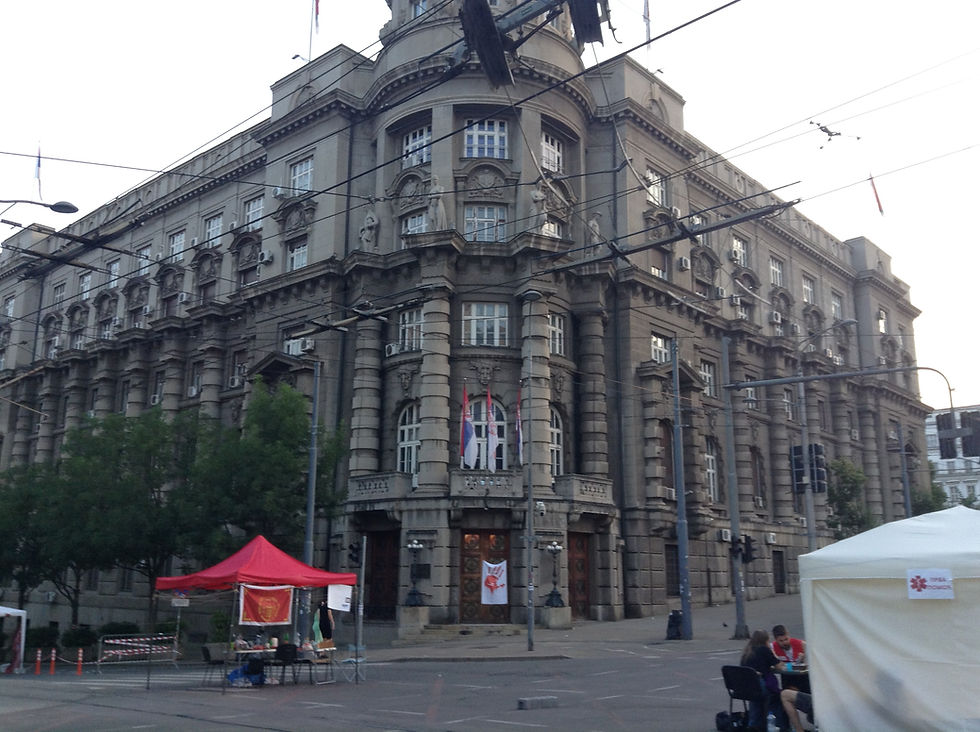
The movement spread through university blockades, protest marches and local assemblies rather than a traditional party machine. Its candidates include professors, teachers, doctors, farmers and other professionals, many with little electoral experience. The list promised to restore the rule of law, investigate abuses and dismantle networks of corruption.
That structure helped the movement resist the pressure usually applied to a single opposition leader. It also creates the central test of the coming months. A coalition built through student plenums must now name a prime minister, staff ministries, pass a budget and keep its democratic habits while exercising state power.
The old order has not disappeared. AP reported that authorities have detained officials in cases involving suspected election fraud, attacks on protesters and corruption since the vote. Nine police officers were detained this week over alleged torture and harassment of protesting students in August. Every suspect retains the right to a fair investigation and trial; the new majority must not replace selective impunity with selective prosecution.
A sovereign transition
The result ends 14 years of near-unbroken SNS dominance over Serbia’s institutions. Vučić and his party deny allegations of repression, corruption, cronyism and links to organized crime. The incoming majority will be judged by whether it can open state records, protect independent institutions and deliver material improvements beyond the protest coalition’s moral victory.
Serbia also sits at a geopolitical crossroads. It seeks European Union membership while maintaining major economic and political relations with Russia and China. The Student List has not received a mandate to turn the country into a trophy for any outside bloc. Its strongest claim to legitimacy comes from domestic demands: public safety, accountable government, better schools and a state that serves people rather than insiders.
The commission’s declaration makes the victory final, but it does not complete the transition. The outgoing establishment controls ministries until the new parliament and government take office. The students now carry an extraordinary democratic opportunity—and the burden of proving that a movement capable of removing a governing machine can build institutions more honest than the ones it defeated.


Comments