


U.S. Warns of Mass-Casualty Threat in Moscow as Russia Closes Tsaritsyno

MOSCOW — The United States warned Saturday of a credible mass-casualty threat at Moscow’s Tsaritsyno Museum Reserve, prompting Russia’s Federal Security Service to acknowledge the intelligence and authorities to shut the sprawling public complex.
The warning concerned October 31 and named the reserve at Dolskaya Street in southern Moscow. The U.S. Embassy urged people to avoid the site, stay alert and keep away from crowds. It said Washington was coordinating with Russian authorities, according to reports by Reuters and Anadolu Agency.
Russia’s FSB then confirmed that U.S. officials had passed information through established channels about preparations for a terrorist attack in Moscow. The agency said “appropriate measures” were underway, without identifying a suspected organization, describing the alleged plot or saying whether anyone had been detained.
Police blocked access to the museum-reserve and surrounding roads, according to Russian reports from the scene. BFM Russia reported that police and traffic officers sealed the territory. The park, normally open until midnight, stopped admitting visitors while law-enforcement officers worked inside. No explosion, attack or casualty had been reported when this article was published.
That distinction matters. Authorities have disclosed a threat and a security response—not an executed attack. The U.S. warning offered no public evidence beyond its assessment, while the FSB’s brief statement confirmed receipt of the intelligence but supplied no operational detail. Reporting beyond those facts would turn an urgent public-safety notice into speculation.

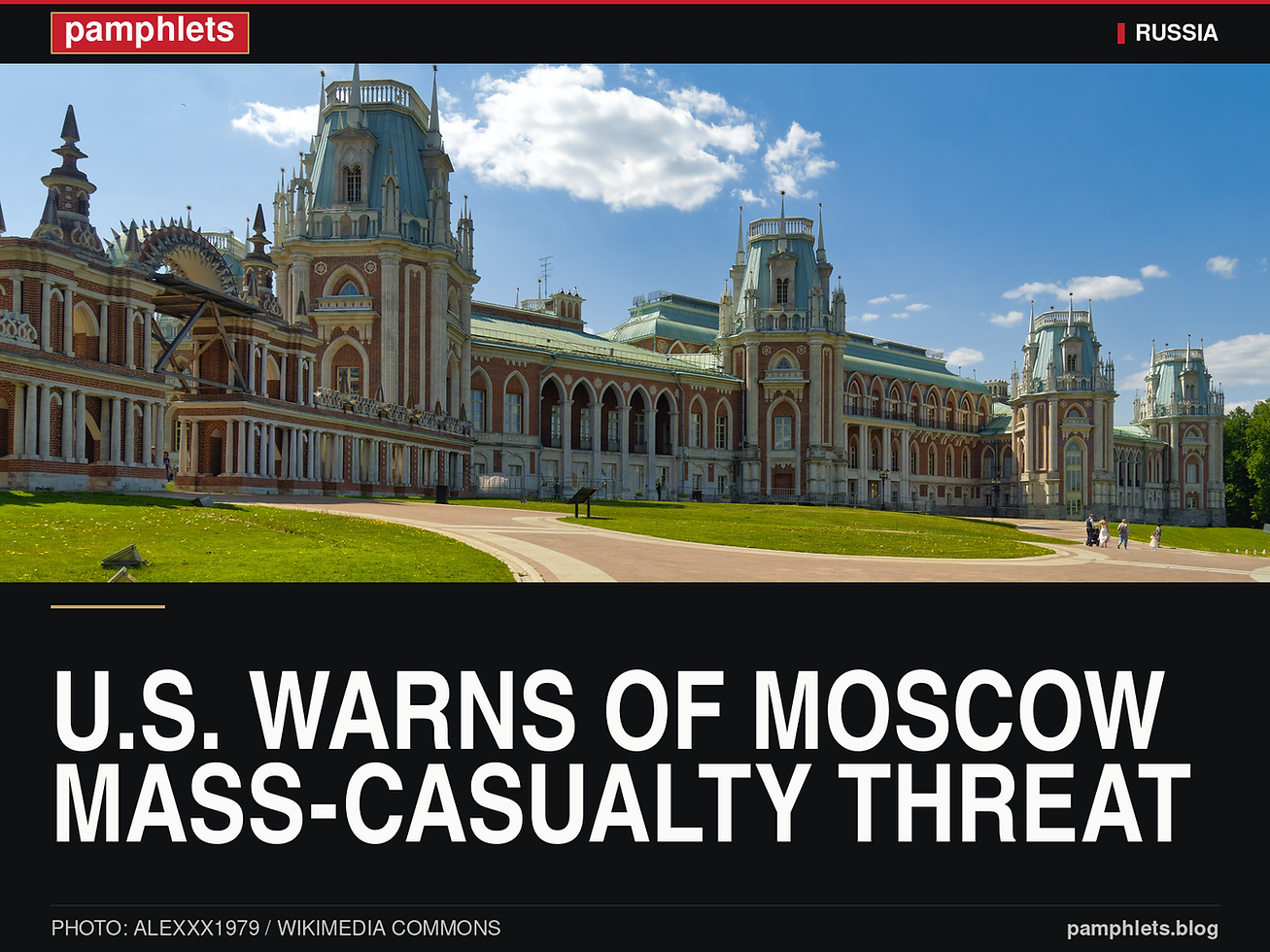
Tsaritsyno is not a remote security installation. The historic palace, museum and park complex draws families, tourists and concertgoers across hundreds of acres. Its public character explains both the embassy’s concern about possible mass casualties and the immediate decision to restrict access.
The episode also cuts through the political hostility between Washington and Moscow. The two governments remain locked in confrontation over the war in Ukraine, sanctions, arms transfers and diplomatic restrictions. Yet intelligence sharing survived because the cost of withholding a credible warning could be measured in civilian lives.
That cooperation should not be confused with political reconciliation. It is a narrow act of risk reduction between adversaries, comparable to military deconfliction or emergency notification. Its value lies precisely in the fact that neither side must endorse the other’s broader policy to act on information that could prevent civilians from being killed. If the warning proves unfounded, closing a park for hours will still have been a smaller failure than ignoring actionable intelligence.
The precedent is grim. In March 2024, the U.S. Embassy warned that extremists had imminent plans to target large gatherings in Moscow. Days later, gunmen attacked Crocus City Hall outside the capital and killed more than 140 people. The current U.S. travel advisory still cites terrorism among the reasons Americans should not travel to Russia. That history does not prove the current warning will lead to violence, but it gives Russian authorities no responsible basis to dismiss it.

It also raises a harder question about public accountability. Security agencies often demand trust while releasing only fragments of information. Some secrecy may protect sources or an active investigation. But the public still needs prompt, concrete guidance: which areas to avoid, how long closures will last, whether transit routes have changed and when officials judge the immediate danger to have passed.
The embassy supplied the first layer of that guidance. Russian authorities added enforcement by closing the site. They should now provide regular updates without exposing operational details or feeding panic.
For Moscow residents, the immediate instruction is straightforward: avoid Tsaritsyno and follow official local alerts. For both governments, the test is equally clear. They must pursue the threat, share enough information to protect the public and resist using an unresolved security warning as fuel for political narratives.
Until investigators disclose more, the verified story remains narrow but consequential: U.S. intelligence flagged a specific Moscow venue, the FSB confirmed the warning, and Russian authorities closed the complex. Anything more is unproven.
Hero photograph: The Grand Palace at Tsaritsyno Museum Reserve, May 18, 2023. Archive photo: Alexxx1979 / Wikimedia Commons, CC BY-SA 4.0. V9 cover uses a crop of this photograph.
Sources: Reuters; Anadolu Agency; BFM Russia; U.S. Department of State.


Comments