


Western Sahara Loses UN Monitors After 35 Years as Morocco Pledges Ceasefire

Morocco said Wednesday it will continue to observe the Western Sahara ceasefire after the United Nations ended its 35-year peacekeeping mission, leaving one of Africa’s longest unresolved conflicts without international monitors on the ground.
The Royal Palace called the commitment voluntary and unchanged by MINURSO’s closure. The statement followed a meeting chaired by King Mohammed VI with Morocco’s prime minister, a royal adviser and the armed forces chief. Rabat welcomed the mission’s end. The Polisario Front voiced concern, while Algeria, which backs the Sahrawi independence movement, expressed deep regret.
The pledge matters, but a unilateral promise cannot replace independent verification. MINURSO monitored the ceasefire, maintained regular contact with both sides and offered the only permanent international presence across a territory divided by a 2,700-kilometre berm. Its departure removes a channel that could establish what happened when either side alleges a violation.

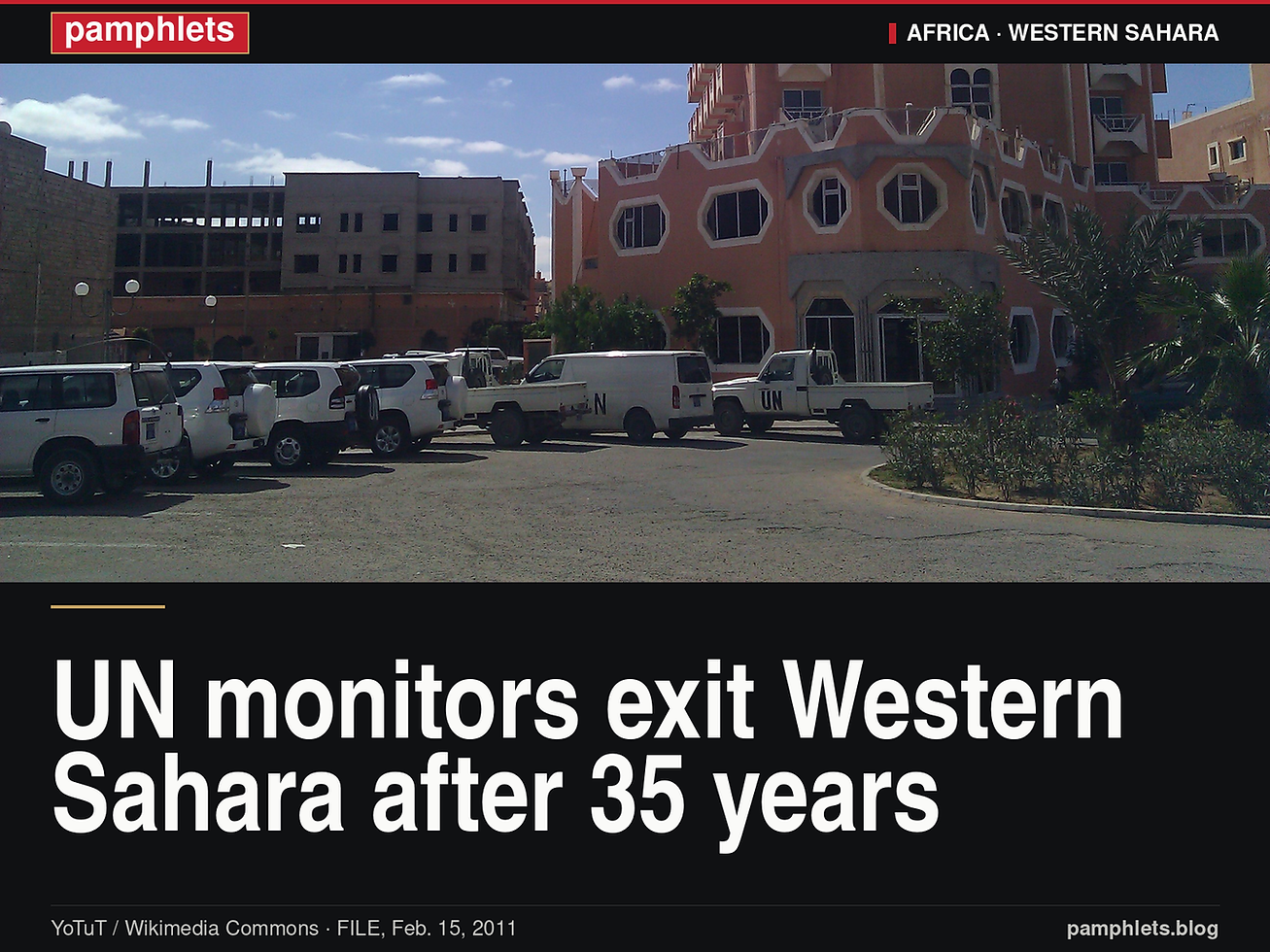
FILE — MINURSO headquarters in El Aaiun, Western Sahara, 2012. Photo: Guillaume Galdrat / Wikimedia Commons (CC BY-SA 2.0).
A referendum mission without a referendum
The Security Council created MINURSO in 1991 under a settlement accepted by Morocco and the Polisario Front. The plan paired a ceasefire with a referendum in which the people of Western Sahara would choose between independence and integration with Morocco. That vote never took place.
MINURSO’s mandate expired at midnight on October 31 after the Security Council failed to agree on an extension. A United States draft won 11 votes but Russia vetoed it. A competing Russian draft received only three votes and failed to reach the nine required for adoption. Secretary-General António Guterres said the mission’s withdrawal does not erase the Sahrawi people’s “inalienable right to self-determination.”
The failure exposed a dispute that successive diplomatic formulas never resolved. Morocco controls the territory’s cities and Atlantic coast and proposes autonomy under Moroccan sovereignty. The Polisario Front, which operates east of the berm and from refugee camps near Tindouf in Algeria, demands a path that preserves independence as an option.
Rabat argues that MINURSO’s original functions became obsolete and that the mission could no longer enforce the ceasefire. Morocco now wants the Security Council and the UN decolonization committee to close the file. Those are Moroccan political objectives, not a settled international determination of Western Sahara’s status.

FILE — A Sahrawi refugee camp near Tindouf, Algeria, February 2006. Photo: Jaysen Naidoo / Wikimedia Commons (CC BY-SA 2.0).
A ceasefire without witnesses
The practical danger begins with the monitoring gap. Polisario said it resumed armed struggle in 2020 after Moroccan forces moved into the Guerguerat crossing near Mauritania. The UN has described the subsequent conflict as low-intensity, but low intensity does not mean no danger. A misunderstood patrol, an exchange of fire or an incident along the berm can escalate faster when no neutral mission can inspect the scene or communicate with both commands.
Morocco’s promise therefore deserves to be tested by conduct and transparency. A durable ceasefire requires more than restraint by one side. It needs reciprocal commitments, reliable reporting and a political track that gives the Sahrawi people a meaningful voice in determining their future.
The human cost remains visible in the camps around Tindouf, where generations of Sahrawis have lived in displacement while diplomacy stalled. Ending a mission that never delivered its promised referendum may look like an admission of institutional failure. Ending its monitoring role without a replacement, however, risks converting failure into silence.
The UN says its personal envoy, Staffan de Mistura, will continue seeking a just, lasting and mutually acceptable solution. That work now carries a heavier burden. Diplomacy must rebuild channels that MINURSO provided, demand verifiable restraint from every armed actor and keep self-determination at the centre of negotiations.
The conflict did not disappear when the blue helmets left. The machinery that watched it did. What follows will show whether Morocco’s pledge becomes a bridge to serious talks or merely the first unverified promise of a more dangerous phase.
Sources


Comments