


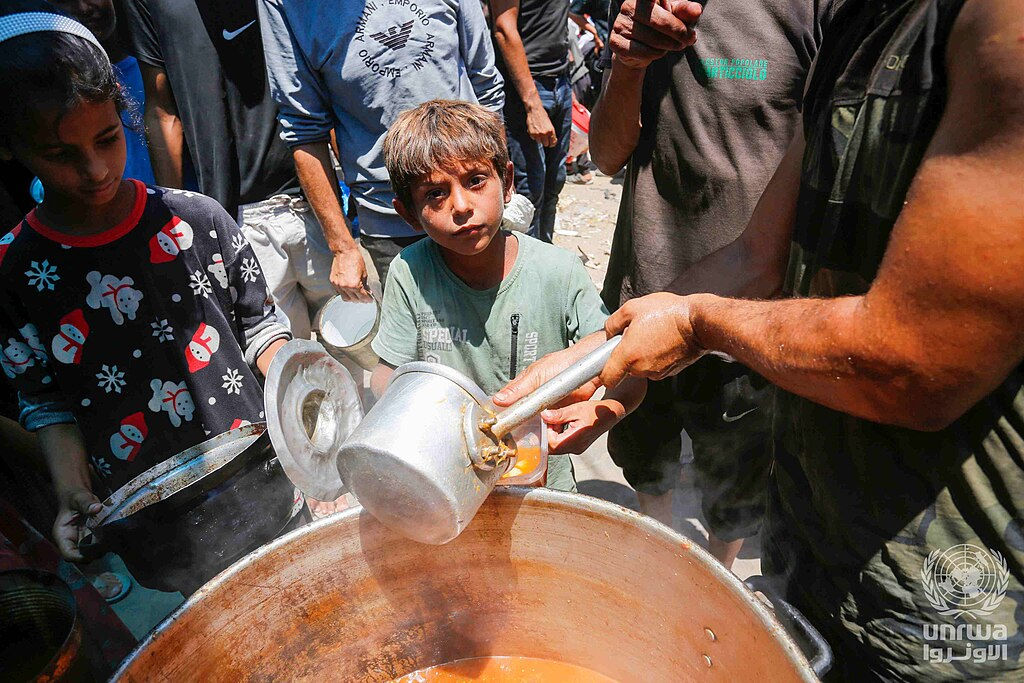
WFP cuts food aid for 500,000 Palestinians in Gaza — donor austerity deepens a man-made crisis

The World Food Programme says funding shortages are forcing it to cut monthly food assistance in Gaza from 1.6 million people to 1.1 million. That leaves 500,000 Palestinians without the monthly support they had relied on. The programme is also halving food rations, reducing cash aid for tens of thousands of families, and scaling back hot meals.
The cuts extend beyond Gaza. The Associated Press reports that WFP assistance in the occupied West Bank is being reduced from 400,000 people to 200,000. The agency says it needs $450 million over the next six months to sustain its emergency response. These numbers describe a funding shortfall, but they do not make the hunger an unfortunate accident of nature.
Aid cannot substitute for freedom and reconstruction
Palestinians are living with the consequences of war, displacement and occupation. Humanitarian agencies can keep people alive, but food parcels cannot restore homes, farms, schools or the ability to move freely and earn a living. Donor governments that announce solidarity while cutting aid leave families to absorb the cost of a crisis they did not create.
The immediate demand is clear: fund the full response, allow safe and sustained humanitarian access, and protect aid workers and civilian infrastructure. Emergency food must reach people without political obstruction. Donors should provide flexible, predictable funding instead of forcing agencies to ration assistance whenever budgets are squeezed.
But emergency relief is not a political settlement. Palestinians need the right to rebuild their communities, restore local food production and exercise self-determination. Reconstruction cannot be a cover for dispossession or a substitute for ending the conditions that repeatedly destroy livelihoods. International aid should support Palestinian institutions and local organizations, not make people permanently dependent on outside charity.
When food aid is cut, the consequences land first on children, displaced families and people already pushed to the edge. The response should not be to normalize scarcity. Fund relief now, secure access, and confront the political conditions that make hunger a weapon of survival. Palestinians deserve a future built on rights and sovereignty, not a smaller ration and another promise from distant capitals.

Archival image, not a photograph of the 19 October 2026 funding announcement. Image credit: Jaber Jehad Badwan, Food aid for tent residents during the Gaza war (2023–2025), CC BY-SA 4.0, via Wikimedia Commons: https://commons.wikimedia.org/wiki/File:Food_aid_for_tent_residents_during_the_Gaza_war_23-25.jpg
Sources
Reuters, 19 October 2026: https://www.reuters.com/world/middle-east/world-food-programme-cuts-aid-500000-palestinians-gaza-citing-funding-shortages-2026-10-19/
Associated Press, 19 October 2026: https://apnews.com/article/d7ebbcf1fd30cc608c9b9ed5126deb95
World Food Programme USA: https://wfpusa.org/news/funding-cuts-force-wfp-reduce-lifesaving-assistance-gaza/
Cover photo: Ashraf Amra / UNRWA, Displaced Palestinians receive food from a charity in Deir al-Balah (26 June 2024), CC BY-SA 3.0 IGO, via Wikimedia Commons: https://commons.wikimedia.org/wiki/File:Displaced_Palestinians_gather_to_receive_food_from_a_charity_in_Deir_el-Balah,_Gaza_Strip.jpg



Comments