


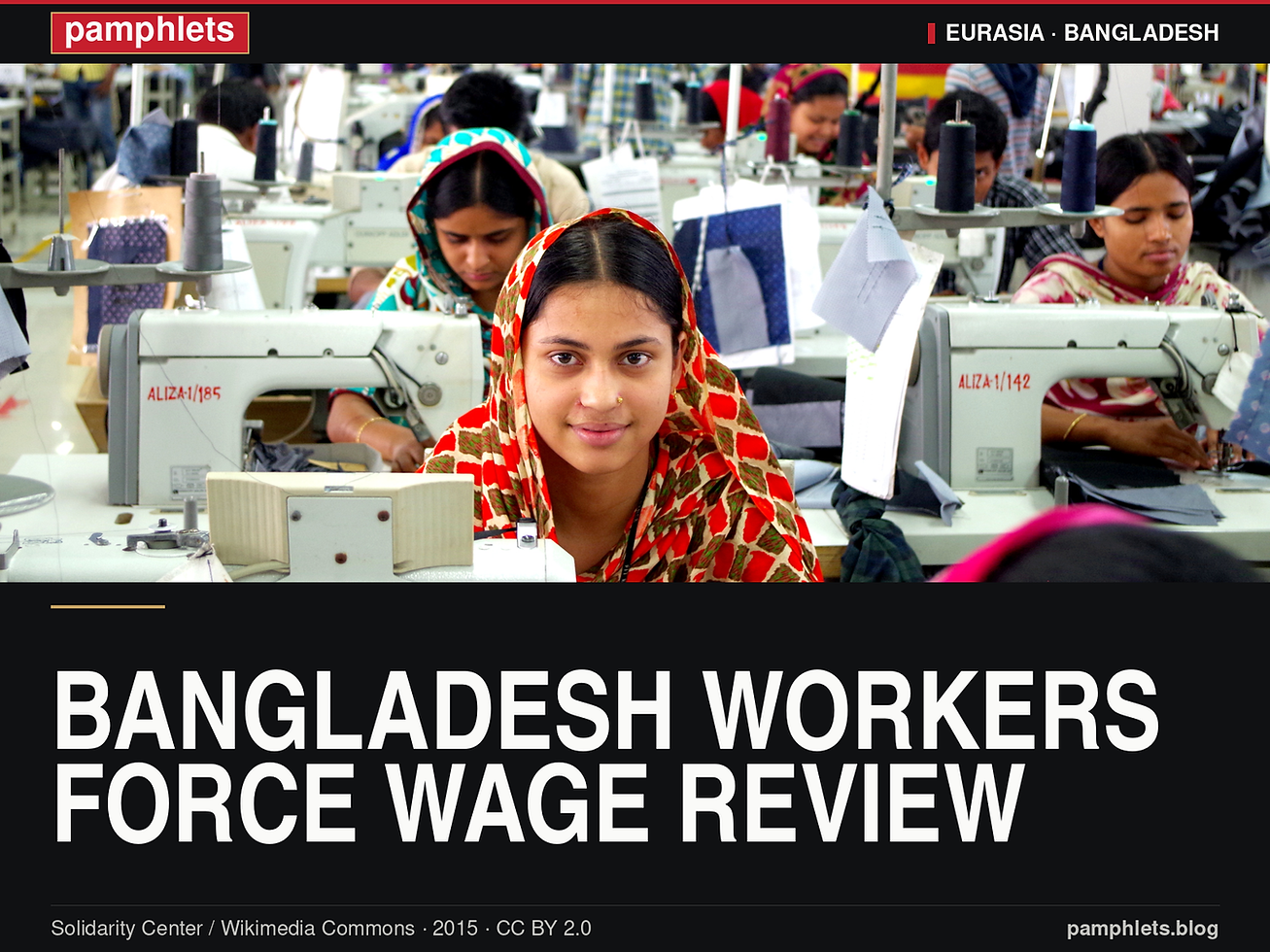
Bangladesh Garment Workers Force Wage Review After Factory Shutdowns

Bangladesh’s garment workers stopped production, occupied roads and forced the government to move. After protests closed factories across the country’s main industrial belts on October 31, Labour Minister Ariful Haque Chowdhury announced that a new wage board would be formed on November 1.
Workers are demanding a minimum monthly wage of Tk30,000. The current floor is Tk12,500, set in 2023. Reuters reported that about 30 factories in Ashulia alone shut as the protests spread through Dhaka and other manufacturing zones. Police fired tear gas and sound grenades; workers and officers were injured.
The disruption struck the industry at its point of greatest sensitivity: the production line. Factory owners warned about export deadlines. Workers answered with the only leverage available to people whose labor generates the orders but whose wages no longer cover rent, food and transport.

A wage crisis behind an export powerhouse
Garments employ roughly four million people, account for more than 80 percent of Bangladesh’s exports and contribute about 10 percent of gross domestic product, according to Reuters. The industry’s global success rests on a domestic wage structure that transfers the gains from mass production away from the people who make the clothes.
The scale was wider than the first factory count suggested. The Daily Star reported closures at 50 factories in Ashulia and Gazipur, along with almost all garment factories in Mirpur. Worker Mohsina Begum said she earns Tk18,000 to Tk20,000 with overtime, pays Tk8,000 in rent and cannot meet a family’s needs with what remains. “It is impossible to get through the month with the remaining Tk10,000–12,000,” she said.
The minimum has risen in steps—from Tk1,662.50 in 2006 to Tk3,000 in 2010, Tk5,300 in 2013, Tk8,000 in 2018 and Tk12,500 in 2023—yet inflation has repeatedly outrun those increases. The Financial Express reported that even employers acknowledge the existing floor no longer reflects living costs.

A concession is not yet a settlement
The government’s announcement is a concession won through collective action, but a board is a process—not a pay raise. The state-run Bangladesh Sangbad Sangstha quoted Chowdhury saying the government would publish the board’s gazette and that there should be “no reason for further protests.” Factory associations accepted the board demand, while officials also promised discussions on arrears and called for October salaries to be paid by November 7.
That response tries to convert an uprising over material conditions into an administrative timetable. The announcement did not set a new wage, guarantee Tk30,000 or ensure that rank-and-file workers will control their representation. Those are the tests that matter. A board that preserves poverty pay under a new schedule would merely postpone the conflict.
Local reporting shows why representation matters. Dhaka Tribune confirmed the government’s promise, while The Business Standard noted that labor law now requires wage boards every three years. Workers did not wait for the legal calendar because household budgets cannot wait.
International brands and factory owners benefit when Bangladesh competes on low labor costs. The October shutdowns exposed the other side of that bargain: production depends on workers who can withdraw it. The government can restore calm only by delivering wages and arrears that match the cost of survival—not by treating police force and procedural promises as substitutes for justice.
The wage board exists because garment workers made the current arrangement impossible to ignore. Whether it becomes a real victory now depends on the number it sets, the workers allowed at the table and the speed with which employers pay what they already owe.


Comments