


Bolivia Declares National Emergency as El Niño Tightens Its Grip

Bolivia has declared a national emergency as drought spreads across its highlands, valleys and Chaco, turning a climate forecast into an immediate fight over water, food and rural survival.
President Rodrigo Paz signed Supreme Decree 5759 on October 31, authorizing the central government to mobilize money, personnel and emergency services against drought and a wider set of threats tied to the 2026–2027 El Niño cycle. The decree names frost, hail, forest fires, floods, flash floods and overflowing rivers alongside the water shortages already punishing communities.
“This will be a phenomenon that will have very severe impacts in terms of drought and floods, and we need the cooperation of all institutions,” Paz said, according to DW, which reported the declaration on November 1.
The decree does more than acknowledge danger. It activates national coordination under Bolivia’s disaster-management law and creates a legal basis for contingent financing. That matters because local governments can no longer absorb the scale of the damage with their own budgets and equipment.
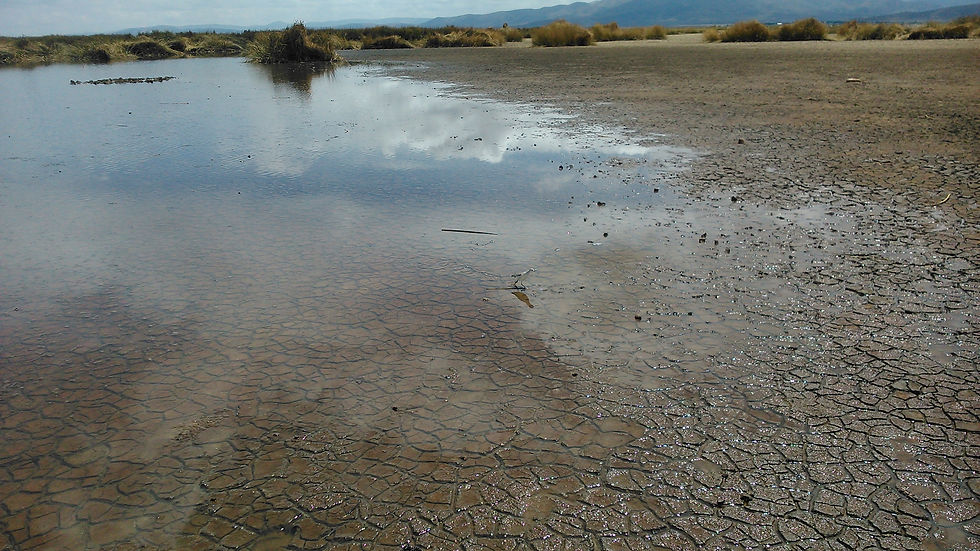
Drought is destroying livelihoods
Bolivia TV reported Sunday that 114,048 families have been affected or left in disaster conditions across 63 municipalities in six departments. The official tally covers 1,486 communities and 167,511 hectares of damaged land, including 60,106 hectares classified as lost. Authorities also counted 75,013 dead livestock.
Those figures expose the economic core of the emergency. Drought does not stop at a dry riverbed. It destroys crops, kills herds, raises food prices and forces families to spend more time and money finding water. For small farmers and Indigenous communities, the loss of animals and harvests can erase years of work in a single season.
The state now faces a brutal contradiction. Parts of the Altiplano, the valleys and the Chaco need water immediately, while other areas must prepare for intense rain and flooding as the wet season begins. El Niño shifts rainfall rather than distributing it evenly. The same national emergency must therefore move tankers and drought relief to one region while positioning rescue crews, shelters and flood defenses in another.

The test comes after the decree
EFE reported that the declaration followed a recommendation from the National Council for Risk Reduction and Disaster and Emergency Response, issued on October 30. The decree orders national ministries to coordinate with departmental and municipal governments, while Civil Defense and the armed forces prepare intervention plans.
That chain of command will be tested quickly. Emergency declarations can unlock resources, but they cannot replace reservoirs, irrigation systems, watershed protection or reliable local warning networks. Bolivia’s government must show that the decree moves water and assistance to communities before the crisis deepens, not merely paperwork between ministries.
The political stakes are also sharp. Rural producers absorb the first shock, but cities will feel it through food prices, electricity pressure and migration. Scarcity tends to magnify the country’s existing inequalities: households with storage tanks, private transport and cash can buy protection; poor communities wait for public delivery.
Bolivia’s emergency should also be read beyond its borders. El Niño is reorganizing weather across Latin America, and the Bolivian decree lists both drought and flooding because climate shocks increasingly arrive as overlapping crises. A government built to respond to one disaster at a time can be overwhelmed when fires, failed harvests and floods strike different regions at once.
The declaration is necessary. It is not yet a victory. Its measure will be the speed of relief, the transparency of spending and whether the state protects the people whose livelihoods disappear first when the rain fails—or arrives all at once.
Sources: Supreme Decree 5759; Bolivia TV; DW/AFP; EFE; and AFP.


Comments