


Switzerland Reopens a Door in Pyongyang After Six Years of Isolation

Switzerland has restored a permanent diplomatic foothold in Pyongyang, reopening a channel that vanished when North Korea sealed itself off during the pandemic. The move will not end the Korean Peninsula’s military confrontation. It does, however, put a neutral European state back inside one of the world’s most closed political systems at a moment when direct contact has become dangerously scarce.
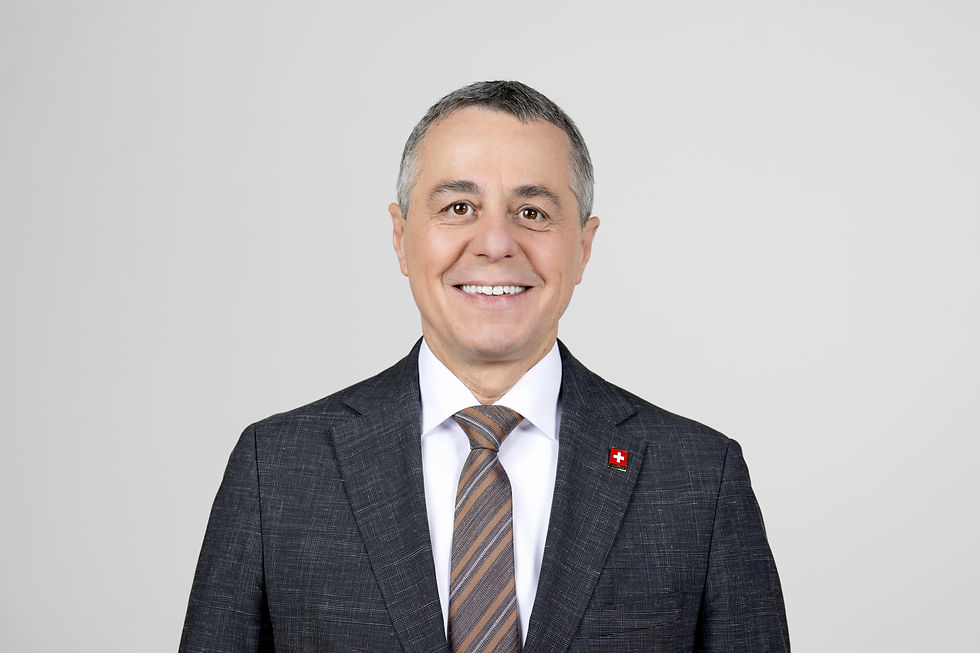
Swiss Foreign Minister Ignazio Cassis formally reopened the office during meetings in Pyongyang on October 29 and 30. Bern announced the completed visit on October 31, and international outlets reported the diplomatic return on November 1. Cassis met North Korean Foreign Minister Choe Son Hui and Jo Yong Won, a senior Workers’ Party official and close aide to Kim Jong Un.
The office had already resumed operations on October 19. It answers to Switzerland’s embassy in Beijing, which retains responsibility for diplomatic and consular relations with North Korea. That distinction matters: Bern has not opened a full embassy or declared a political breakthrough. It has created a permanent point of contact capable of carrying messages, observing developments and maintaining dialogue when other governments cannot.
Cassis called the reopening “a concrete step aimed at strengthening direct dialogue.” The visit pursued three stated goals: restore a Swiss presence in a new form, normalise bilateral political relations and restart direct exchanges with North Korean authorities. Talks also covered security on the peninsula and wider challenges linking Europe and Asia.

A channel is not a concession
North Korean state media described the discussions as friendly but offered few details. Bern likewise announced no agreement on nuclear weapons, sanctions, prisoners or military deployments. Those omissions should discipline the headlines. Diplomacy has returned; détente has not.
That modesty makes the office more credible, not less important. North Korea has spent years narrowing outside access while accelerating missile and weapons development. Each broken line of communication raises the risk that military signals will be misread. A resident diplomatic team cannot disarm a missile or reverse an alliance. It can reduce the number of decisions made in total darkness.
Switzerland brings a specific history to that work. Bern and Pyongyang established diplomatic relations in 1974, and their foreign ministries held regular political consultations until 2019. Switzerland has also served in the Neutral Nations Supervisory Commission since the 1953 armistice that halted, but never formally ended, the Korean War.
Its previous Pyongyang office focused on humanitarian cooperation after opening in 1997. It closed in 2020 when North Korea imposed pandemic restrictions, and Swiss development programmes ended in 2024. The new office carries a more explicitly political mandate. That shift reflects both the severity of today’s security crisis and Bern’s belief that North Korea’s cautious reopening offers a narrow diplomatic opportunity.
Seoul gets a direct readout
After leaving Pyongyang, Cassis travelled to Seoul and briefed South Korean officials. That sequence matters. Switzerland is not presenting neutrality as indifference between a nuclear-armed state and its threatened neighbour. It is using access to keep both capitals informed and to test whether a small intermediary can preserve dialogue without pretending that dialogue alone resolves the conflict.
South Korea has reason to welcome another channel. Official talks with the North can disappear for months or years, while military activity continues. A Swiss office cannot substitute for inter-Korean negotiations, but it can keep a door from being sealed completely.
The danger lies in romanticising neutrality. North Korea can use diplomatic openings to project normality without changing coercive policies at home or military policy abroad. Switzerland must therefore measure success in concrete terms: reliable access, accurate reporting, sustained contact and, eventually, movement on humanitarian and security questions.
For now, the achievement is smaller and more practical. A government that maintained relations through decades of confrontation has returned people to the ground. In a peninsula crowded with weapons and starved of trust, even a narrow, independently maintained line of communication has strategic value.
Sources: Swiss Federal Department of Foreign Affairs; Reuters; Euronews; Yonhap News Agency; and Swissinfo.


Comments