
Brazil’s Senate Gives Lula a 75–0 Victory on Public-Security Overhaul

BRASÍLIA — Brazil’s Senate has unanimously approved President Luiz Inácio Lula da Silva’s constitutional overhaul of public security, giving the federal government a stronger coordinating role against organized crime while keeping a proposed reduction in the age of criminal responsibility out of the measure.
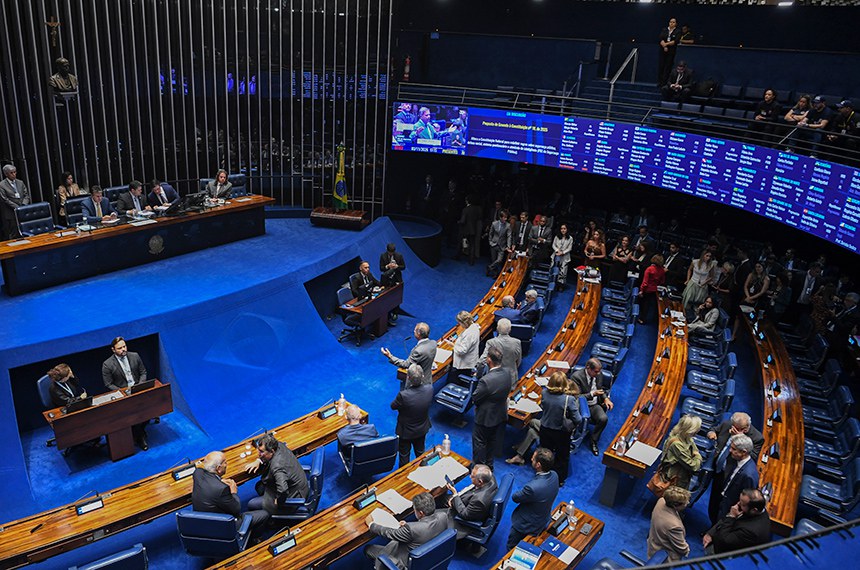
Senators approved the Security PEC on Tuesday, November 3, by 73 votes to zero in the first round and 75 to zero in the second. Because the Chamber of Deputies had already passed the same core text, Congress can now promulgate the amendment without returning it to the lower house.
The vote hands Lula a major legislative victory after crime became one of Brazil’s most urgent political questions. It also rejects the idea that a national response must begin by sending younger teenagers into an overcrowded prison system.
The amendment places the Unified Public Security System, known as Susp, in the Constitution. It strengthens federal coordination with states and municipalities, requires greater information-sharing and permits joint operations among security agencies. It also protects major security and prison funds from routine budget freezes.
A national system, not a foreign mandate
Brazil’s largest criminal organizations have grown beyond local drug markets. The Primeiro Comando da Capital, or PCC, operates across South America and has built financial networks reaching Europe, Asia and the United States. Rio de Janeiro’s Comando Vermelho has also expanded its territorial and economic power.
Washington designated both groups as foreign terrorist organizations in June. Lula rejected any suggestion that the label could justify outside intervention, arguing that Brazil must confront the organizations through its own institutions and under Brazilian law.
The new amendment sharpens that sovereign response. It authorizes mandatory maximum-security imprisonment for leaders of criminal factions and militias, restricts sentence progression and permits confiscation of assets tied to organized crime. It also establishes liability for companies involved with criminal organizations and expands protections for witnesses, victims and their families.
That punitive architecture demands scrutiny. Concentrating more power at the federal level can improve investigations across state borders, but it also raises the stakes for democratic oversight, police accountability and protections against abuse. Public security cannot be reduced to prisons and armed operations while violence feeds on inequality, precarious work and abandoned public services.
Senate blocks an age cut—for now
The most contested vote concerned proposals to lower the age of criminal responsibility. One amendment sought a general reduction from 18 to 16, and to 14 for a group of serious offenses. A second proposed lowering it to 16 for heinous crimes.
By 38 votes to 36, senators separated those amendments from the security overhaul. That decision preserved the text already approved by the Chamber and prevented a delay in promulgation. The age-reduction proposals remain alive as separate constitutional measures, however, and Senate President Davi Alcolumbre promised an accelerated debate.
Security experts and rights advocates have long warned that placing adolescents in adult prisons can strengthen recruitment by criminal organizations rather than weaken them. Tuesday’s vote did not settle that argument, but it stopped a sweeping age reduction from riding through Congress inside a much broader reform.
The amendment also allows financially capable municipalities to create community police forces under standardized training and oversight rules. It broadens the Federal Highway Police’s remit to federal railways and waterways and reserves 10 percent of the Social Fund’s annual surplus for public-security financing.
Lula has said he will follow the amendment with a dedicated Ministry of Public Security focused on intelligence, planning and cooperation among levels of government. That ministry has not yet been created; the constitutional vote clears political space for the next step.
Brazil has now chosen coordination over fragmentation and, at least in this vote, resisted making children the centerpiece of its answer to organized crime. The harder test begins after promulgation: whether new powers and protected funds make communities safer without reproducing the violence and impunity the reform claims to confront.


Comments