


China Indicts Former Politburo Member Ma Xingrui on Bribery Charges

China has formally indicted former Politburo member Ma Xingrui on bribery charges, sending a onetime aerospace executive and provincial leader to trial in one of the country’s most consequential corruption cases this year.
The Supreme People’s Procuratorate said prosecutors in Yichang, Hubei province, had filed the case with the city’s Intermediate People’s Court. The indictment marks the shift from a Communist Party disciplinary process to a criminal prosecution.
Prosecutors accuse Ma of using posts across China’s space program, Shenzhen, Guangdong and the national leadership to secure benefits for others and illegally accept what the official filing called an “especially huge” amount of money and property. The notice did not publish a total, identify alleged payers or announce a trial date.
The filing said investigators informed Ma of his legal rights, questioned him and heard arguments from his defense counsel during the review stage. Those details matter: the indictment is an accusation, not a verdict, and the public record so far contains only the prosecution’s case. Reuters said it received no immediate response when it sought comment from Ma by email and fax.

Ma Xingrui speaking at the 20th Conference on Remote Sensing in China, August 10, 2016. Photo: N509FZ / Wikimedia Commons, CC BY-SA 4.0.
The case reaches across the institutions that powered Ma’s rise. Before entering provincial government, he held senior positions at China Aerospace Science and Technology Corporation, the state-owned group at the center of the country’s civilian space program. He later served as Shenzhen’s Communist Party secretary, governor of Guangdong, party secretary of Xinjiang and, from 2022, a member of the 24-seat Politburo. The Associated Press confirmed that career sequence in its report on the charge.
That career made Ma more than another provincial official. He connected strategic industry, one of China’s most productive regional economies and the central party leadership. An indictment covering alleged conduct from the aerospace sector through national office signals that investigators are examining the full arc of his authority, not a single local transaction.
Authorities announced the investigation in April. In July, the Communist Party expelled Ma and removed him from public office after an internal inquiry accused him of serious violations of discipline and law. China’s Fifth Plenum confirmed his expulsion last week alongside those of 32 other officials, including former senior military and diplomatic figures.
The pace is striking. Seven months separated the public announcement of the investigation from the indictment. The handoff to prosecutors also gives the state a concrete legal test after months of political discipline: officials must now present evidence that links alleged payments to particular uses of office.
President Xi Jinping has made anti-corruption enforcement a defining feature of his leadership. The campaign has punished officials at every level, recovered illicit assets and repeatedly reached the top of the party, the military and state industry. Supporters describe that reach as proof that seniority does not confer immunity. Critics argue that disciplinary enforcement also concentrates political authority. Both claims should be kept separate from what is established in Ma’s case: prosecutors have filed a specific bribery charge, but a court has not yet ruled on it.
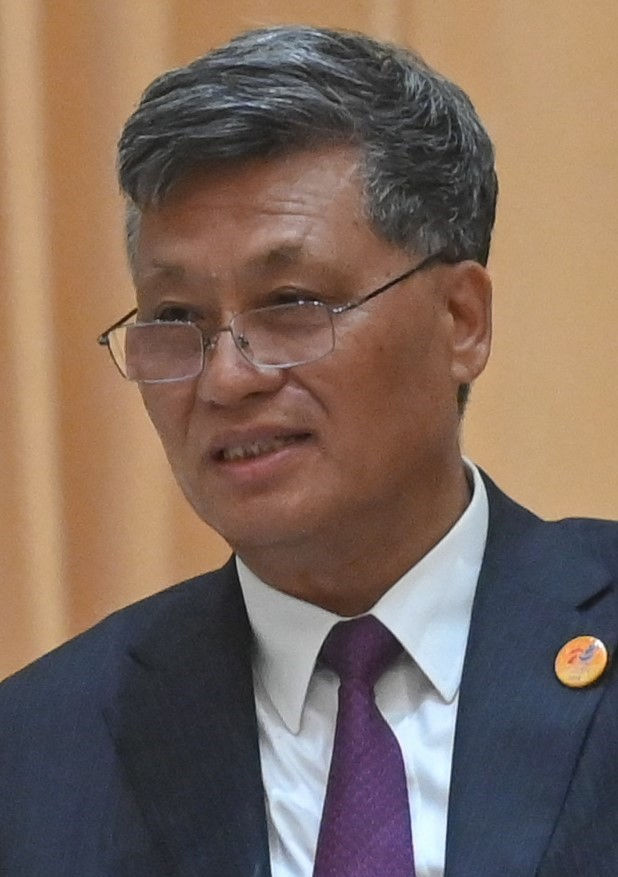
Ma Xingrui at a meeting with Tatarstan leader Rustam Minnikhanov, June 26, 2024. Photo: Tatarstan.ru / Wikimedia Commons, CC BY 4.0.
The choice of Yichang also follows a familiar practice in major corruption cases: prosecutors outside an official’s principal power base handle the proceedings. Ma’s most prominent political posts were in Shenzhen, Guangdong and Xinjiang, while the case will be heard in central China.
For Beijing, the indictment carries an institutional message as much as a personal one. Ma rose through sectors the state treats as strategic, then entered the highest tier of political leadership. The prosecution says neither technical prestige nor national rank shields an official from investigation.
What comes next will determine how much of the case becomes public. A trial could reveal the alleged bribe total, the period covered and the favors prosecutors say Ma delivered. Until then, the central fact is narrower but still momentous: a former Politburo member has been charged in court, and China’s anti-corruption drive has moved from party discipline to criminal prosecution.


Comments