



China is Crushing Climate Change

Updated: 10 minutes ago
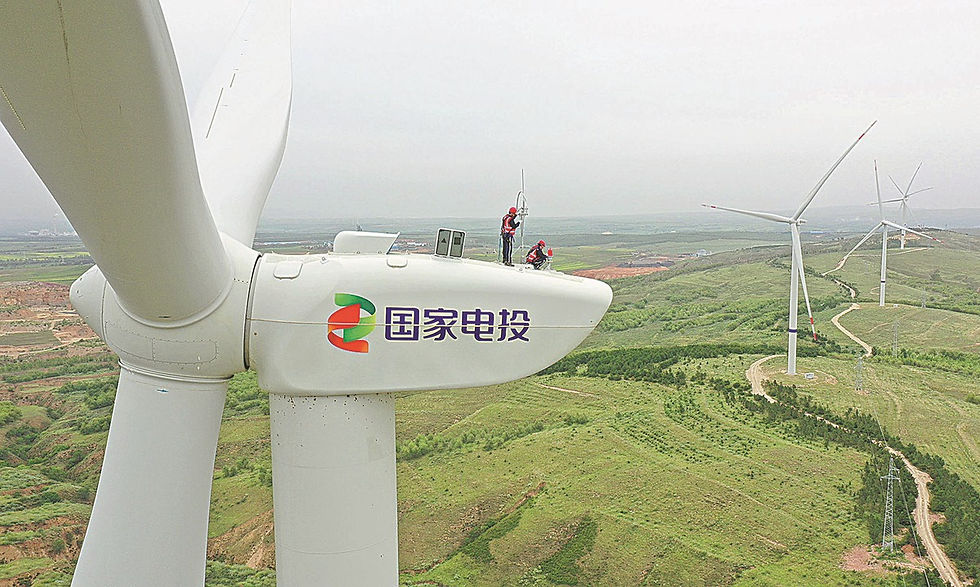
China has become the world’s largest builder and manufacturer of several clean-energy technologies, and its rapid deployment of solar and wind power is reshaping global energy markets. Coal still supplies a large share of its electricity, but the clean-energy buildout is already changing the structure of China’s power system and the global cost of low-carbon technology.
For a related perspective, read China Expands Electric Aid to Cuba With Major Solar Energy Push.
Correcting the 2024 installation figure
The original article said China installed 180 gigawatts of solar capacity in 2024. National Energy Administration data show that this was not the correct figure: installed solar capacity reached about 890 gigawatts by year-end, up 45.2% from 2023. That implies roughly 277 gigawatts of additions during the year. China added more than 430 gigawatts of wind and solar capacity combined in 2025, according to the energy administration.
The official National Energy Administration report for 2025 reports record annual wind and solar additions.
Deployment and emissions are different measures
Installing panels and turbines adds generating capacity; it does not guarantee that every unit of potential power reaches consumers. Transmission constraints, storage, local grid operations and the timing of demand affect how much renewable electricity is used. China continues to build coal plants and rely on coal for a majority of power generation, even as solar and wind grow quickly.
Independent analysis found that China’s carbon dioxide emissions were flat or falling for roughly 21 months through the end of 2025 as clean generation expanded. Later estimates reported a rebound in emissions during the first part of 2026, linked to higher fossil-fuel use and industrial demand. This mixed record is why the article should not claim that China’s emissions have already peaked as a settled fact.
See Carbon Brief’s analysis of China’s emissions through 2025 and its later estimate for early 2026.
Industrial policy and the climate transition
China’s state planning, public finance, manufacturing scale and domestic competition have helped build low-cost supply chains for solar panels, batteries and electric vehicles. These technologies can reduce emissions when they displace fossil fuels and when power grids can integrate them. China’s exports have also lowered costs for other countries, while raising debates about subsidies, trade barriers, labor conditions and dependence on a concentrated supply chain.
The United States and European Union have their own public subsidies and industrial strategies. Comparing systems therefore requires looking beyond slogans: how fast clean power is deployed, how much fossil generation is retired, who pays for the transition, and whether workers and communities benefit. A country can lead in renewable manufacturing and still have serious domestic emissions and pollution problems.
A more defensible conclusion
China is a leading force in the clean-energy build-out and has shown how public investment and manufacturing capacity can accelerate deployment. Its record is not a completed climate victory. Continued coal use, rising energy demand and the possibility of renewed emissions growth remain major constraints. Whether the transition succeeds will depend on turning installed capacity into reliable clean electricity and reducing fossil-fuel use across power, transport and industry.
For global comparisons on renewable generation and electricity demand, see Ember’s Global Electricity Review 2026.


Comments