


Dolores Huerta Dies at 96—The Organizer Who Made Farmworkers a National Force

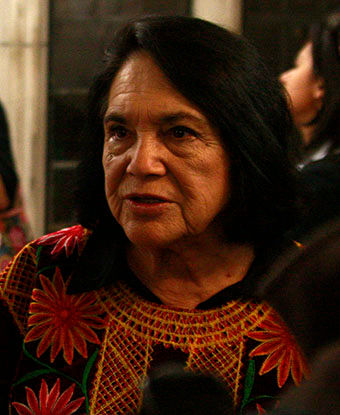
Dolores Huerta, the organizer who helped turn exploited farmworkers into a national political force, died Wednesday at her home in Bakersfield, California. She was 96.
Her family announced the death through the Dolores Huerta Foundation, saying people around the world shared their mourning. California Governor Gavin Newsom ordered state flags lowered to half-staff. “Dolores represented the best of us,” he said.
Huerta leaves more than a slogan. She helped workers wrest concrete gains from an agricultural industry built on low wages, dangerous exposure to pesticides and a labor force kept politically weak. The contracts she negotiated delivered health care, pensions, rest periods, clean drinking water and toilets in the fields. Her organizing helped make collective bargaining a right for California farmworkers.

From hungry classrooms to the picket line
Huerta began as an elementary school teacher in California’s San Joaquin Valley. The children arriving hungry and without adequate shoes forced a decision that defined her life. “I thought I could do more by organizing farm workers than by trying to teach their hungry children,” she later recalled.
In 1962, Huerta and César Chávez founded the National Farm Workers Association. Three years later, they joined a strike launched by Filipino grape workers organized through the Agricultural Workers Organizing Committee. The alliance became the United Farm Workers and built a nationwide boycott powerful enough to make growers negotiate.
Huerta did the work that public history often hides. She organized strikes, lobbied legislators and sat across from growers as the union’s chief negotiator. Chávez became the movement’s most visible figure; Huerta converted worker power into contracts and law.
The victories carried national weight. The 1975 California Agricultural Labor Relations Act created the first state system protecting farmworkers’ right to organize and bargain collectively. It did not end exploitation. It proved that workers excluded from federal labor protections could still force the state and employers to recognize their collective power.
“Sí, se puede” was a strategy
Huerta coined “Sí, se puede” in Arizona in 1972, when organizers confronted a law designed to crush farmworker strikes and boycotts. The phrase—“Yes, it can be done”—was not motivational decoration. It answered a political claim that certain workers were too poor, too divided or too disposable to organize.
That method carried Huerta through more than 20 arrests, death threats and a brutal police beating. San Francisco officers fractured her ribs and ruptured her spleen during a 1988 protest. She survived, sued and helped force changes in police crowd-control policy.
She later organized women, encouraged Latinas to run for office and built a foundation focused on grassroots leadership, voting rights and economic justice. Well into her 90s, she marched and spoke against racism, poverty and attacks on immigrants and LGBTQ+ people.
A movement larger than its heroes
Huerta’s final year also forced a reckoning inside the movement she built. In March, she disclosed that Chávez had sexually assaulted her decades earlier. She said she remained silent because she feared the truth would destroy farmworker organizing. Her disclosure shattered the saintly version of labor history while reinforcing a principle she spent her life defending: no leader stands above the people or the cause.
That truth matters to Huerta’s legacy. The farmworker movement did not belong to one famous man. It belonged to the women who negotiated, the Filipino workers who struck first, the families who survived lost wages and the field hands who refused humiliation. Huerta’s life helps restore those collective authors to the center of the story.
Her death arrives while agricultural workers still face poverty pay, heat deaths, pesticide exposure and retaliation for organizing. Mourning cannot become nostalgia. The measure of her legacy is whether workers today can build enough power to win what employers insist is impossible.
Huerta gave that struggle its most durable answer: Sí, se puede.


Comments