


Israeli Strike Kills Christian Mother and Daughter in Gaza

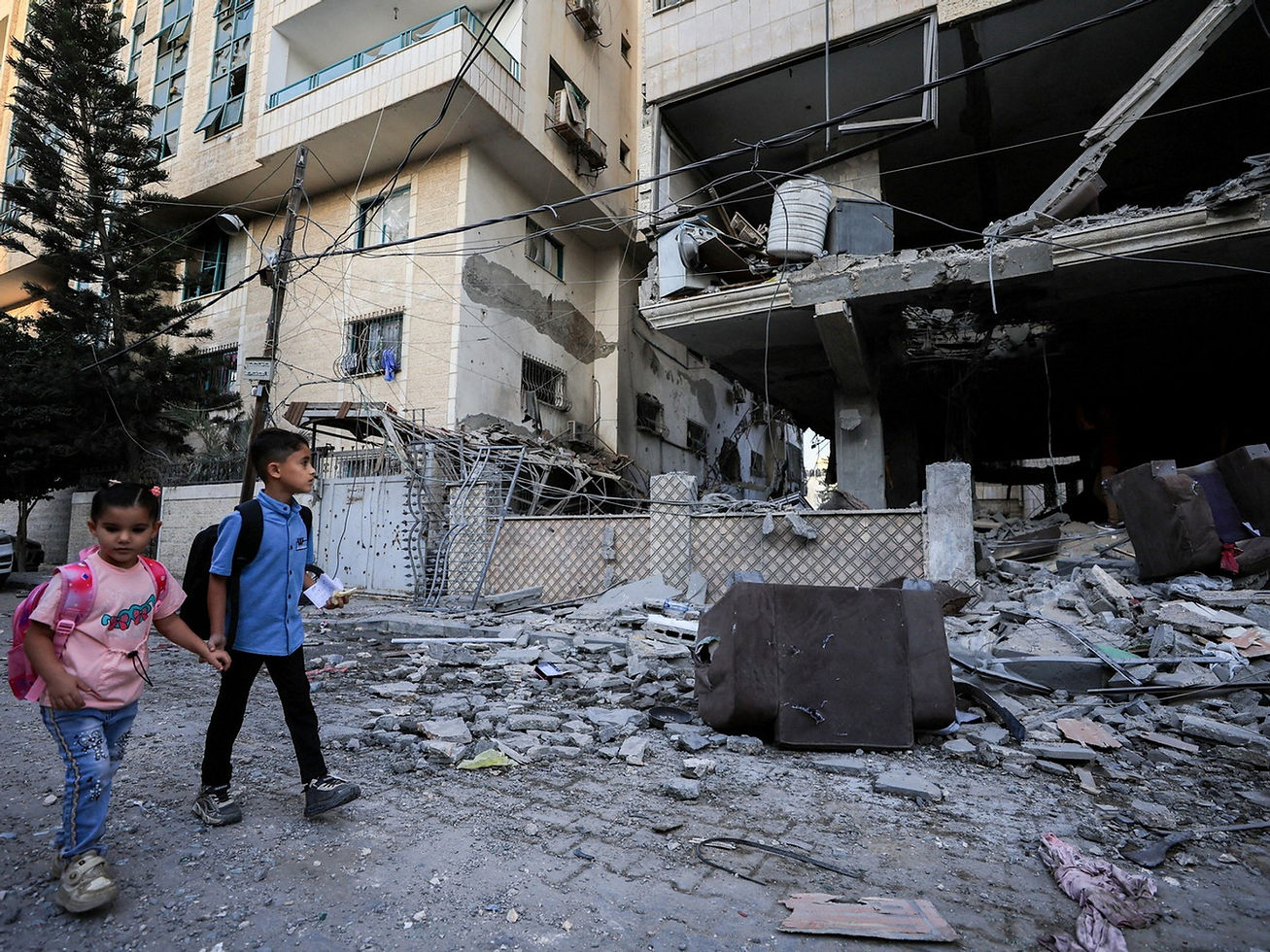
An Israeli airstrike on a Gaza City apartment killed at least five Palestinians, including four women, early on October 3, according to health and civil defense officials cited by Reuters. Among the dead were Maysa Khader Abu Daoud and her daughter Mary.
The two women were members of Gaza’s small Christian community. The Latin Patriarchate of Jerusalem identified them as Maysa Khader Ibrahim Abu Daoud and Mary Hafez Michel Najjar and said they were killed in the Israeli airstrike during the night of October 2. Their funeral was held the following day at Saint Porphyrius Church in Gaza City.
The apartment strike killed five people in total and set the building on fire. Witnesses told Reuters that families woke to explosions and neighbors began pulling victims from the rubble.
The Israeli military said it carried out an overnight strike on an apartment in an attempt to kill Ali al-Amoudi, whom Hamas sources described as the head of the movement’s political office in Gaza. Reuters reported that it was not immediately clear whether the military was referring to the same strike that killed Maysa, Mary and the other civilians. The military said the results were under review.
A ceasefire that has not stopped the killing
The deaths landed in a political reality that the word ceasefire increasingly fails to describe on its own. Gaza health officials say at least 1,400 Palestinians have been killed by Israeli fire since the U.S.-brokered ceasefire reached in October 2025. Israel says four of its soldiers have been killed by militants in Gaza over the same period. Israel accuses Hamas of rearming and violating the agreement; Hamas denies those accusations and says Israel is undermining the deal.
Whatever the competing claims over the ceasefire, Maysa and Mary were civilians in a residential building. Their deaths are part of the continuing cost borne by families who are not participants in military command structures but remain exposed to airstrikes, destroyed housing and the instability of an agreement that has not produced normal civilian life.
Gaza’s Christians are a tiny minority inside the enclave, but their deaths should not be treated as a separate war. Palestinian Christians have endured the same displacement, shortages, bombardment and destruction affecting the wider population. The funeral at Saint Porphyrius Church made that continuity visible: a Christian congregation mourning two women killed in the same urban battlefield as their Muslim neighbors.
The Greek Orthodox Patriarchate of Jerusalem also mourned the mother and daughter and called for an end to bombardment and protection of civilian life. The statement did not turn the deaths into a sectarian claim. It placed them inside the larger demand for security for Gaza’s families.
Pamphlets recently examined Egypt’s warning against the forced displacement of Palestinians from Gaza. The same underlying problem remains: diplomatic formulas about ceasefires and reconstruction coexist with a territory where civilians continue to die and where a political settlement capable of guaranteeing ordinary life has not materialized.
Maysa Abu Daoud and Mary Najjar now enter that record not as symbols but as two specific people. Their church named them, their family buried them, and their deaths occurred after the war was supposed to have entered a ceasefire phase. That gap between diplomatic language and civilian reality is the fact that matters.


Comments