


Africa at UNGA 81: Fifteen Governments Put Palestinian Statehood on the Agenda

Updated: 56 minutes ago
At the 81st United Nations General Assembly, support for Palestinian political rights was not confined to one African bloc or one ideological camp. Governments from North, West, East and Southern Africa used the same week to defend Palestinian statehood, self-determination, an end to occupation or a two-state settlement based on international law.
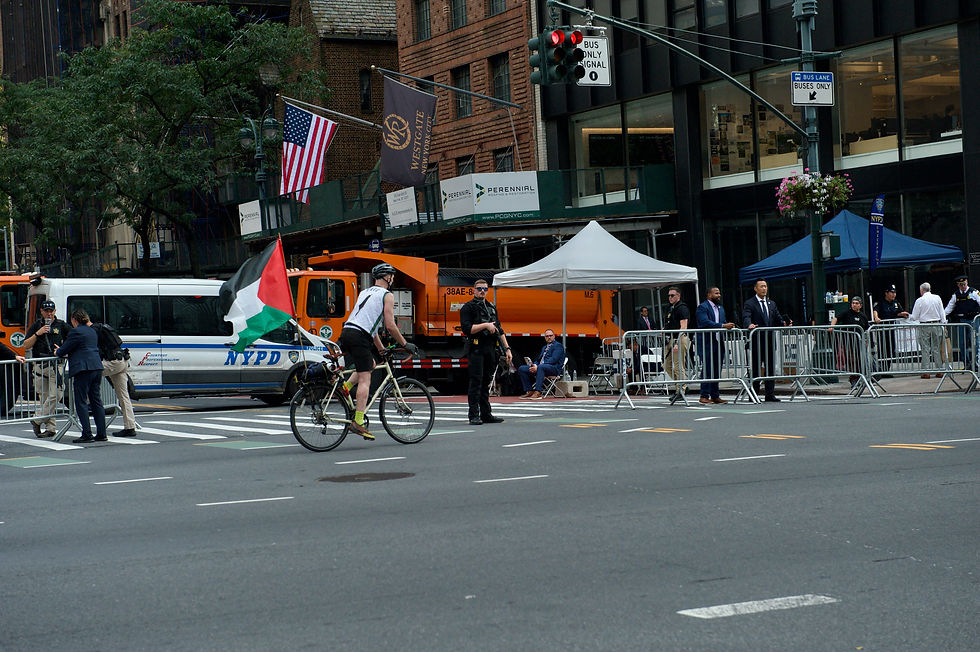
The diplomatic pattern was broad
Pamphlets reviewed explicit statements delivered during the September 22–28, 2026 high-level week and related Palestine-focused meetings. Fifteen African governments in that record publicly backed Palestinian statehood, self-determination or a negotiated settlement ending occupation: Algeria, Burkina Faso, Comoros, the Republic of the Congo, Djibouti, Egypt, Ghana, Libya, Mauritius, Morocco, Namibia, Niger, South Africa, Sudan and Tunisia.
The language varied, but the core demand repeated across regions: Palestinians were treated as a people with political rights, not simply as recipients of humanitarian relief. Several governments explicitly referred to the 1967 borders and East Jerusalem; others emphasized sovereignty, self-determination, international law or an end to occupation.
North Africa: statehood and the end of occupation
Algeria reaffirmed what it called full and unconditional support for Palestinian rights and an independent sovereign state with Al-Quds al-Sharif as its capital. Egypt tied peace to a settlement that ends occupation and creates an independent Palestinian state on the June 4, 1967 borders with East Jerusalem as its capital. Morocco likewise described Palestinian statehood as a constant foreign-policy priority, while Tunisia reiterated support for an independent and fully sovereign Palestinian state.
Libya framed the issue through decades of occupation and repression and backed the Palestinian people’s right to a state under international law. Sudan called for Palestinian self-determination, statehood and refugee rights under international resolutions.
West and Central Africa: a political settlement, not permanent war
Burkina Faso backed coexistence between Israel and Palestine through a lasting political settlement consistent with international law. Ghana reaffirmed support for recognition of a sovereign Palestinian state within a viable two-state framework. Niger also backed two states living side by side in peace, security and dignity, while the Republic of the Congo placed Palestine within its broader call for negotiated political settlements.
East and Southern Africa: solidarity and self-determination
Djibouti described its solidarity with Palestinians as unwavering and backed a sovereign state based on the 1967 borders. Mauritius emphasized the inalienable right to self-determination. Namibia connected Palestinian statehood to freedom and self-determination, while South Africa argued that Palestinian rights and dignity cannot be treated as conditional.
The Marxist question is political agency
A material reading of these speeches focuses on agency. Humanitarian aid can keep people alive, but it does not answer who controls land, borders, movement, security and political institutions. The recurring African position at UNGA was that Palestine is a political question involving sovereignty and self-determination, not only a humanitarian emergency.
The fifteen governments did not use identical language and should not be treated as a unified ideological bloc. What they shared was a refusal to reduce Palestine to relief alone. Their statements placed statehood, political rights and international law at the center of the debate.

Comments