


Ethiopia’s Wars: From Defeating Italy to Renewed Fighting in Tigray

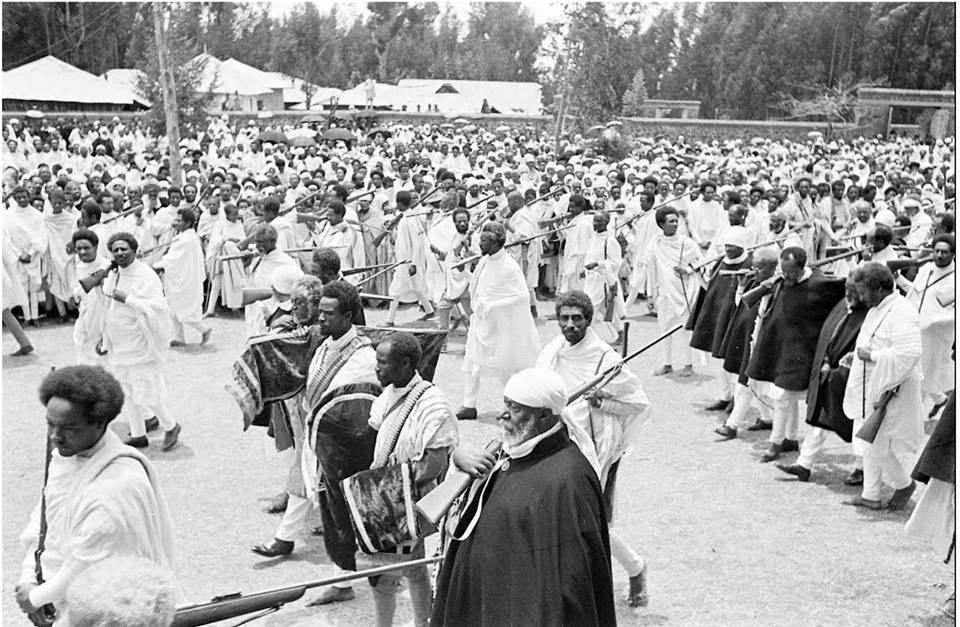
Ethiopian soldiers, 1935. Archival photograph by an unknown photographer, viaWikimedia Commons (public domain).
Ethiopia has defeated colonial armies, fought a Cold War invasion, and survived decades of civil conflict. Now renewed fighting in its north is threatening the peace agreement that ended the 2020–2022 Tigray war. The immediate danger is humanitarian; the wider risk is that disputes over borders, ports and the Nile pull neighboring states deeper into the crisis.
For a related perspective, read Ghost of Sankara: Ibrahim Traoré and the Return of Revolutionary Africa.
News context checked through September 30, 2026. The chronology below covers the major modern wars that shaped today’s conflict.
What is happening now
The African Union said on September 23 that TPLF forces had occupied the airports of Mekelle, Axum and Shire, disrupting civilian flights. It urged de-escalation and a return to the Pretoria agreement, signed on November 2, 2022.
On September 28, Reuters reported that pro-government forces claimed to have captured Alamata, a supply hub south of Mekelle. Reuters verified footage of soldiers there and cited diplomatic sources. Control of the town matters because it sits on the route into southern Tigray.
The civilian cost is already visible. Médecins Sans Frontières reported on September 28 that the number of war-wounded patients received at Korem and Alamata hospitals rose from roughly 180 to more than 420 over 48 hours. More than 300 wounded patients had reached Suhul hospital in Shire by September 25. These are hospital figures, not a verified nationwide casualty count.
Before Adwa: Britain and Egypt
In 1868, a British expedition stormed Emperor Tewodros II’s fortress at Magdala after a hostage crisis. British troops looted and destroyed the fortress before withdrawing. The campaign left a lasting dispute over Ethiopian treasures carried to Britain.
Egypt also tried to expand into Ethiopia. Emperor Yohannes IV’s forces defeated Egyptian armies at Gundet in 1875 and Gura in 1876. The Nile and Red Sea were already central to the region’s strategic rivalries, although today’s dam dispute has its own causes.
Adwa: an African victory over colonialism
On March 1, 1896, Ethiopian forces under Emperor Menelik II defeated an invading Italian army at Adwa. Empress Taytu helped organize the resistance. Italy’s attempt to impose a protectorate failed, and Ethiopia’s victory became a powerful symbol for people resisting European colonial rule.
That victory did not make Ethiopia immune to invasion. Mussolini’s Italy attacked again in 1935. ICRC archival research documents the use of mustard gas and attacks on medical facilities bearing Red Cross emblems. Italian occupation followed in 1936; Ethiopian resistance and the Allied campaign ended it in 1941. Ethiopia’s independence was defended repeatedly, rather than guaranteed by European promises.
Revolution, civil war and the Cuban intervention
The monarchy fell in 1974 amid social unrest and famine. The Derg, a military council, took power and eventually aligned with the Soviet Union. Its 1975 land reform abolished private landownership, but the regime also crushed opponents in the Red Terror, including rival leftist movements. Radical reform and military repression became intertwined.
In 1977, Somalia invaded the predominantly Somali-inhabited Ogaden region. The Soviet Union shifted its support toward Ethiopia, while Cuban troops helped Ethiopian forces reverse the invasion. Somali forces withdrew in 1978. The U. S. State Department’s own history records the Soviet airlift and Cuban intervention that turned the fighting.
The Ogaden war was therefore both a territorial conflict and a struggle shaped by international alliances. It also shows why simply describing the Horn through fixed ideological camps can mislead: Moscow had previously supported Somalia, while Washington had supported Ethiopia’s emperor.
Eritrea’s independence changed the map
Mengistu’s government fell in 1991 to rebel movements, with the TPLF playing a central role in the coalition that took Addis Ababa. Eritrea secured independence following a 1993 referendum, leaving Ethiopia landlocked. Ethiopia adopted a federal order organized largely around national and linguistic communities.
Independence did not settle the relationship between the two states. Ethiopia and Eritrea fought a border war from 1998 to 2000, followed by years of hostility. Abiy Ahmed’s 2018 rapprochement with Eritrea helped earn him the 2019 Nobel Peace Prize. The present tensions show how vulnerable that opening remained.
Tigray: a peace agreement without a settled political order
War broke out between Ethiopia’s federal government and Tigrayan forces in November 2020. Eritrean troops fought alongside the federal side. The conflict devastated civilian life through violence, displacement and the collapse of essential services. The 2022 Pretoria agreement stopped the main fighting, but disputes over territory, political authority and displaced people’s return persisted.
The September 2026 alignment is especially striking. The TPLF has joined a coalition with six other armed groups opposing Abiy, including the Amhara Fano National Movement and Oromo Liberation Army. Amhara forces had fought alongside the federal government during the earlier Tigray war. Shared opposition to Addis Ababa does not resolve the groups’ competing territorial and political demands.
Why the crisis could spread
Ethiopia’s army chief has accused Eritrea, Sudan and Egypt of supporting its opponents. Eritrea and Sudan deny the allegations; Egypt has emphasized respect for states’ sovereignty. The accusations are claims by a party to the conflict, not independently established proof of a coordinated foreign intervention.
There are nevertheless real regional disputes. Ethiopia seeks more secure access to the Red Sea, while Eritrea fears threats to its sovereignty. Egypt contests Ethiopia’s unilateral management of the Grand Ethiopian Renaissance Dam. On September 30, Egyptian Foreign Minister Badr Abdelatty said Cairo recognized Ethiopia’s right to development but opposed unilateral measures and further dams.
These overlapping disputes make regional escalation a serious risk. They do not establish that Egypt and Ethiopia have entered a direct war. Refugees International warned on September 29 that Eritrea and Sudan risk becoming parties to the fighting, and called for renewed negotiations and unrestricted humanitarian access.
The historical pattern is a recurring contest over who controls territory, state power and routes to the sea. Foreign governments have repeatedly intensified that contest. An anti-colonial reading must also keep Ethiopian civilians at its center: sovereignty loses its practical meaning when people cannot reach food, hospitals or their families. The urgent test is whether diplomacy can stop another military struggle from becoming another civilian catastrophe.

Comments