
Palestine and Cuba: Different Forms of Outside Pressure

Updated: Oct 14
Palestine and Cuba are not the same case. One centers on occupation, war and territorial control; the other on a six-decade U.S. embargo, financial restrictions and pressure on trade. The comparison becomes useful only at a more precise level: both show how stronger states can use economic or military power to narrow the choices available to a weaker population.
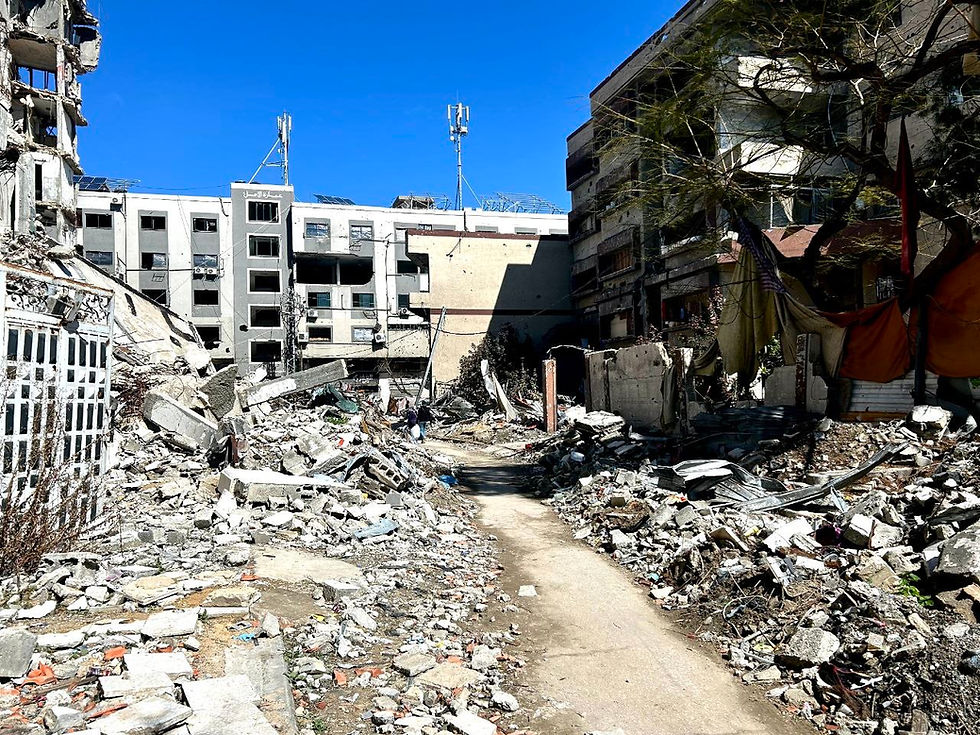
In Gaza, coercion is territorial and military
The material questions in Gaza are direct: control over territory, borders, movement, infrastructure, imports and physical security. United Nations humanitarian reporting continues to document displacement, destruction and severe constraints on civilian life. Those conditions arise from war and occupation, not from ordinary economic pressure.
In Cuba, coercion works through trade and finance
Cuba faces a different system of pressure. U.S. sanctions restrict transactions, financing and commercial relationships with Cuban entities. In 2026, Cuban officials continued to argue that tighter U.S. pressure was constraining energy access and economic reform. Washington presents the sanctions as leverage against the Cuban government.
The common issue is who bears the cost
Economic sanctions and military occupation are not interchangeable. But both can shift political pressure onto civilians who have limited influence over the decisions being contested. That is where the comparison becomes analytically useful: coercive policy often works by raising the social cost of resisting a stronger power.
A material analysis keeps the mechanisms distinct
A Marxist analysis does not need false equivalence. It asks who controls land, finance, trade routes, military force and access to essential goods. Palestine and Cuba occupy different positions inside that structure, but both reveal how unequal power can be translated into pressure on entire societies.


Comments