


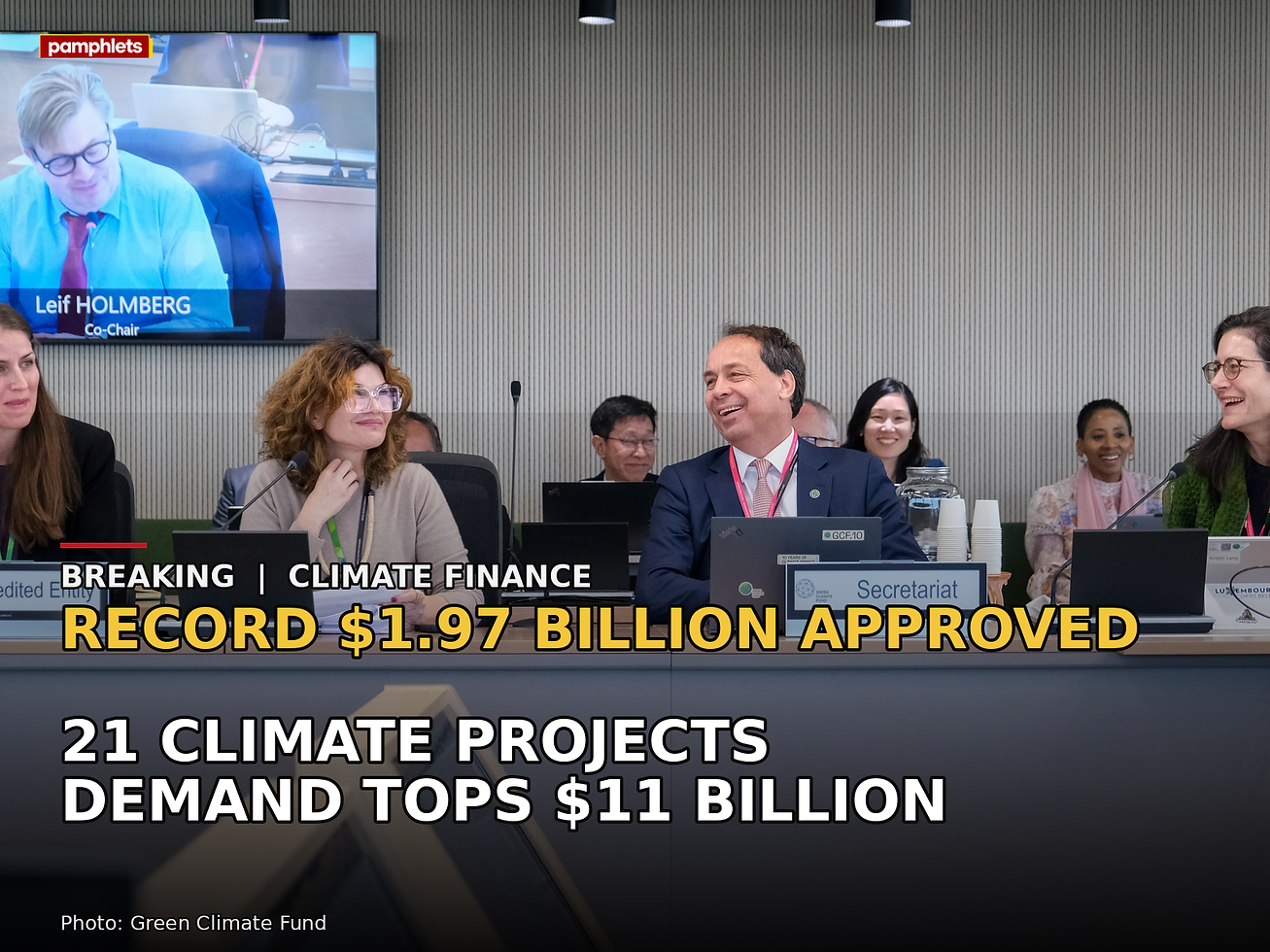
Green Climate Fund Approves Record $1.97 Billion—but Demand Tops $11 Billion

The Green Climate Fund approved a record $1.97 billion for 21 projects on Thursday, the largest financing package in a single meeting since the fund began operating. The decision will move money toward drought resilience, food and water security, forest protection, cleaner industry and climate adaptation across vulnerable countries. It also exposes a brutal arithmetic: requests before the fund now exceed $11 billion.
The GCF Board adopted the package at its forty-sixth meeting in Songdo, South Korea, held from October 26 to 29. The fund said the approvals pushed its direct portfolio to $22.3 billion across 379 projects and mobilized roughly $87 billion when co-financing is counted. Annual approvals have now crossed $3 billion for the first time.

That scale matters. Climate disasters are intensifying while debt, war and austerity squeeze public budgets across the Global South. A multilateral fund able to move nearly $2 billion at once can keep adaptation plans alive when commercial lenders demand returns that poor communities cannot provide.
The package also shifts more authority toward institutions closer to the countries receiving the money. The GCF said 34 percent of the new financing will move through national and regional “Direct Access Entities,” rather than through large international agencies. Algeria, Cameroon, Moldova and Yemen secured their first single-country GCF projects. The fund also approved its first direct sovereign loan responding to the Belém call to protect Congo Basin forests.
Board co-chair Seyni Nafo called the result “delivering at scale.” That description is fair—but incomplete. Approving $1.97 billion against more than $11 billion in demand means the fund met less than one dollar in five requested. Every record announcement therefore carries a second message: governments facing climate damage have prepared far more credible work than the present financing system will support.

The private sector will play a larger role. Reuters reported that $682 million of the package will back six private-sector initiatives. Executive Director Mafalda Duarte said the fund should seek private-capital “multipliers that are higher than 10” for every GCF dollar and called that target conservative.
Leverage can stretch scarce public money. It can also tilt climate policy toward projects that generate predictable revenue, leaving flood defenses, community water systems, small farmers and loss-and-damage needs fighting for what remains. The test is not how many private dollars appear in a press release. It is whether people exposed to drought, heat and displacement receive protection without inheriting unaffordable debt or surrendering public control.
The Board also opened the door to contributions from non-sovereign and alternative sources. That may widen the donor base as rich-country budgets tighten before COP31 in Turkey. But philanthropic money and financial engineering cannot replace the obligations of industrialized states whose historic emissions built their wealth while narrowing everybody else’s carbon budget.
The new projects deserve rapid implementation. The expanded use of direct-access institutions deserves protection from the consulting chains and procedural bottlenecks that have slowed international climate finance. And the countries that celebrate leverage must still put more public money on the table.
Thursday’s approval is both progress and indictment. The GCF proved it can move a record sum toward real projects in dozens of places. The $11 billion queue proved the world still finances climate survival as a scarce privilege. COP31 will show whether wealthy governments intend to close that gap—or merely applaud the record while the unmet need grows.
Sources: Green Climate Fund announcement · Reuters · GCF B46 meeting record



Comments