


Lula Wins a Fourth Term—and Blocks Bolsonaro’s Return

Updated: 7 hours ago
Luiz Inácio Lula da Silva has won a fourth, nonconsecutive term as Brazil’s president, reversing a first-round defeat and stopping the Bolsonaro family from retaking control of Latin America’s largest country.
Brazil’s Superior Electoral Court declared the race mathematically decided on Sunday, October 25, after Lula established an insurmountable lead over Senator Flávio Bolsonaro. At the latest official update, 99.76 percent of polling sections had been counted: Lula held 64,066,539 votes, or 51.75 percent of valid ballots, against Bolsonaro’s 48.25 percent. The result completed a comeback that most pollsters and much of Brazil’s political class had treated as unlikely three weeks ago.
Bolsonaro led the October 4 first round by more than 2.2 million votes, taking 47.03 percent to Lula’s 45.16 percent. No second-place presidential candidate had overturned a first-round result since Brazil returned to democracy in 1985. Lula did it against a consolidated right and a campaign shadowed by pressure from Washington.
The victory blocks the immediate restoration of a political dynasty built by Jair Bolsonaro, the former president now serving a 27-year sentence for plotting to overturn the 2022 election. His son campaigned on freeing him, weakening the Supreme Court and pushing Brazil into a closer security and economic alignment with U.S. President Donald Trump.
Lula made sovereignty the argument of his final weeks. Trump’s administration had imposed high tariffs on Brazilian exports, while Flávio Bolsonaro campaigned as Trump’s ally and promised closer ties with Washington. Lula countered that Brazil should decide its own relations with the United States, China and the rest of the Global South.
That geopolitical choice sat beside a material one. Lula defended above-inflation minimum-wage increases, social programs, labor protections and stronger Amazon safeguards. Bolsonaro promised spending cuts, privatization and a harder policing regime, including megaprisons and lower criminal-responsibility thresholds. Voters did not choose an abstract ideological label. They chose between competing projects for wages, welfare, public authority and national independence.
The result also exposed the limits of forecasts that treated a right-wing first-round lead as destiny. Higher-than-expected turnout appeared to strengthen Lula, according to polling experts cited by Reuters. His campaign rebuilt support among lower-income voters and mobilized the Northeast, where later-counted ballots erased Bolsonaro’s early advantage on Sunday night.
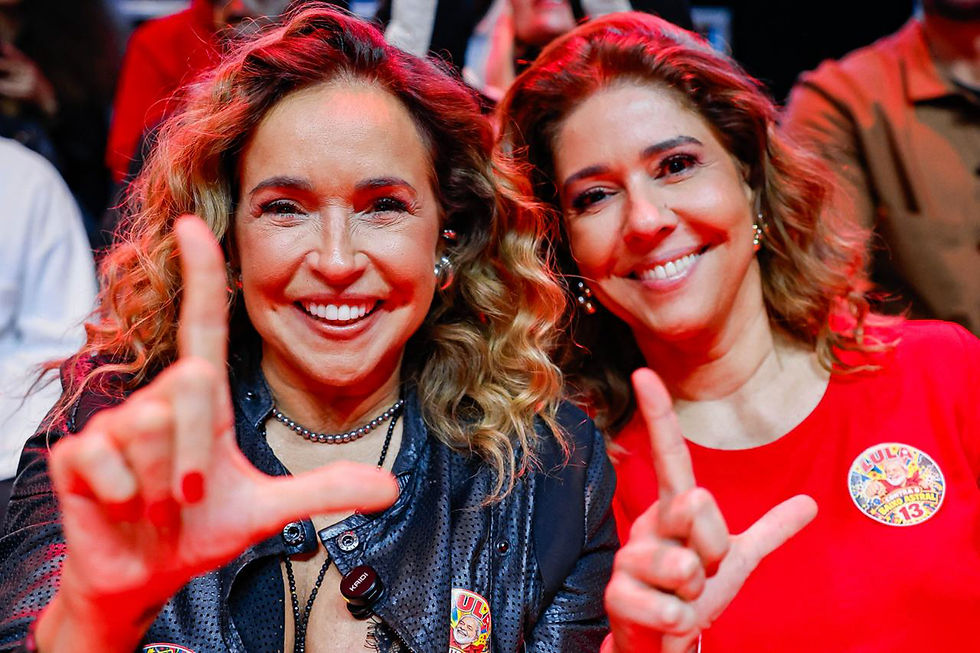
Lula’s victory does not erase the right’s power. Bolsonaro’s Liberal Party and its allies emerged from the congressional vote with a stronger position, including the ability to pressure the Supreme Court, attack environmental rules and obstruct social spending. Lula will enter his fourth term facing a legislature more conservative than the electorate that returned him to office.
That contradiction will define the next government. Lula can block a Bolsonaro presidency, but he cannot govern as though Bolsonarism disappeared. It controls state governments, police constituencies, powerful churches, agribusiness networks and a vast online propaganda machine. The far right lost the presidency while tightening its hold over other institutions.
The campaign’s final hours underlined how fragile the process remains. Supreme Court Justice Cristiano Zanin extended voting by two hours after public-transport failures and severe weather obstructed access in several states. Some polling stations had already closed before the order arrived, creating confusion and immediate threats of litigation. Yet Brazil’s electronic count proceeded quickly, publicly and under international observation.
Lula now inherits a country with low unemployment but high household debt, expensive food and fuel, a 13.75 percent benchmark interest rate and public debt equal to 82.9 percent of gross domestic product. The workers who delivered his comeback will expect more than relief from a Bolsonaro return. They will expect wages that outrun prices, public services that work and protection from a Congress eager to make ordinary people pay for fiscal adjustment.
Abroad, the vote preserves Brazil as an independent pole in a region Washington has worked aggressively to discipline. It protects the country’s climate commitments from a candidate who denied human-caused climate change and promised to loosen environmental constraints. It also keeps the door open for Brazil to act through BRICS and South-South partnerships without reducing its foreign policy to obedience.
Lula’s fourth victory is therefore both historic and incomplete. Brazil rejected an heir who offered pardon, punishment and alignment as a governing program. But the coalition behind that program remains entrenched. The election stopped its return to the presidency. The struggle over who pays, who rules and whose interests Brazil serves begins again on Monday.


Comments