


Pakistan Gives Rights Lawyers 10 Years in Road-Barrier ‘Terrorism’ Case

A Pakistani anti-terrorism court sentenced two of the country’s most prominent human rights lawyers to a decade in prison on Thursday over a confrontation at a roadblock. The state turned a disputed traffic incident into a terrorism conviction—and delivered the verdict inside the prison where it already held the defendants.
Judge Tahir Abbas Sipra sentenced Imaan Zainab Mazari-Hazir and her husband, Hadi Ali Chattha, to ten years each under Pakistan’s Anti-Terrorism Act. He also imposed one-year and two-year terms under separate criminal provisions for obstructing and assaulting public servants. The sentences will run concurrently.
The case dates to October 2024, when police sealed an Islamabad route for England’s visiting cricket team. Prosecutors accused Mazari and Chattha of removing barriers, confronting officers and jeopardizing the team’s security. The couple denied the charges. Mazari said police stopped them while she was trying to reach court to represent a client.
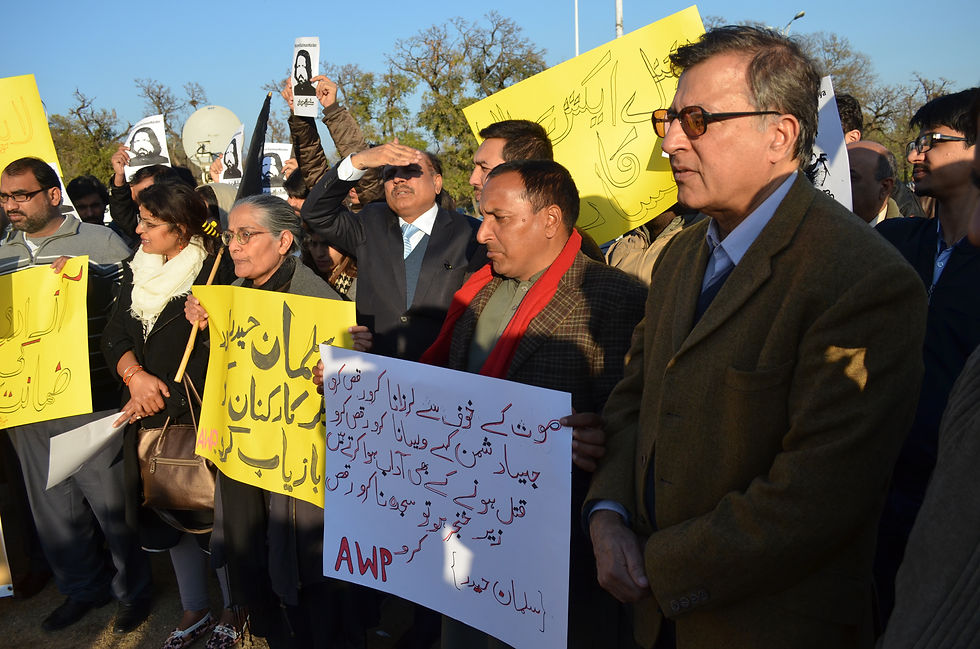
The punishment is wildly disproportionate to the alleged conduct. It also follows a pattern: Pakistan’s security establishment repeatedly converts political dissent and human-rights work into criminal conspiracy, sedition or terrorism.
Mazari has defended journalists, ethnic-minority activists and families searching for relatives allegedly disappeared by state agencies. Chattha has worked beside her on politically sensitive cases. Their legal practice put them directly against institutions accustomed to operating without public scrutiny.
“We are prisoners of conscience,” the couple said in statements seen by Reuters. They accused the state of targeting them for that work. In a separate statement reported by Dawn, Mazari said, “From day one, our constitutional rights to fair trial, due process and basic human dignity have been infringed.”
The trial itself deepened those concerns. Proceedings took place inside Adiala Jail in Rawalpindi. The court appointed state counsel for the defense, while Mazari’s mother, former human-rights minister Shireen Mazari, said the couple could not defend themselves through their own lawyer and did not receive key legal documents. Their lawyers had asked the court to delay the judgment while challenges remained before the Islamabad High Court and Supreme Court.
The court rejected that request and framed the roadblock confrontation as an attempt to spread terror. Its judgment invoked the 2009 attack on Sri Lanka’s cricket team in Lahore, even though the present defendants faced no allegation of planning armed violence against the English players.
That comparison did the political work. By connecting lawyers at a barrier to one of Pakistan’s worst sporting-security disasters, the court inflated a contested street encounter into a threat to the nation. The terrorism label then justified a prison trial, exceptional procedure and a ten-year sentence.
This was not the couple’s first prosecution. Police arrested them in January over social-media posts critical of military operations in Balochistan and Khyber Pakhtunkhwa. A court sentenced each to 17 years under cybercrime law the next day. United Nations experts and rights groups condemned that case. Pakistan’s Supreme Court suspended those sentences on September 17 and ordered their release pending appeal.
Police arrested them again within hours in the road-barrier case.
That sequence matters more than any single charge. First the state prosecutes speech. When a higher court intervenes, police activate an older case. When defense lawyers challenge the proceedings, the trial moves behind prison walls. The machinery keeps the accused confined even as individual convictions come under review.
The latest verdict also sends a message beyond Mazari and Chattha. Lawyers who represent disappeared people, minority activists or government critics now face the possibility that ordinary advocacy can be recast as a national-security offense. Clients lose counsel. Families lose a route into court. Journalists and organizers learn that the state may punish not only dissenters but those who defend them.
The couple’s family says it will challenge the verdict in the Supreme Court. That appeal will test more than the proportionality of a ten-year term. It will test whether Pakistan’s highest court can stop anti-terror law from becoming a permanent detention system for people the security establishment wants silenced.
The road barrier was temporary. The precedent could last much longer.
Sources: Associated Press · Reuters · Dawn · The Express Tribune · Photo: rights demonstration · Photo: Supreme Court



Comments