


Serbia’s Students Break Vučić’s Grip on Power

Serbia’s student movement has converted two years of grief, marches and blockades into a projected parliamentary majority, forcing Aleksandar Vučić to concede the most consequential defeat of his political career. A revolt that began after preventable deaths at a railway station now stands on the threshold of governing the country.
Vučić acknowledged defeat on Sunday night, October 25, before Serbia’s official count was complete. His own projection put the Student List on 135 to 140 seats in the 250-member National Assembly, against roughly 105 for his Serbian Progressive Party-led bloc. The chamber’s majority line is 126.
“It is clear that we have lost these elections, the Student List has won,” Vučić said in a televised speech.
The concession followed turnout approaching 70 percent, the highest since the breakup of Yugoslavia. Crowds poured into Belgrade’s streets, honking horns and chanting after a campaign conducted under deep distrust of state institutions, ruling-party media power and reports of intimidation.
From mourning to mandate
The movement began after a concrete canopy collapsed at Novi Sad railway station on November 1, 2024, killing 16 people. Students refused to let the deaths be filed away as an accident without political authorship. They tied the disaster to opaque contracts, cronyism and a governing system that rewarded loyalty while evading accountability.
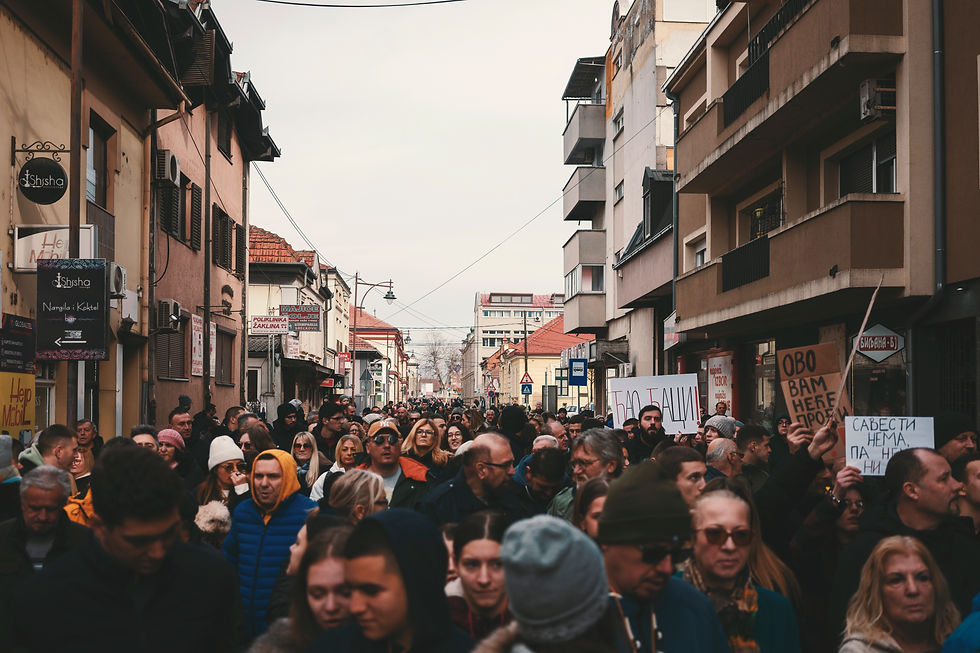
Their electoral vehicle made an unusual choice: student organizers did not fill the list with themselves. They recruited professors, doctors, farmers, engineers, artists and athletes, presenting a 250-candidate slate designed to look less like a replacement elite than a cross-section of society.
That structure turned moral protest into political capacity. For nearly two years, students walked and cycled across the country, carried their case into small towns and kept organizing after the government waited for exhaustion. Sunday’s vote showed that disciplined civic networks can outlast the media spectacle and patronage machinery of a dominant party.
Victory is not yet power
The official results remain unfinished, and Serbia still has to translate projections into certified seats. Yet the concession changes the terrain. Vučić did not merely lose a close contest; he admitted that the opposition had crossed the line needed to govern without depending on his bloc.

The harder struggle begins inside the state. Vučić and the SNS built power through control over appointments, contracts, public employment and much of the television landscape. Winning parliament does not automatically free the courts, public broadcaster, police or state companies from networks formed during 14 years of political dominance.
The election-day record also demands scrutiny. Domestic observers reported suspected vote buying, pressure on voters and attacks or threats against monitors and journalists. A democratic transition will require transparent tabulation, protection of evidence and lawful transfer of authority—not simply faith in the defeated side’s televised concession.
A Balkan realignment
Serbia’s international posture will also be contested. Vučić balanced European Union candidacy against strategic ties with Russia and China, using geopolitical ambiguity to extract support while resisting democratic pressure. The Student List unites people with different views on Brussels, Moscow and Kosovo; its first test will be whether institutional reform can hold that coalition together.
Still, the result carries a regional lesson. The students did not wait for a charismatic savior or retreat into symbolic dissent. They linked corruption to daily life, built alliances beyond campuses and forced a captured political system onto electoral ground. Their victory belongs as much to workers, families and provincial communities as to the university halls where the revolt began.
Serbia has not completed a democratic transition in one night. But millions have broken the central myth of Vučić’s rule: that his machine could absorb every scandal, divide every opponent and survive every ballot. The canopy collapse exposed the human cost of impunity. The student movement turned that exposure into a mandate.
Sources: Reuters, Associated Press and The Guardian.


Comments