


Serbia’s Students Fill Belgrade Before Vote That Could End 14 Years of Vučić Rule

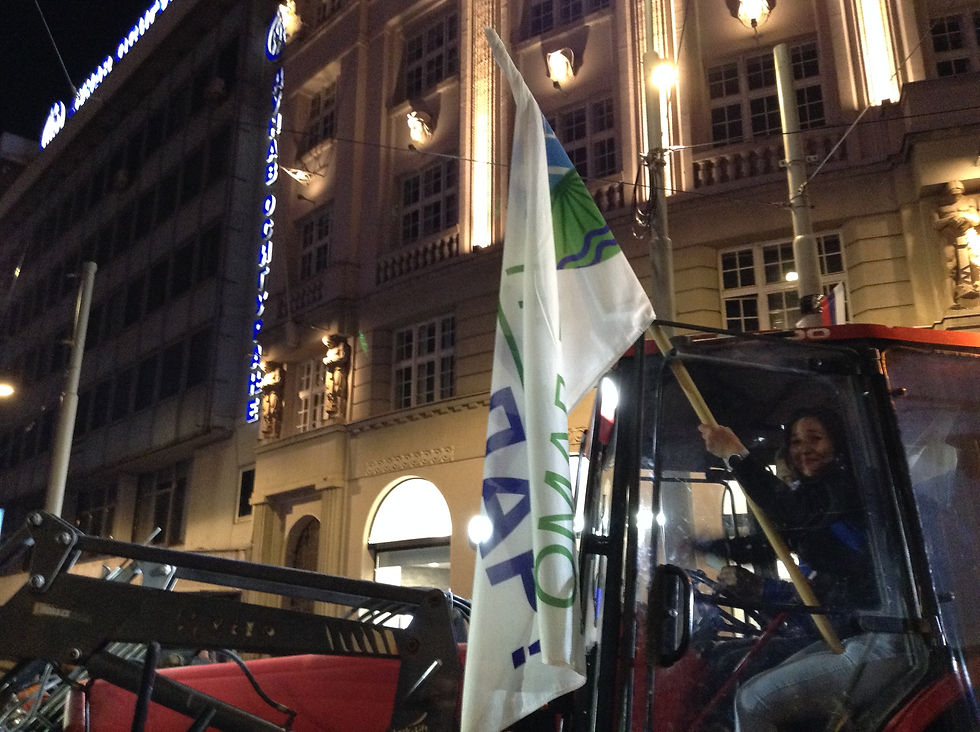
Hundreds of thousands of people flooded central Belgrade on Thursday night behind Serbia’s student movement, closing its campaign with the country’s most powerful display of democratic force in years. The crowd filled Slavija Square and several surrounding blocks, chanting “Victory” before Sunday’s parliamentary election.
The rally turned nearly two years of street protest into a direct electoral challenge to Aleksandar Vučić and the Serbian Progressive Party, which has dominated national politics since 2012. The Students’ List is running neck and neck with the ruling bloc, according to polling reported by the Associated Press. What began as a demand for accountability after a preventable disaster has become a referendum on corruption, media control and concentrated power.

The movement traces its origin to the November 2024 collapse of a newly renovated concrete canopy at Novi Sad railway station. Sixteen people died. Students and families accused the state of shielding officials and contractors from accountability, then built blockades, assemblies and long marches that reached far beyond university campuses.
That pressure already brought down one government. Prime Minister Miloš Vučević resigned in January 2025 after attacks on protesters in Novi Sad. But the student movement refused to stop at a change of personnel. It demanded transparent public contracts, independent institutions and early elections.
Its campaign has deliberately broken with Serbia’s discredited opposition parties. Students organized through assemblies, recruited candidates from outside the political class and walked or cycled through rural districts where Vučić’s machine has long relied on patronage and tightly controlled media. Their slogans — “Students win” and “Serbia or mafia” — compress a sprawling democratic revolt into a blunt choice.
Drama student Natalija Stepanović told Thursday’s crowd that fear and injustice would pass. “Tyrants will pass, like they always do,” she said, “but the people of this country never will.” The statement captured the movement’s wager: that disciplined collective action can outlast a state apparatus built to isolate, intimidate and exhaust its opponents.
The vote will not take place on equal ground. The OSCE’s election-monitoring mission says the contest unfolds amid deep polarization, declining trust in state institutions and a hostile environment for civil society. Its interim report notes unaddressed concerns over voter intimidation and pressure, while citizen monitors have reported attacks and threats against observers.
The ruling party enters the election with control over the largest television outlets, public institutions and a sprawling political machine. Activists have reported surveillance and cyberattacks. More than 100 violent incidents were recorded during the campaign, according to a Serbian monitoring group cited by AP. Vučić has responded by branding student organizers foreign-backed agents and warning that unrest after the vote would be crushed.
The stakes extend beyond who occupies the prime minister’s office. A student victory would confront entrenched networks inside the state, media and contracting system. It would also test whether an assembly-led movement can turn moral authority into durable political power without reproducing the hierarchy it set out to defeat.
The danger is equally clear. A close result could trigger competing claims of victory, street mobilization and repression. Serbia’s 2023 election was followed by protests over alleged fraud, while international observers reported irregularities. Sunday’s count will therefore measure not only votes, but whether the institutions handling them can command public trust.
For now, the movement has already changed what seems possible. “The students woke us up, woke everybody up in this country,” Belgrade resident Igor Zečević told AP. That awakening has carried a generation from campus blockades to the edge of state power. On Sunday, Serbia will decide whether it becomes a government.


Comments