
U.S. Backs One-Year Somalia Mission Renewal After Cutoff Threat

File photograph · 31 March 2022, Mogadishu: African Union and Somali officials unveil the African Union Transition Mission in Somalia (ATMIS), the predecessor to AUSSOM. Photograph by Fardosa Hussein / AMISOM Public Information, via Wikimedia Commons; CC0. Cropped for the web hero.
The United States has reversed a threatened cutoff to international security operations in Somalia, telling AFP that it will support a one-year renewal of the mandates for the United Nations Support Office in Somalia (UNSOS) and the African Union Support and Stabilization Mission in Somalia (AUSSOM). Somalia’s federal government welcomed the decision on Monday, November 16. A formal mission extension still belongs to the United Nations Security Council and the African Union; Washington’s decision removes a major financial obstacle rather than completing that process by itself.
AFP reported that Washington had stopped funding UNSOS and had told the support office to wind down by the end of 2027. The State Department now says the renewed support is meant to contain threats in Somalia and prevent a wider regional crisis, while warning that the decision is not an “indefinite commitment.” It also called on Somalia and the African Union to plan for what it described as more sustainable regional security arrangements.
UNSOS is not a combat mission. It supplies logistics that keep the African Union deployment and parts of Somalia’s security apparatus functioning, including transport, medical evacuation, rations, fuel and base support. A recent U.N. report said the office was supporting 11,911 AUSSOM personnel at 49 locations, as well as authorized Somali forces operating jointly with the mission. That practical role is why the earlier cutoff threatened far more than an accounting change.
Mogadishu’s official statement called the United States a longstanding partner and said the one-year renewal would preserve operational continuity. The government also said Somali forces had taken over more than 20 forward operating bases from African Union troops during the past four years and that the international force had been reduced from roughly 21,000 personnel to about half that level. Those figures and the claim that Al-Shabaab has been largely pushed into remote areas are the government’s account; the statement did not provide independent evidence for them.
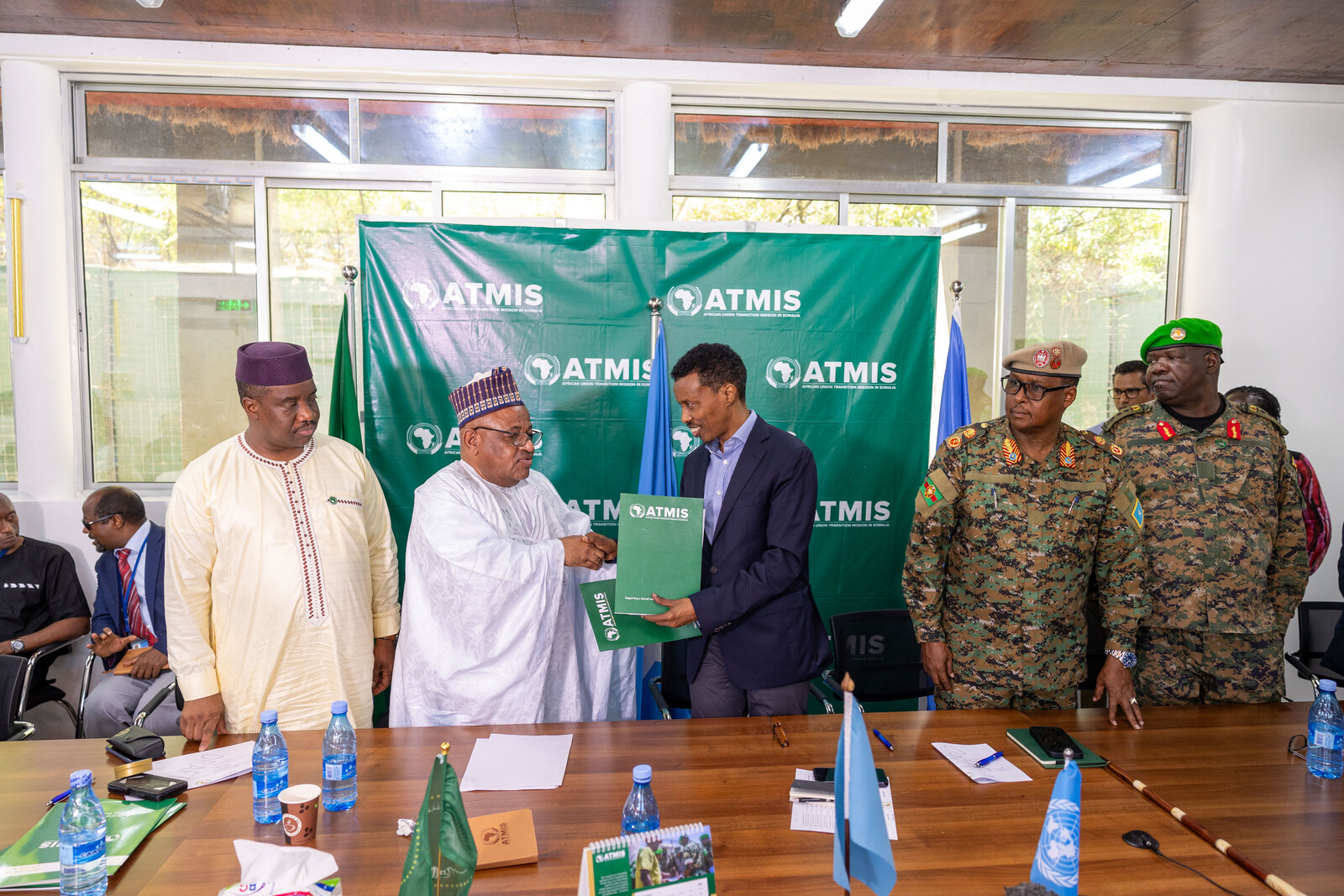
Photograph · 29 January 2024, Mogadishu: AU envoy Mohamed El-Amine Souef transfers land-lease and base documents to Somali National Security Adviser Hussein Sheikh Ali. Moses Odanga / ATMIS Photo, via Wikimedia Commons; CC0. Resized by Pamphlets.
The security picture is more contested than that account suggests. AFP reported that Al-Shabaab still controls large areas of central Somalia and maintains business networks capable of raising revenue inside the capital. The pressure on the mission increased when Uganda, its largest troop contributor, announced plans to withdraw its forces by the end of 2027—a development Pamphlets reported earlier this month. The latest U.S. decision buys time, but it does not settle whether departing contingents will be replaced or how a smaller mission will hold territory transferred to Somali forces.
The dispute is also inseparable from Somalia’s political crisis. President Hassan Sheikh Mohamud’s government has faced opposition to constitutional changes and an extended electoral timetable. On November 6, Somalia’s Supreme Court voided the presidential term extension and ordered an election, deepening the confrontation over who sets the transition’s rules. A security arrangement funded from abroad cannot substitute for an inclusive political settlement inside the country.
That is the central weakness exposed by Washington’s reversal. A mission presented as Somali-led remains vulnerable to abrupt decisions in the U.S. capital, while African troop contributors and Somali communities carry the immediate risks. In February, the African Union appealed for predictable, long-term financing and approved a larger mission allocation, but its own decision still relied on outside partners and voluntary contributions. One more year prevents a sudden collapse; it does not create sovereignty over the mission’s finances.
The next test is whether the Security Council converts U.S. support into a clear mandate and whether the resulting budget protects essential logistics without disguising an open-ended foreign military presence. Somalia, the African Union and troop-contributing states will also have to publish a credible transition plan: which bases will be transferred, what civilian protections apply, who pays for the remaining force and what happens if promised funds arrive late. Until those questions are answered, the reversal is a reprieve—not a durable settlement.
Image credit · Web hero: Fardosa Hussein / AMISOM Public Information, 31 March 2022, CC0, via Wikimedia Commons; cropped by Pamphlets. Article image: Moses Odanga / ATMIS Photo, 29 January 2024, CC0, via Wikimedia Commons; resized by Pamphlets.


Comments