


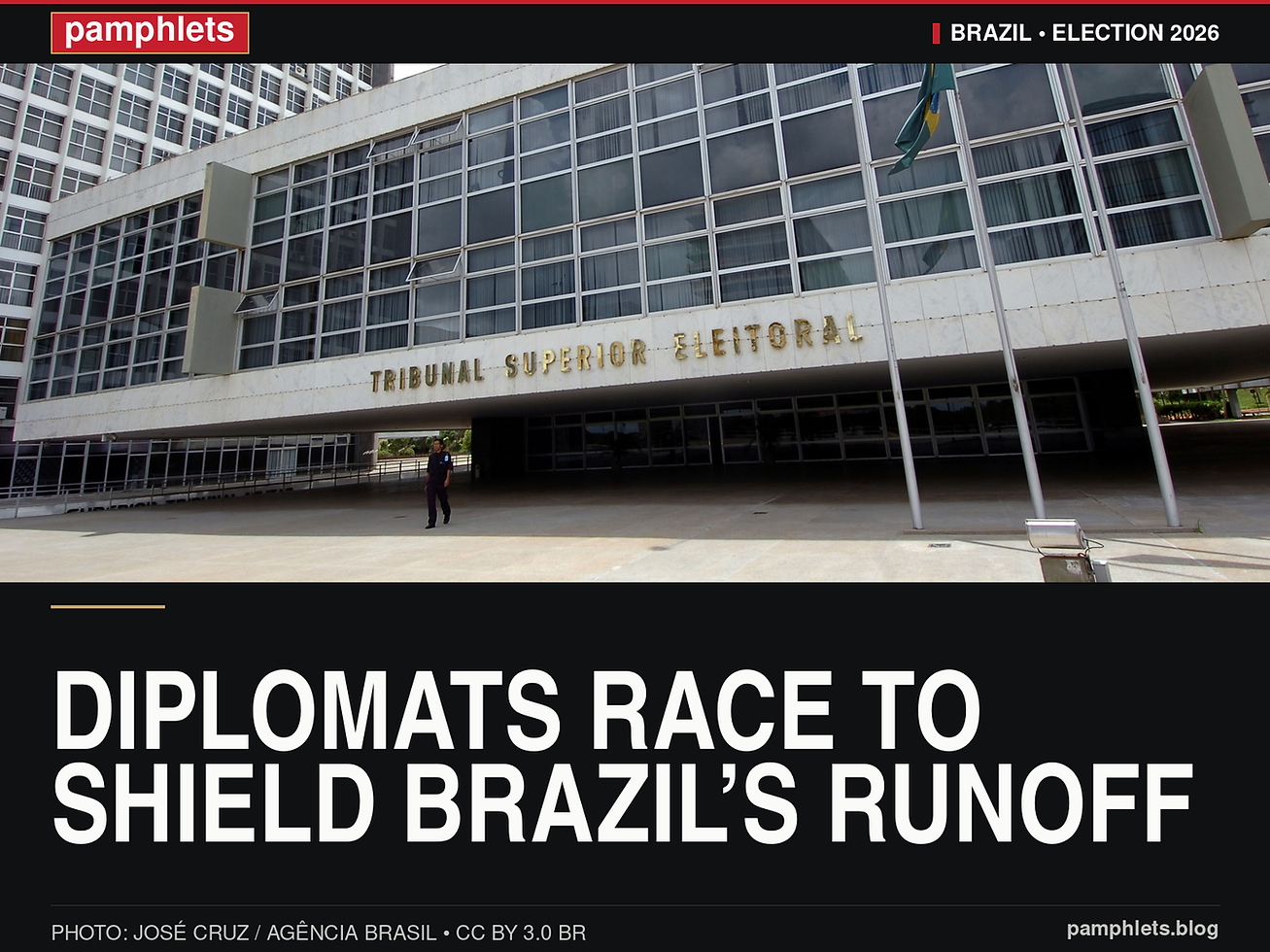
Diplomats Race to Shield Brazil’s Runoff From Foreign Interference

BRASÍLIA — Foreign diplomats are preparing for a danger that should not exist: an outside government declaring a winner in Brazil’s presidential runoff before Brazil’s own electoral authorities finish counting the votes.
Four ambassadors told Reuters on October 23 that missions in Brasília are discussing rapid recognition of whoever wins Sunday’s election. The talks remain informal, and several embassies are still consulting their capitals. Their purpose is not to choose between President Luiz Inácio Lula da Silva and right-wing senator Flávio Bolsonaro. It is to prevent Donald Trump, Javier Milei or another foreign leader from trying to create a political fact before Brazil announces a legal result.
“Speed is the main concern,” one European ambassador told Reuters. Another said the issue was “the shape of Brazilian democracy after this election.”
That warning carries weight because the October 25 runoff is extraordinarily close. Brazil’s Superior Electoral Court says Bolsonaro led the first round with 47.03 percent of valid votes, while Lula won 45.16 percent. A Datafolha survey released Thursday put the candidates level at 50 percent each among valid votes. A narrow result would give election deniers the uncertainty they need to flood the political space before verified numbers settle the question.

Brazil’s institutions must speak first
Brazil already has a public mechanism for doing exactly that. The Superior Electoral Court says it will begin publishing second-round results from 5 p.m. Brasília time. Its official portal updates the national count as polling-station bulletins arrive and allows the public to inspect section-level records, digital vote files and machine logs. The authority to announce Brazil’s result belongs there—not in Washington, Buenos Aires, a campaign war room or a billionaire’s social-media feed.
Reuters reported that two ambassadors fear Trump could question a narrow Lula victory. The United States State Department and embassy in Brasília did not answer the news agency’s request to commit in advance to recognizing the tribunal-certified winner. The concern is not abstract. During Honduras’s delayed 2025 count, Trump alleged fraud without evidence and threatened consequences if preliminary results favoring his preferred candidate changed.
Brazil also carries the memory of 2022. Jair Bolsonaro refused to concede for days after losing to Lula. His supporters later stormed Brazil’s capital, and the former president ultimately received a 27-year sentence for plotting a coup. International recognition of the certified result helped narrow the space for an anti-democratic maneuver. Diplomats are now considering how to close that space again.

Two political programs, one sovereign choice
No defense of electoral procedure requires political neutrality about what the candidates represent. Lula has campaigned on a shorter standard workweek, higher Bolsa Família payments, low-cost public credit and debt relief. The Associated Press reports that Congress approved a move from a six-day, 44-hour week to five days and 40 hours without a pay cut ten days before the runoff. Lula also backed a 15 percent increase in the country’s principal cash-transfer program, reaching nearly 50 million people.
Flávio Bolsonaro offers the return of a dynasty whose last presidency weakened social and environmental protections and culminated in an organized attack on the constitutional order. The new Congress has shifted sharply right, giving his allies greater power even if Lula wins.
Those stakes make outside interference more dangerous, not less. Brazil’s people must be free to choose between competing programs and live with the political struggle that follows. Foreign capitals may recognize a certified winner. They have no democratic right to manufacture one.
The most responsible action on Sunday is also the simplest: wait for Brazil’s official count, reject premature victory claims and recognize the candidate confirmed by the country’s electoral authorities. Democracy begins with voters, not ambassadors. Its international defense begins by refusing to let a powerful foreign president speak over them.


Comments