


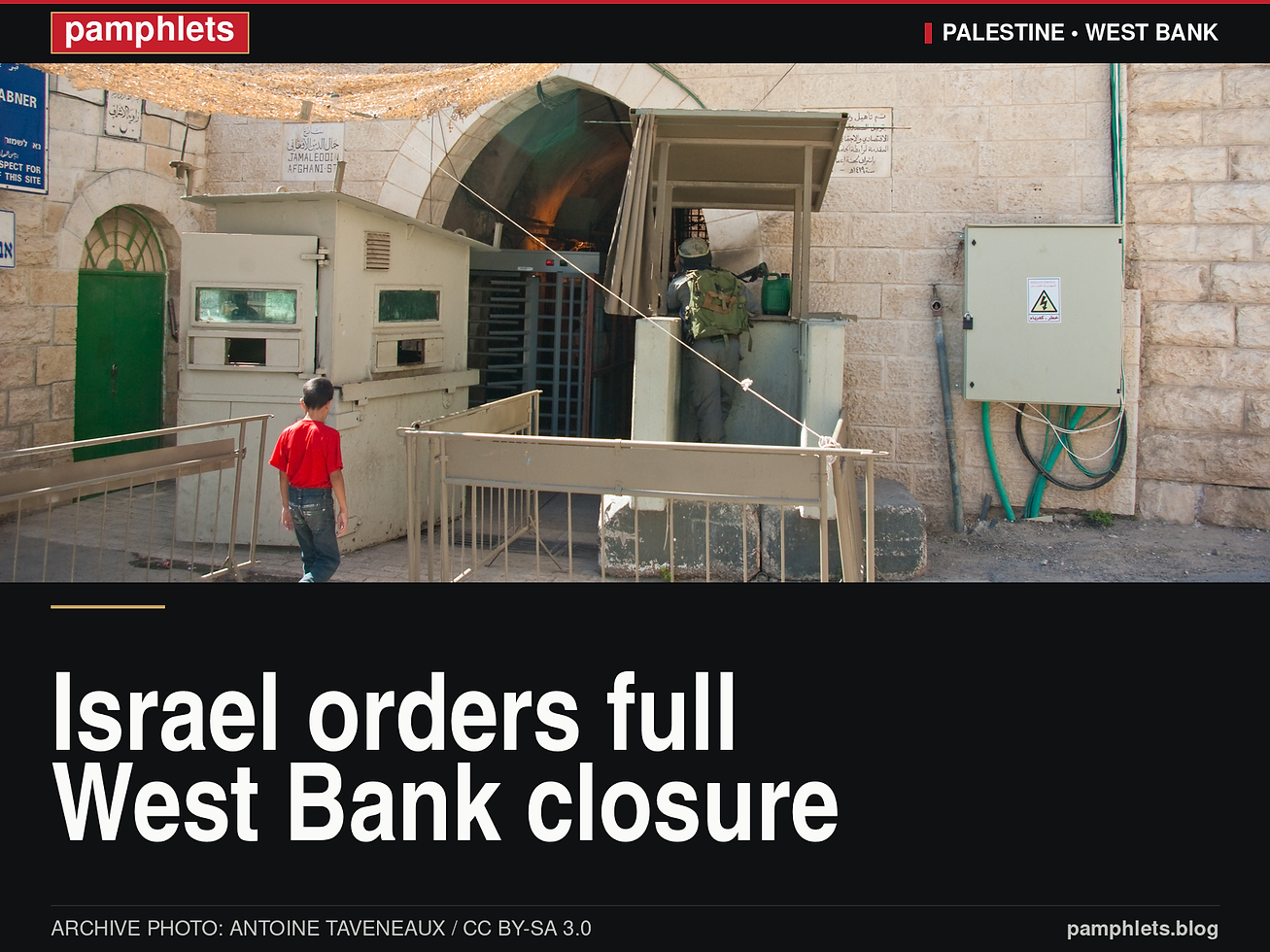
Netanyahu Orders West Bank Closure After Hebron Shooting

Israel has ordered its army to seal off Hebron and prepare a full closure of the occupied West Bank after a shooting near the city left five people wounded and ended with soldiers killing two Palestinian gunmen.
The order turns one violent incident into a territorial punishment for millions of Palestinians. Israeli settlers and other Israeli drivers can continue moving through much of the road network, while Palestinian villages face gates, checkpoints and blocked routes to jobs, hospitals, schools and neighboring towns.
Reuters reported that the Israeli military killed the two suspected attackers near the Yehuda Junction on Friday, October 23, and immediately imposed a cordon while forces searched the area. The Associated Press later reported that Prime Minister Benjamin Netanyahu instructed security forces to close Hebron and prepare a West Bank-wide lockdown.
The army said the men carried an M16 rifle, a handgun and additional ammunition. Emergency services reported five wounded people, some critically. Authorities had not publicly identified all the injured as civilians or soldiers when the closure order was issued.
A population placed under collective restraint
Netanyahu convened an emergency meeting with his Security Cabinet and senior military and intelligence officials. He claimed that Hamas was preparing a larger attack, but his office did not publish evidence or explain why millions of people across the occupied territory should lose freedom of movement because of two armed men.
The government’s answer followed an established pattern: treat Palestinian mobility as a privilege that the occupation can withdraw, not a right attached to ordinary life.
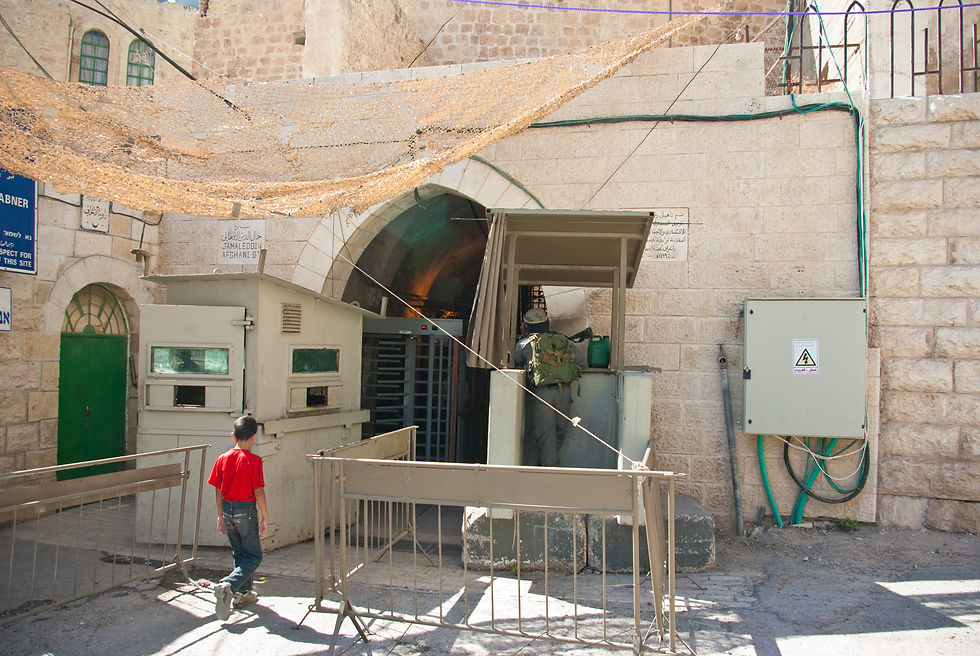
AP reported that this was the fourth West Bank closure or major restriction in a month. Gates and checkpoints isolate Palestinian villages from main roads. Israeli drivers, including settlers, generally retain access even when Palestinians cannot pass.
Far-right National Security Minister Itamar Ben-Gvir made the hierarchy explicit. He declared Israeli lives “a million times more important than freedom of movement.” The statement did more than defend a security operation. It described an openly unequal system in which one population’s movement can be suspended for another population’s political reassurance.

Election politics enters every checkpoint
The closure arrives four days before Israel’s parliamentary election. Netanyahu is seeking another term while campaigning on security and warning that armed groups may try to influence the vote. The shooting gives his government a dramatic stage for that message, but Palestinians will carry the material cost.
The timing matters because Israeli politicians are not merely debating security policy. They are competing over who can impose the harshest terms on people who cannot vote in the election that governs the military controlling their roads.
Brad Lander, a U.S. congressional candidate visiting the West Bank, called the restrictions part of an apartheid system and said they aimed “to make Palestinian life impossible.” Israeli forces had detained him two days earlier.
The closure also lands during a surge of attacks on Palestinian olive harvesters. Settlers have assaulted farmers and damaged property across the West Bank while soldiers have imposed new restrictions on access to agricultural land. Roads and checkpoints therefore determine not only who can travel, but who can reach fields, earn income and keep a harvest.
Security cannot erase civilian life
The attack and the reported weapons require an investigation. They do not justify closing an entire occupied territory. Collective restrictions blur the line between pursuing suspects and governing through mass coercion.
Every sealed gate produces consequences that do not appear in a security briefing: a delayed ambulance, a missed dialysis appointment, wages lost at a checkpoint, produce spoiling in a truck, children unable to reach class. These costs fall overwhelmingly on Palestinians who had no connection to the shooting.
Israel’s government calls the measure protection. In practice, it reinforces a system of separate roads, unequal permissions and military control. The immediate question is whether the lockdown will expand after the election. The deeper fact is already visible: under occupation, a government can transform one attack into punishment for a whole people before it has even completed the investigation.
Sources: Reuters · Associated Press


Comments