


Serbia’s Student Landslide Sets Off Arrests as Vučić’s Machine Cracks

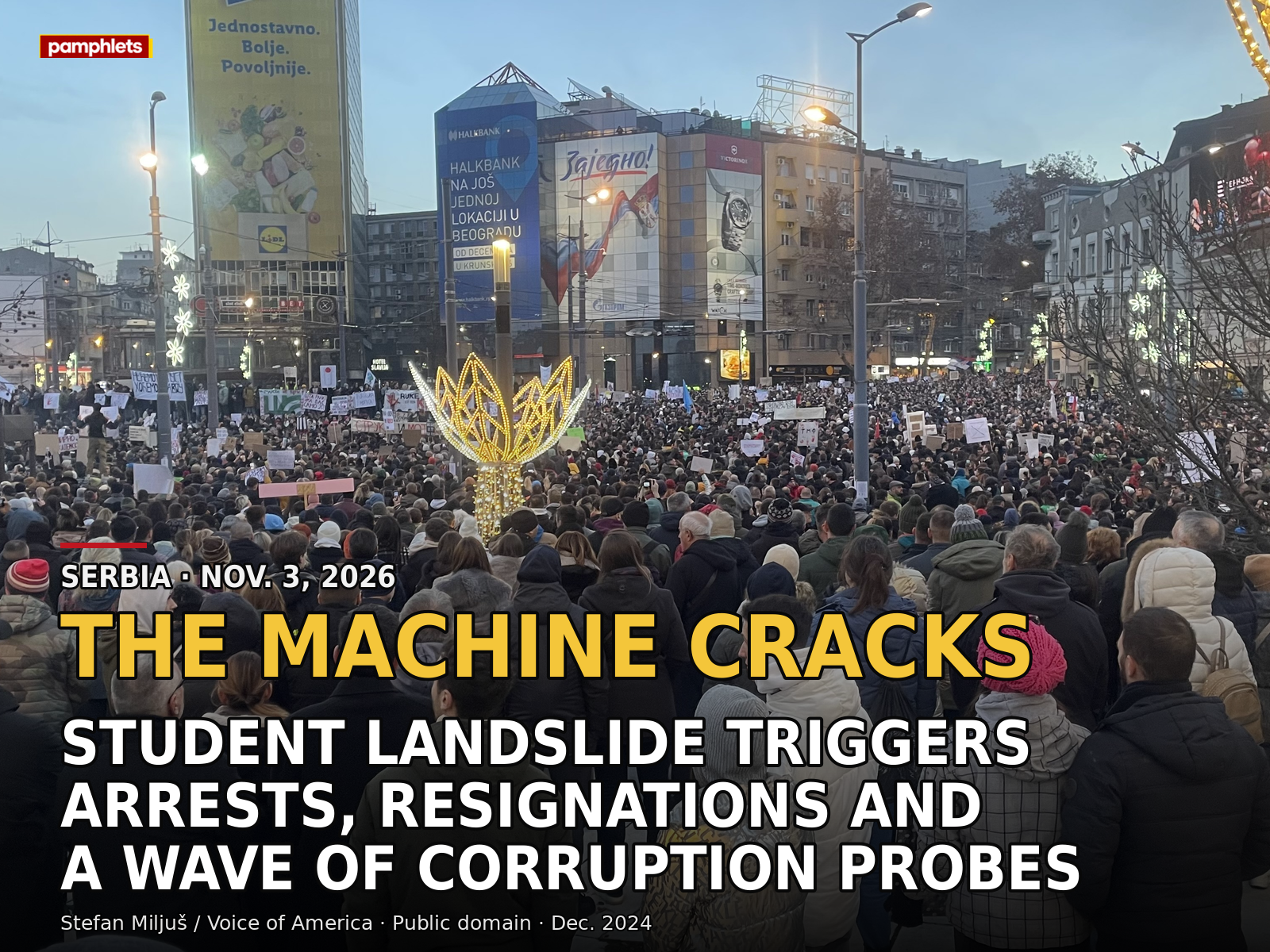
Serbia’s student-led election victory has begun to shake the machinery that kept Aleksandar Vučić’s party in power for more than a decade. Police officials are under arrest, prosecutors face a flood of corruption complaints, state media have apologized for biased coverage and workers are demanding the removal of party-appointed managers—even before the new parliamentary majority formally takes office.
The rupture follows the October 25 snap election. Serbia’s electoral commission reported that the Student List won 52.71% of the vote and 140 seats in the 250-member National Assembly. Vučić’s United Serbia alliance took 39.17%. The result gave the student-backed slate an outright majority after two years of mass protests against corruption and institutional impunity.
The transfer of power has not yet happened. Under Serbia’s constitutional timetable, parliament must convene and a government must form. But officials and business figures tied to the old order are already confronting investigations that had stalled while Vučić’s Serbian Progressive Party dominated the state.
Authorities arrested Marko Kričak, the former chief of Serbia’s criminal police, and another senior police official on suspicion of abuse of office connected to a murder investigation. Police also detained Davor Macura, owner of Alta Bank, after regulators revoked the bank’s licence. Prosecutors accuse Macura of abuse of office; he denies wrongdoing and says the bank was closed without due process.
Other cases go directly to the conduct of the election. Police detained six people in Mali Zvornik over allegations that they issued false residence documents to Bosnian citizens so they could vote for Vučić’s party. Lawyer Ivan Ninić separately alleged that a Justice Ministry official and prison wardens pressured or bribed inmates to support the ruling list. Those accusations remain unproven, but prosecutors have opened procedures around election fraud, threats, violence and illegal surveillance.
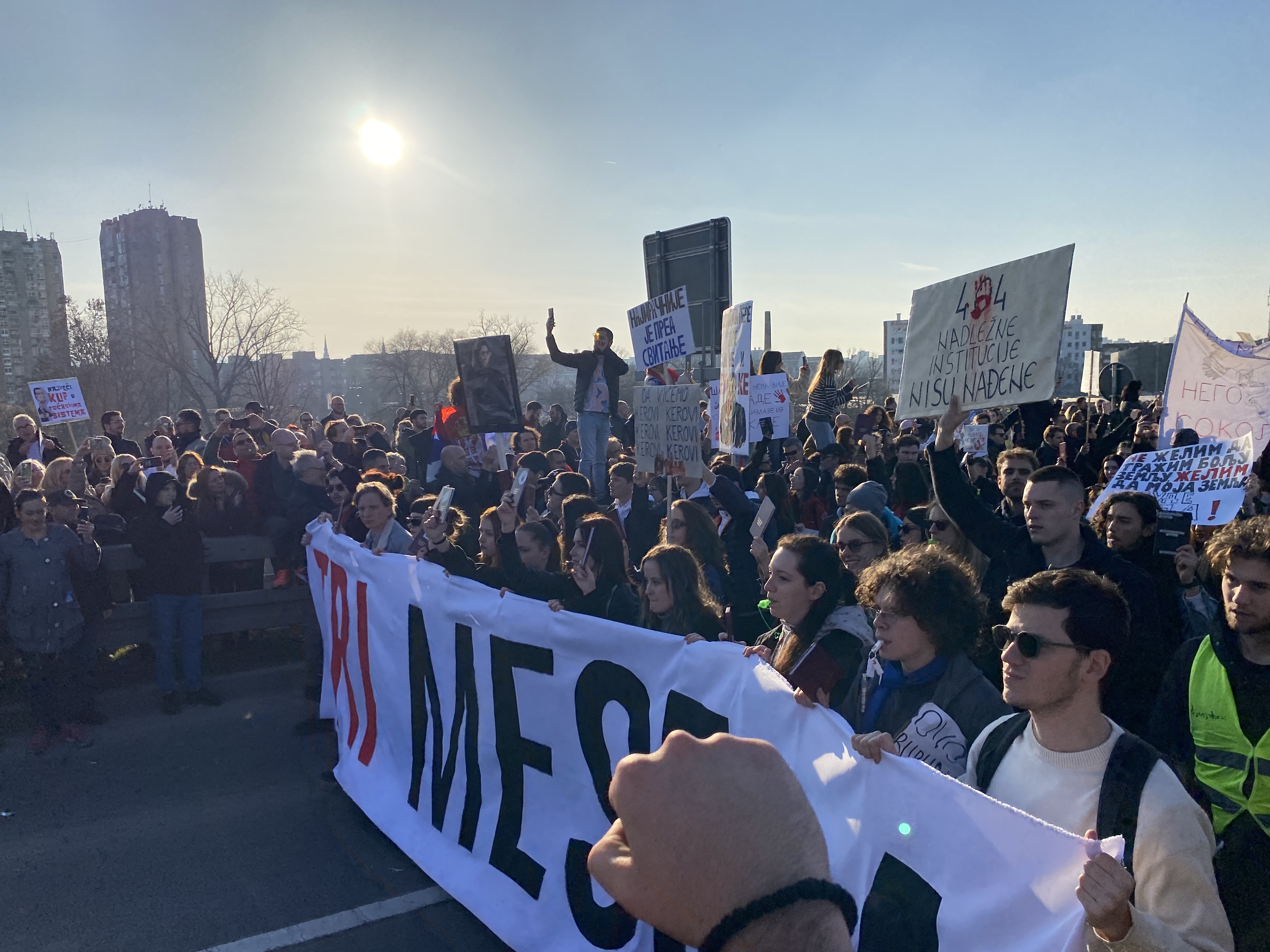
The unraveling is also visible outside the courts. Students at a Belgrade high school recovered documents from rubbish bins after suspecting their principal was trying to destroy records; the principal denied it. Serbia’s state broadcaster, RTS, changed its leadership and apologized for biased reporting. Employees in schools, hospitals, theatres and museums have demanded that managers appointed by the Serbian Progressive Party leave their posts.
Student List representatives have called on judges and prosecutors to pursue long-delayed cases or resign. That demand carries the anger of a movement born after the November 1, 2024 collapse of a railway-station canopy in Novi Sad killed 16 people. Protesters treated the disaster not as an isolated engineering failure but as the deadly result of opaque contracting, political protection and a state that refused accountability.
Vučić rejects the corruption allegations and accuses the victors of “revolutionary terror.” In a television appearance Sunday, he said he did not fear arrest because investigators would find no evidence against him. “They don’t have anything,” he said.
Vučić’s defiance matters. He built a durable system around control of television, public employment, security institutions and access to state contracts. Election defeat removed the top layer, but it did not automatically dismantle the networks beneath it. The speed of defections and institutional apologies shows that many loyalists calculated their loyalty around power rather than principle.
That creates both an opening and a danger. Serbia needs real investigations, transparent evidence and fair trials—not revenge prosecutions or guilt by association. The student movement won by promising that no official would remain untouchable. It will lose its democratic advantage if it reproduces the arbitrary methods it opposed.
The victory also does not supply a ready-made foreign policy. The leaderless Student List united professors, farmers, artists and young organizers around corruption and education, not a single position on the European Union, Kosovo, Russia, China or Serbia’s military neutrality. Foreign governments will try to define the result for their own purposes. Serbian voters defined it first as a domestic revolt against captured institutions.
The decisive test now is whether prosecutors can follow evidence upward, whether public institutions can operate without party instructions and whether the new majority can replace personal rule with accountable government. Independent observers recorded record turnout and extensive pressure on polling boards. The election cracked Vučić’s machine. Serbia’s students must now prove they can build something more democratic in its place.


Comments