


Greenland Approves U.S. Base Expansion After Trump’s Annexation Threats

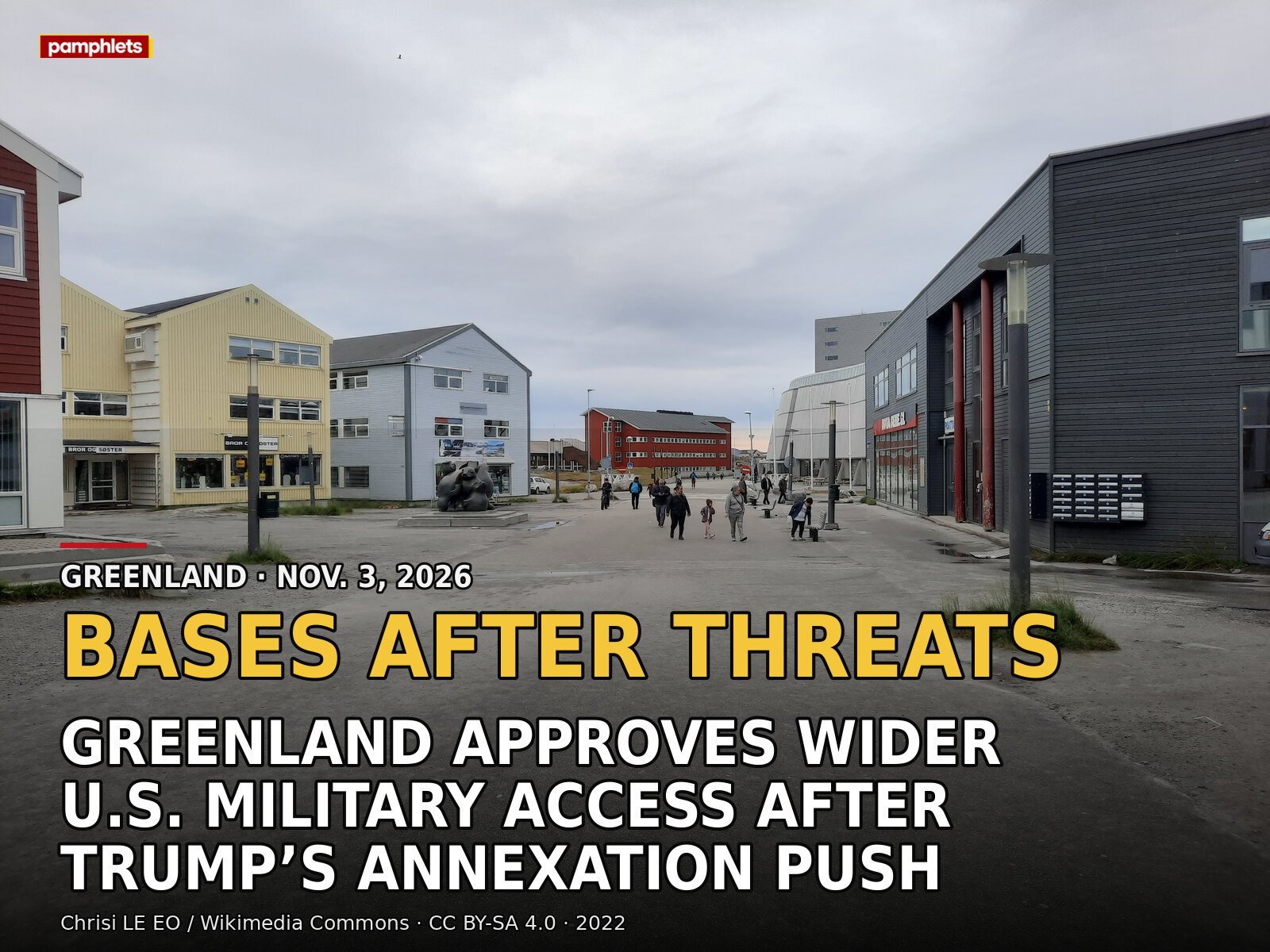
Hero photograph: Greenland’s parliament building in Nuuk by Chrisi LE EO, CC BY-SA 4.0. Card rendered with the locked Pamphlets V9 system.
Greenland’s parliament voted Tuesday to approve a military agreement that gives the United States wider access to the Arctic island, months after President Donald Trump demanded control of Greenland and refused to rule out taking it by force.
The Inatsisartut approved the pact by 16 votes to zero, with seven abstentions. Signed by the governments of Greenland, Denmark and the United States on September 22, the agreement would expand operations at Pituffik Space Base and open two additional defense areas at Narsarsuaq and Mestersvig. Denmark’s parliament must still approve it before it can take effect.
The vote settles one stage of the dispute without resolving its central contradiction: Greenland has defended its right to decide its own future while accepting a larger military footprint from the power that recently threatened that right.
Trump spent months insisting that Washington needed Greenland for national security. At one point, he declined to exclude military action to acquire the self-governing Danish territory. He later retreated from that threat, but the pressure shaped the talks that produced Tuesday’s vote.
Greenlandic Prime Minister Jens-Frederik Nielsen presented the agreement as a defense of self-determination. When the pact was signed in New York, he said it recognized Greenlanders “as a people with the right to self-determination.” After the vote, he wrote: “Greenland is our country. Greenland will always be our country.”
Those words matter because Greenland’s strategic value has too often been discussed as if the island were an empty platform for great-power competition. Roughly 57,000 people live there. They possess political rights, economic demands and a long campaign for greater autonomy from Denmark. Arctic shipping routes, mineral wealth and missile-warning geography do not erase that society.
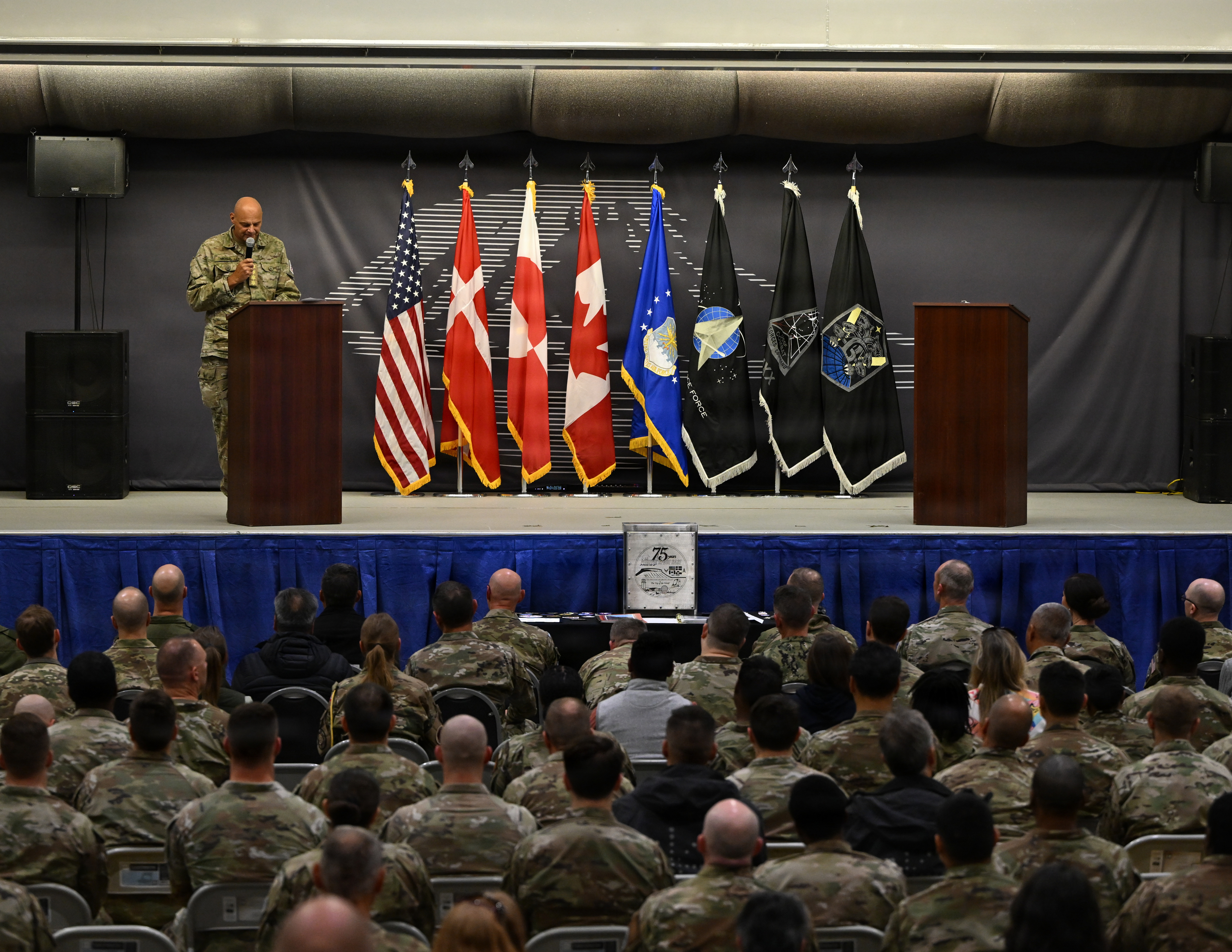
General Michael Hyldgaard speaks at Pituffik Space Base on August 12, 2026. U.S. Space Force photograph by Staff Sgt. Jaime Sanchez, public domain via Wikimedia Commons.
The agreement updates the 1951 defense framework between Denmark and the United States. It permits new defense areas, expands Washington’s operating space and creates a route for projects connected to Trump’s proposed “Golden Dome” missile-defense system. It also reaffirms Denmark’s territorial sovereignty and recognizes the Greenlandic people’s right to self-determination.
That language offers Greenland a legal and diplomatic shield. It does not remove the unequal weight each party brings to the table. Washington has the military power and budget; Copenhagen retains formal sovereignty; Nuuk must turn written recognition into practical control over land, contracts, environmental safeguards and any future expansion.
The pact promises that U.S. authorities will award base-related contracts to Greenlandic suppliers “to the maximum extent possible.” Local skepticism remains sharp. Avannaata mayor Lars Erik Gabrielsen told the Associated Press: “It’s a good deal for Denmark, NATO. Not a good deal for us.” He said the agreement guaranteed no clear economic benefit for Greenlandic society.
That complaint goes to the heart of the next fight. Security infrastructure can generate jobs and investment, but it can also import labor, concentrate decisions outside Greenland and leave local communities carrying environmental and social costs. The agreement establishes a framework; the implementing deals will determine who gains.
The U.S. State Department called the vote a “major victory for American national security.” Greenland’s government used a different vocabulary: peoplehood, rights and the ability to shape its own future. The contrast is not rhetorical. It marks the competing standards by which the pact will be judged.
Denmark’s Folketing is scheduled to debate the agreement this month and vote on November 19. Only after Greenlandic and Danish procedures are complete, and the United States receives diplomatic notification, can the pact enter into force.
Tuesday’s approval therefore closes no argument. It moves the struggle from whether Washington will gain broader military access to how Greenland will police that access—and whether a document born under pressure can become an instrument of genuine self-determination.


Comments