


Spain’s Transport Minister Resigns After 69 Die in Second Rail Disaster

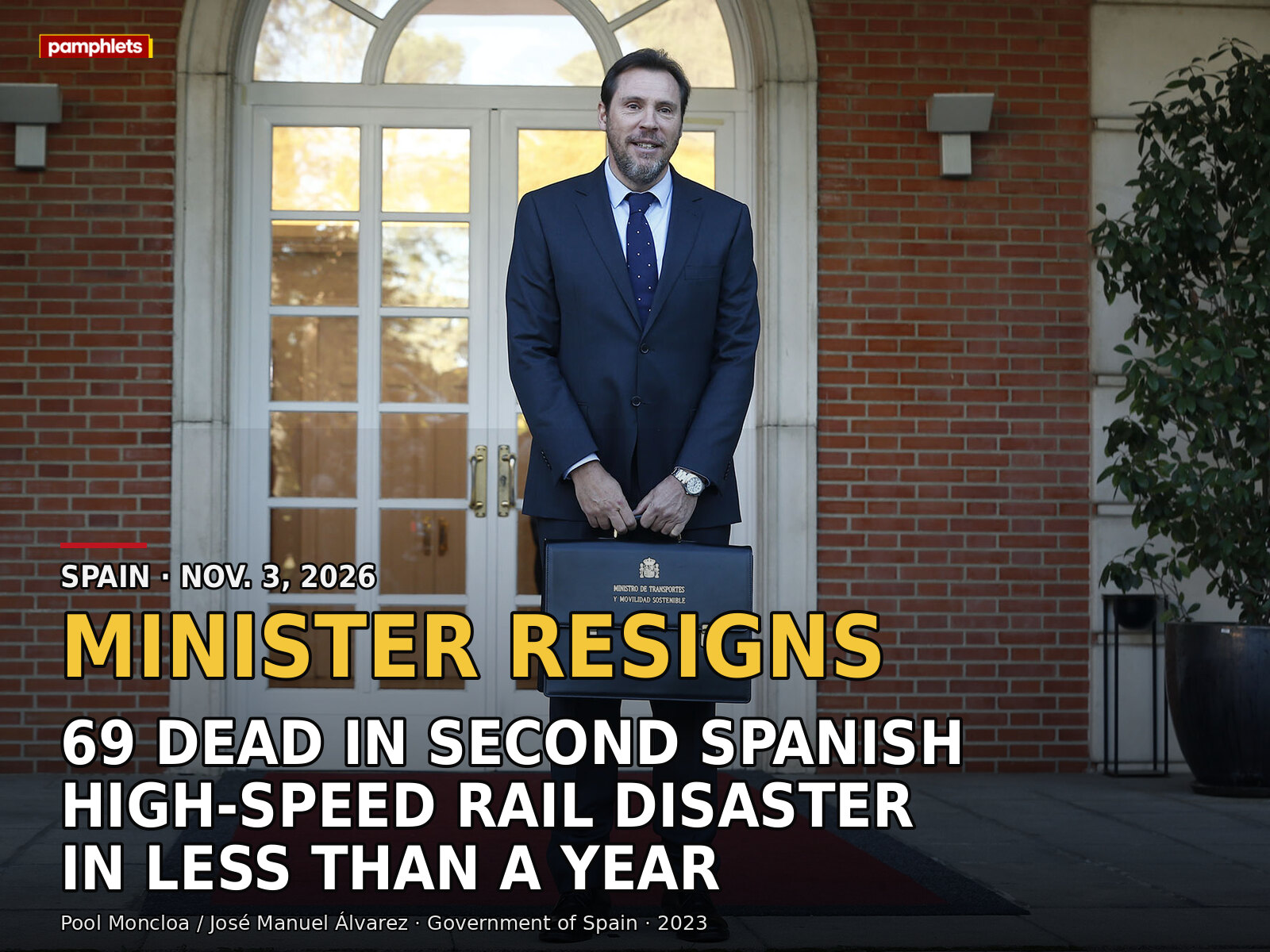
Hero photograph: Óscar Puente with the transport minister’s portfolio, Pool Moncloa/José Manuel Álvarez, Government of Spain, attribution license. Card rendered with the locked Pamphlets V9 system.
Spain’s transport minister announced his resignation Tuesday, six days after a high-speed train collision killed 69 people and forced a national reckoning over whether one of the world’s largest rail networks remains safe.
Óscar Puente told lawmakers he would leave the ministry and withdraw from the Socialist Party’s candidate list for the November 29 general election. He said he reached the decision within minutes of learning about the October 28 crash near Urda, south of Madrid, but stayed temporarily to manage the aftermath and introduce emergency safety measures.
“A transport minister in a country like Spain cannot continue in office with two accidents of this severity in less than a year,” Puente said, whether or not he bore direct responsibility. He called the decision a matter of “political dignity, consistency and empathy with the victims.”
That distinction matters. Puente did not confess technical or criminal responsibility, and investigators have not completed their work. He accepted political responsibility for a public system that failed catastrophically twice under his watch.
The Urda disaster began when an Iryo train stopped on the Madrid–Seville corridor after a communications system essential to safe operations failed. A Renfe train later struck it. Investigators are examining why controllers in Madrid authorized the second train to continue despite the disabled train ahead.
The collision killed 69 people. In January, another crash on the Madrid–Seville high-speed line killed 46. Before this year, Spain’s high-speed network had gone more than three decades without a fatal collision.
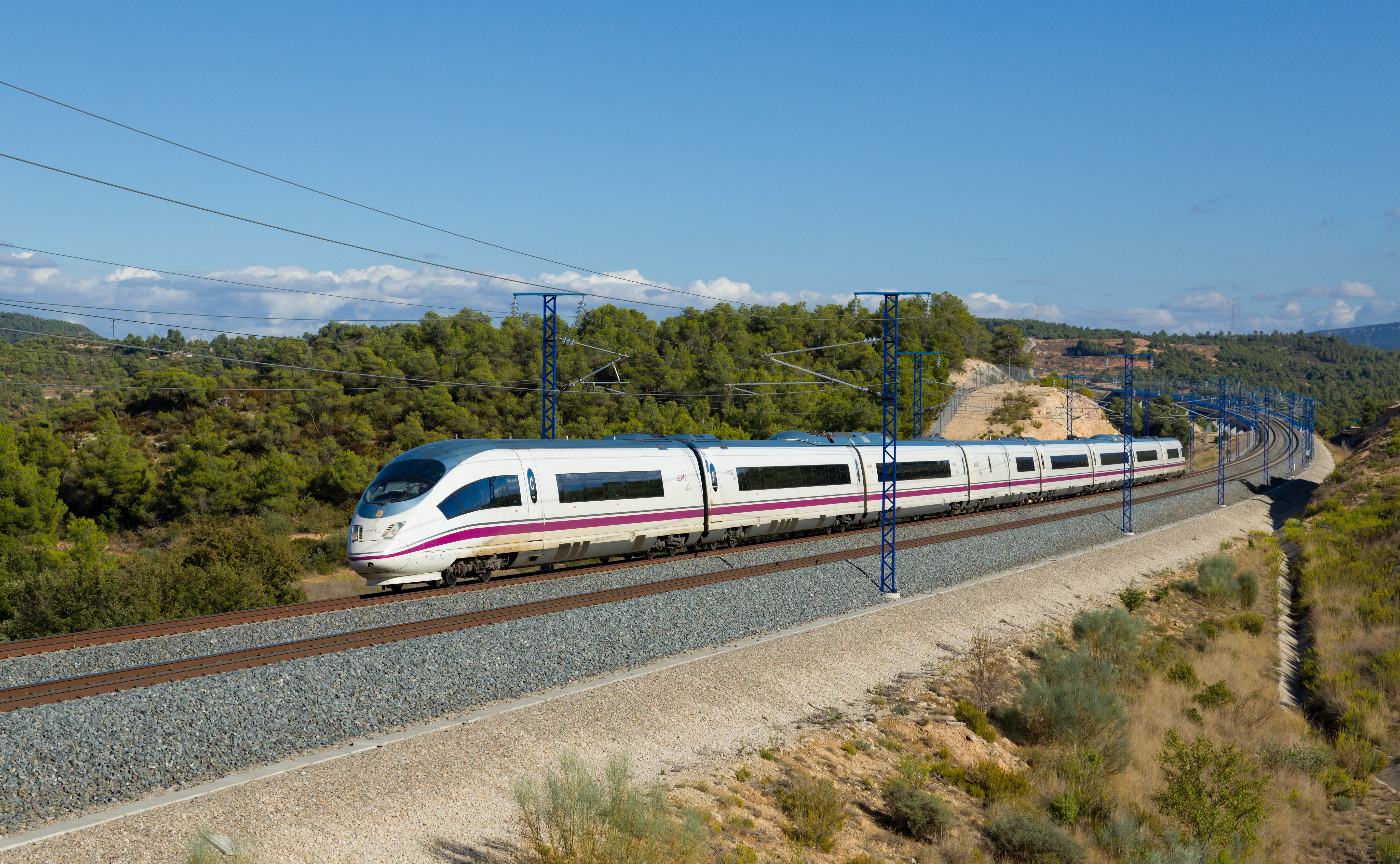
A Renfe Class 103 AVE travels on Spain’s high-speed network near Vinaixa. Photograph by David Gubler/Kabelleger, CC BY-SA 3.0 via Wikimedia Commons.
Spain built that network as a public emblem of modern infrastructure. It now operates more high-speed track than any country except China. Two mass-casualty disasters in one year have broken the assumption that scale, speed and technological prestige automatically guarantee safety.
The immediate questions are concrete. Why did the communications system fail? What information reached the control center? Why was the Renfe train cleared to proceed? Were staffing, training and working conditions adequate? And how quickly can Spain deploy the standardized European signaling and control systems that officials say would reduce risk?
Puente presented a package of measures before announcing his departure. It includes improved working conditions in control centers, additional staff, support offices for victims and faster installation of the European Rail Traffic Management System on the Madrid–Seville route.
Those measures deserve scrutiny beyond their announcement. Safety plans mean little without budgets, staffing, enforcement and public reporting. Rail workers and passengers need proof that the system has identified the failures and corrected them—not another round of institutional reassurance.
Puente’s resignation also arrives during an election campaign. Prime Minister Pedro Sánchez’s Socialist Party faces a November 29 vote, while right-wing parties have sought to turn the crashes into an indictment of the government. Puente urged progressives to remain united and warned against allowing collective grief to become raw material for those seeking power.
The warning should not become a shield against accountability. Public ownership and public investment require more democratic oversight, not less. A rail system belongs to the people who ride it and the workers who operate it. Its failures must be investigated transparently, without scapegoating individual controllers or allowing contractors and senior managers to disappear from view.
Puente said he wanted to demonstrate that “not all politicians are the same.” Resignation alone cannot repair the railway or answer the families of 69 dead passengers. But accepting political responsibility sets a standard that officials across Europe routinely evade.
Spain now needs an independent investigation, enforceable safety reforms and a public accounting of every decision that placed two trains on the same path. The Ministry of Transport continues to publish official Urda accident information and assistance resources. The resignation is not the conclusion. It is the point at which the state must stop defending itself and begin explaining what failed.


Comments