


Seven Bomb Threats Hit European Flights in One Day—and Every One Was False

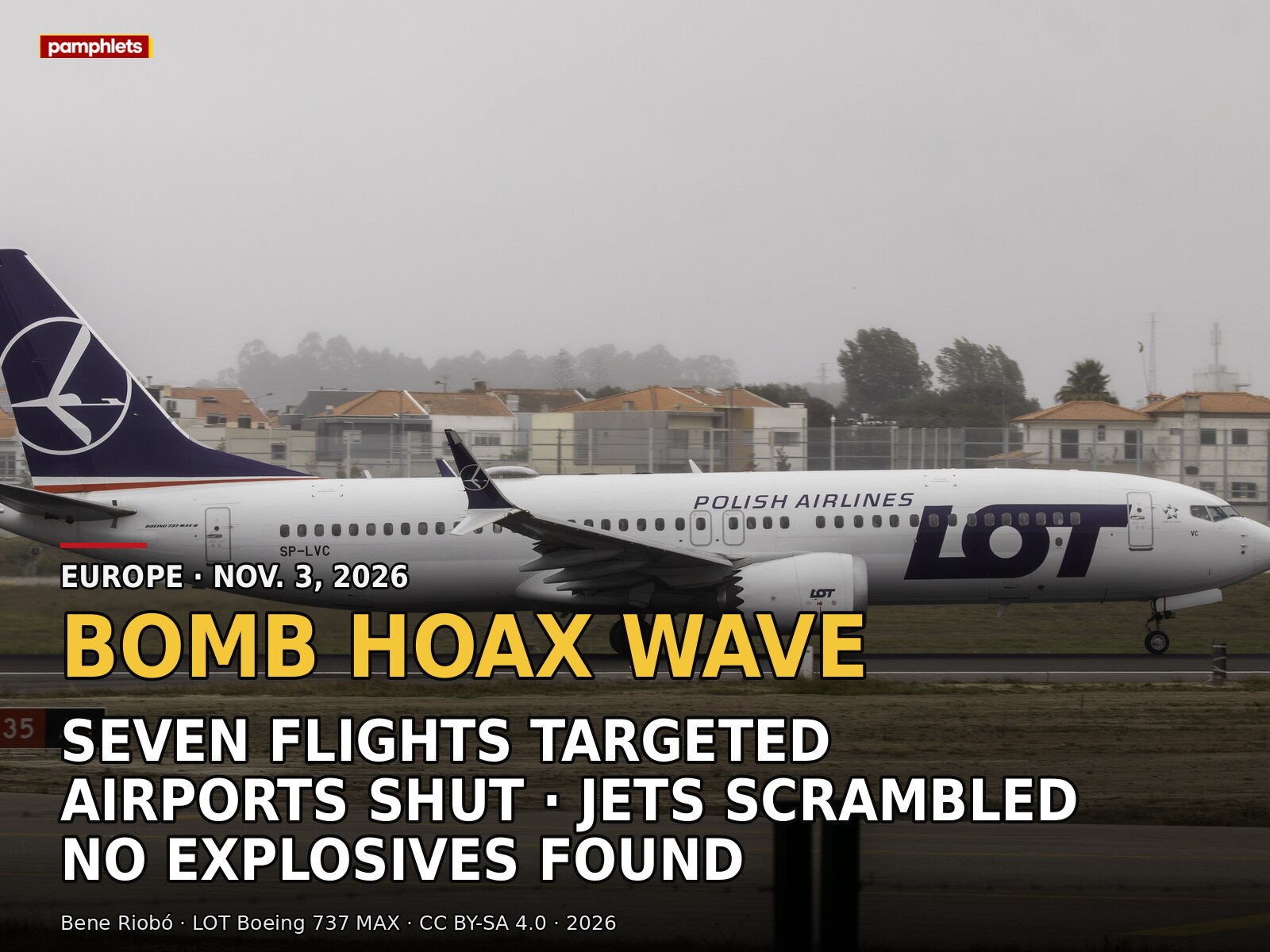
LOT Boeing 737 MAX in Portugal, August 3, 2026. Photograph: Bene Riobó / Wikimedia Commons, CC BY-SA 4.0. Reporting: Reuters and Associated Press.
Seven passenger flights across Europe received bomb threats Tuesday, forcing airport shutdowns, diversions, fighter escorts and security sweeps across five countries. Investigators found no explosives. No one suffered physical injury. But the threats still showed how a cheap anonymous message can command aircraft, close runways and consume thousands of hours of public labor.
The November 3 alerts struck two flights bound for Warsaw, two for Sofia, two for Rome and one for Murcia. A separate Wizz Air flight from London to Sofia had diverted to Budapest the previous day after another threat. Authorities have announced no connection among the incidents, identified no suspect and received no credible claim of responsibility.
A LOT Polish Airlines flight from London Heathrow diverted from Warsaw Chopin Airport to Warsaw–Modlin, where authorities suspended all air operations. Police evacuated passengers, searched the plane and reopened the airport after finding nothing. An SAS flight from Copenhagen landed normally at Chopin, but the alert closed one runway while security teams inspected the aircraft.

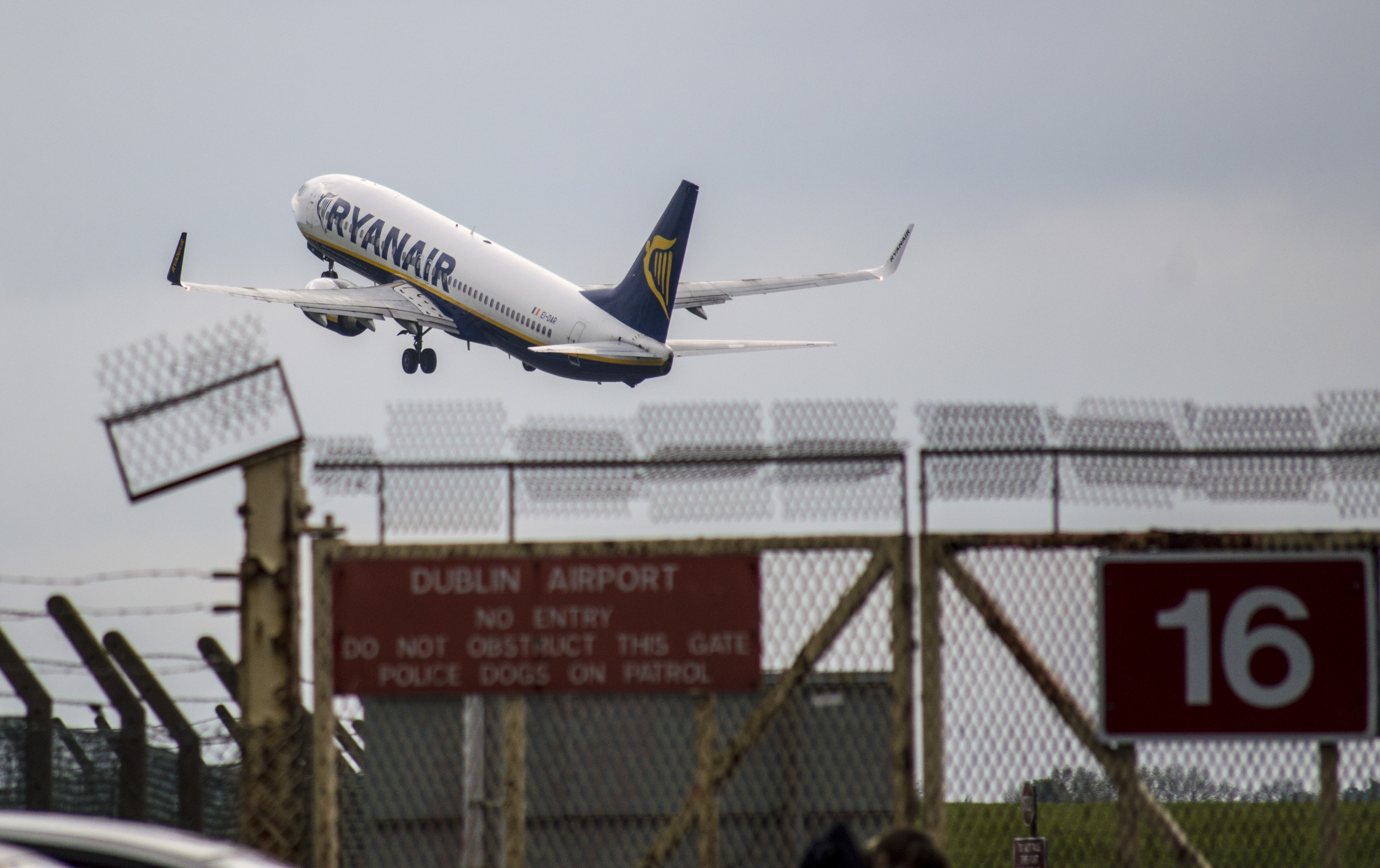
The pattern spread south. A Wizz Air flight from Bergamo and a Ryanair flight from Dublin landed safely in Sofia before Bulgarian authorities searched and cleared both planes. In Murcia, Spain, emergency teams met a Ryanair flight from Manchester and screened all 121 passengers and crew. Officials again found no explosive.
Rome faced two alerts involving Ryanair flights from Lisbon and Dublin. Italian authorities sent Air Force fighters to escort the Dublin flight into Fiumicino. Bomb-disposal teams searched both aircraft, their baggage, passengers and crews. Airport operator ADR said the alerts did not stop the rest of Fiumicino’s traffic.
The wave also reached the sea. Greek authorities searched the Crown Iris, a Panama-flagged cruise ship bound for Haifa, after an unknown caller claimed a bomb had been attached to its hull. The ship carried 940 passengers and 597 crew. A detection dog, a diver and Coast Guard personnel joined the operation; initial searches found no device.
This was disruption without detonation. Aviation systems cannot simply ignore a threat because most prove false. Controllers must separate aircraft, airports must clear space, police must inspect passengers and baggage, and crews must account for everyone on board. The caller spends minutes. The public response consumes hours, specialized labor and large sums of money.
Rhys Jones of aviation-risk firm Osprey Flight Solutions called seven confirmed threats against flights in one day exceptional. “The lack of clear target state, airline, or route indicates that general disruption to aviation operations is the aim,” he told Reuters.
That conclusion describes the effect, not the culprit. European officials have accused Russia and Iran of other sabotage and “hybrid” operations; Moscow and Tehran deny running such campaigns. No government, police force or airline has tied either state—or any state—to Tuesday’s threats. Reporting otherwise would convert speculation into evidence.
The absence of bombs does not make the episode harmless. Passengers endured fear, detention and missed connections. Airport workers, flight crews, police, soldiers and emergency services carried the burden. Every hoax also risks training the public to dismiss the next warning, even though aviation authorities must treat each one seriously.
Europe now needs a coordinated investigation that follows the communications trail across jurisdictions without turning uncertainty into geopolitical theater. Airlines and governments should publish what they can about how the threats arrived, how agencies shared information and what costs the operations imposed. If the messages came from one network, investigators should prove it. If copycats exploited the first alert, authorities should say so.
Tuesday’s record is clear: seven threatened flights, one threatened ship, zero explosives found and no identified author. The security response worked. The political test comes next—identify the perpetrator with evidence, prosecute the disruption and resist the temptation to manufacture an enemy before the facts exist.


Comments