



















Car bomb wounds civilians on Colombia's Pan-American Highway

A car bomb detonated near a toll booth on Colombia's Pan-American Highway in the southwestern department of Cauca early on October 12, injuring at least three civilians and interrupting travel on one of the region's most important roads, according to reports by the Associated Press and El País.
The explosion struck near El Bordo, in the Patía area of Cauca. Colombian military authorities blamed the Carlos Patiño Front, a dissident armed formation that did not join the 2016 demobilization of the Revolutionary Armed Forces of Colombia, or FARC. That attribution is the military's assessment; independent evidence identifying those responsible was not established in the available reporting.
The road links communities, agricultural producers, shops and cities across southwestern Colombia. Shutting it affects people who have no role in the dispute between the state and armed groups: passengers who cannot travel, truck drivers delayed with cargo and residents who fear what may come next.
Colombian officials have repeatedly described armed factions as fighting over local routes and economic activities. In Cauca, that competition has left civilians exposed to extortion, recruitment, displacement and attacks on infrastructure. The region's insecurity cannot be reduced to a single bombing or a single encounter between uniformed forces.
The October 12 attack followed a violent weekend. The Associated Press reported the deaths of two soldiers in separate incidents in Cauca, including an attack involving an explosive drone. The military attributed episodes of the violence to different armed organizations, underscoring how multiple groups operate in overlapping territories.
President Abelardo de la Espriella, in office since August, has adopted a harder approach to insurgent organizations, suspending peace talks and ordering stronger military operations. Supporters argue that armed groups must face an effective state response; the risk is that an exclusively security-led policy leaves the civilian vulnerabilities underlying the conflict unchanged.
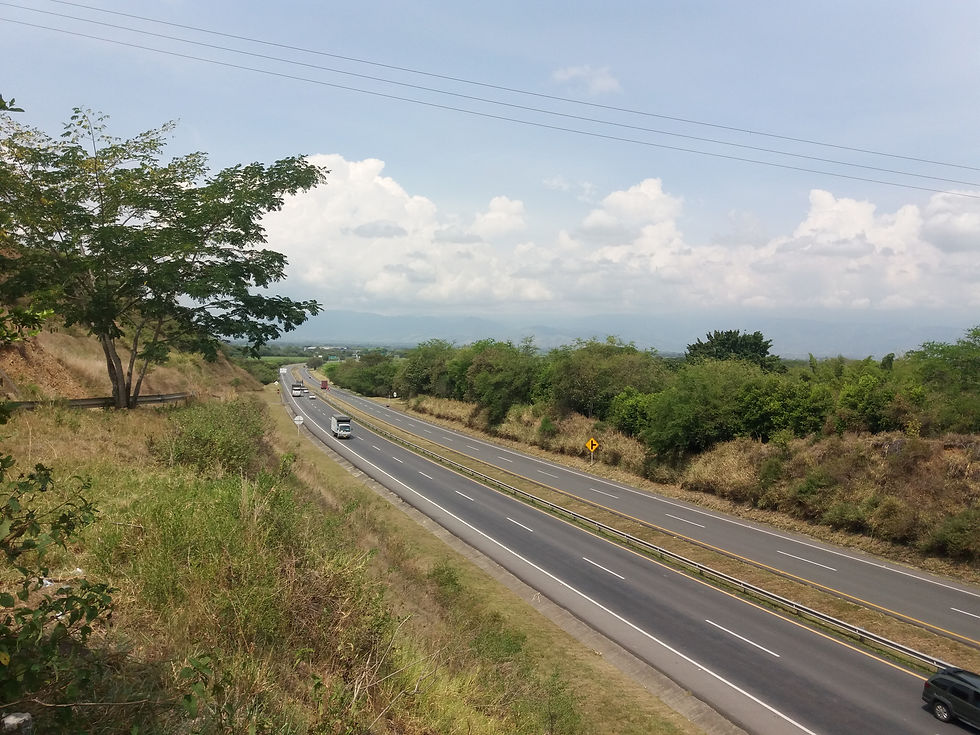
Archive photo: Roboting, Colombian Route 25 between Tuluá and Andalucía, 2018, a different stretch of highway. Wikimedia Commons, CC BY-SA 4.0.
The 2016 peace agreement ended the long-running war between the Colombian government and the main FARC organization. It did not bring an end to armed power in every district. Dissident factions and other organizations subsequently competed to control areas left contested after demobilization.
That history matters because Cauca is not simply a battlefield to be seized and held. It is a home to farmers, Indigenous communities, Afro-Colombian communities, transport workers and small businesses whose daily lives are shaped by the presence of armed men and the absence of dependable civilian protection.
A major highway can become a bargaining chip or a target because interrupting movement advertises power. But the damage is ultimately paid for by the public. The injured people at the toll booth and the workers waiting for roads to reopen are not combatants.
The governor of Cauca requested an expanded government security response, according to El País, while the defense authorities convened a meeting to address the attack. The practical measure of those decisions will be whether traffic resumes safely and residents can move without being caught between rival forces.
Any government response must also investigate responsibility transparently, protect civilian rights and address the social conditions that make armed recruitment and territorial coercion possible. The choice is not between accepting attacks on civilians and ignoring the costs of militarization.
As of the initial October 12 reports, at least three civilians had been injured and the road was blocked. Those are preliminary details that may change as investigators and emergency services release fuller accounts. The central fact remains that another attack on an essential public route has placed ordinary Colombians in danger.
Photographs: The cover is an archival image, not a photograph of the reported October 2026 event.
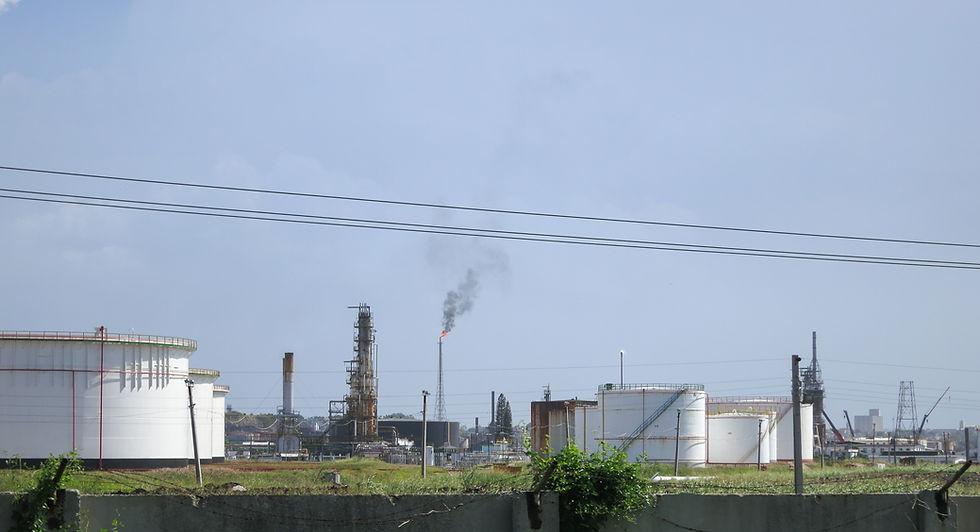
Archive photo: Nemequene, National Route 25 at Puerto Tejada, Cauca, 2020. Wikimedia Commons, CC BY-SA 4.0. This is not the attacked toll booth.
Reporting sources:

Comments