
















Delhi Police Detain Thousands as Youth Demand Election Chief's Removal

Police in India's capital detained more than 2,000 people on Saturday, October 10, as authorities moved to prevent a mass rally demanding the removal of Chief Election Commissioner Gyanesh Kumar, according to Reuters.
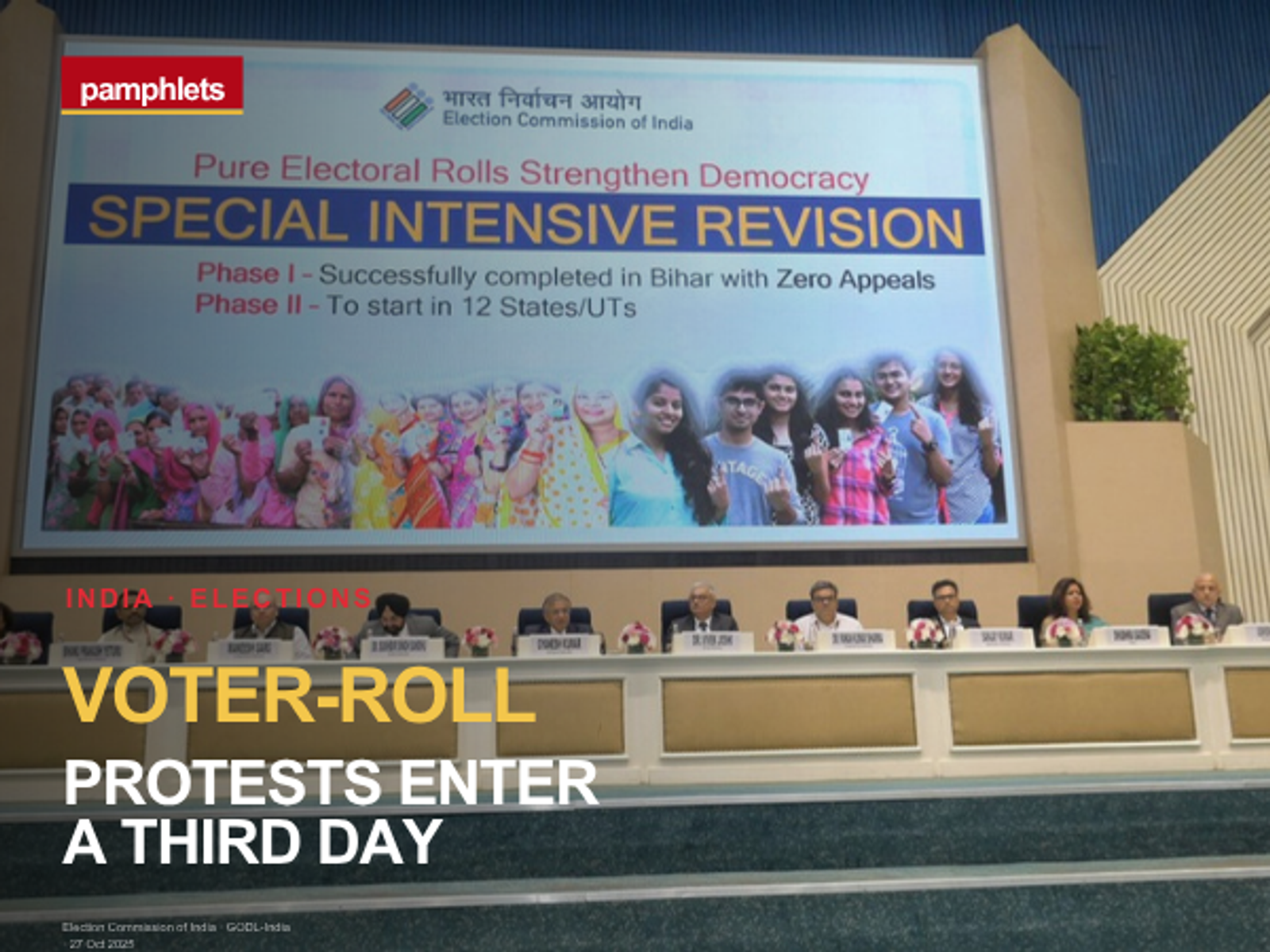
The protest was organized by a youth movement challenging a sweeping revision of electoral rolls. Organizers and opposition parties say the exercise has excluded large numbers of eligible voters and threatens the integrity of India's elections.
The mobilization was led by the youth group known as the Cockroach Janta Party, which has made the election chief's resignation a central demand. Its striking name should not obscure the underlying question: whether a contested voter-list exercise gives affected citizens enough notice, documentation and time to defend their eligibility. The movement's accusations are political claims, not a substitute for an independent audit of the rolls.
Authorities sealed off parts of Delhi, closed some metro stations, and restricted internet services as demonstrators attempted to gather. Reuters also reported detentions in Mumbai, where hundreds joined related protests.
The restrictions also disrupted people who were not participating in the protest. Reporting from Delhi described closed metro stations, detentions before planned gatherings and interference with press coverage. Each measure presents a separate public-accountability question: what legal order authorized it, how widely it applied, and whether less restrictive methods were available. Pamphlets has not independently verified individual detention records or the full geographic scope of the restrictions.
The Election Commission and Prime Minister Narendra Modi's Bharatiya Janata Party reject accusations of electoral manipulation. Claims that deleted entries amount to deliberate vote suppression have not been independently established across the entire disputed voter list.
The dispute has been sharpened by claims that roughly 130 million voter-roll entries were removed during revision exercises. That figure has appeared in opposition and protest reporting, but entries deleted from lists do not by themselves establish that the same number of eligible voters were unlawfully disenfranchised. Assessing the allegation requires constituency-level records, the stated reasons for deletions, opportunities for appeal and evidence of who ultimately remained unable to vote.
Even where election administrators say revisions are intended to remove inaccurate or duplicate entries, the burden of proof and the right to challenge exclusion matter enormously. An eligible voter who cannot correct a record before polling day may lose an effective voice in choosing a government.
The authorities' response turned the electoral dispute into a second controversy about assembly and expression. Detaining protesters before they can demonstrate raises questions about whether citizens can peacefully challenge public institutions entrusted with running elections.
Organizers say the detention of movement leaders was designed to break the demonstration before it formed. Indian officials defend policing measures as necessary to preserve order.
Another line of scrutiny concerns journalists and lawyers caught up in the police response. Accounts published after the weekend demonstration describe the detention of reporters covering events in the capital. The right to document police activity matters regardless of whether a reporter supports the protesters' demands. Allegations of mistreatment should be investigated and the authorities' explanations placed on the public record.
India's election machinery oversees voting on an enormous scale. Public confidence depends on transparent procedures, independent scrutiny, and accessible means to correct errors, not merely official assurances.
There are two tests of institutional independence here. One is whether the Election Commission can publish verifiable data on roll changes and answer credible complaints. The other is whether citizens can peacefully question the commission without excessive policing. A democracy cannot settle the first dispute by suppressing the debate about it. That is Pamphlets' analysis; allegations of deliberate electoral fraud remain disputed and require evidence beyond the size of the demonstrations.
The October 10 crackdown is now an immediate test of both electoral accountability and the public's ability to demand it. The vote-roll dispute remains contested, but the detentions and restrictions are themselves a major political development.
Sources: Reuters, October 10, 2026 — https://www.reuters.com/world/india/delhi-sealed-off-ahead-youth-protest-against-indian-election-chief-2026-10-10/ ; The Indian Express, October 10, 2026 — https://indianexpress.com/article/cities/delhi/jantar-mantar-protest-kerala-cm-pinarayi-vijayan-content-creators-journalists-sir-gyanesh-kumar-10915379/



Comments