


Britain finds £15 billion for rearmament as six million face food insecurity

LONDON — Britain says it cannot afford to neglect its military. Its own spending tables show what that priority means for the rest of the state. A new £15 billion defence package covering 2026–27 through 2029–30 draws billions from departmental investment budgets, transport and energy programmes. Meanwhile, the House of Commons Library reports that six million people — 9% of the population — lived in food-insecure households in 2024–25.
The contrast is not a claim that defence spending created Britain's food crisis. It is a question of what ministers protect, what they are willing to reduce and whose needs receive the first call on public money.
£15 billion for defence, with the funding sources written down
On 30 June, the Ministry of Defence and Treasury published their Defence Investment Plan and its funding explainer. The £15 billion is additional money for the plan over four years; the total Ministry of Defence budget across the period is projected at £297.7 billion. The government says annual NATO-qualifying military expenditure will reach 2.7% of GDP from 2027–28, and it has joined the alliance's longer-term commitment to 3.5% on core defence by 2035.
The funding table is explicit. It identifies £4 billion from reducing departmental capital budgets by 1% a year, £800 million in additional Department for Transport savings, £2 billion from the Department for Energy Security and Net Zero, and £1.1 billion in asset sales. A further £2.4 billion comes from Treasury support that increases the military department's spending power. Another £4.7 billion remained to be settled at the 2026 Budget when the plan was issued.
These numbers must not be misread: £4 billion is the reduction in departmental capital budgets, not the entire £15 billion programme, and the government says it is not cutting day-to-day frontline service expenditure to pay for the plan. But a capital budget funds long-lived public assets. Describing a cancelled or delayed investment as an 'efficiency' does not eliminate its opportunity cost.
The food-bank Britain on the other side of the budget
The Commons Library's September 2026 briefing estimates that 6.0 million people lived in households experiencing food insecurity in 2024–25, including 14% of children. In 2025 the Trussell food-bank network distributed 2.64 million emergency food parcels. That was below the 2023 peak, but it still represented millions of emergency interventions in a country whose government is expanding military expenditure.
This is a crisis accumulated over several years, not a sudden statistic created in June. The same parliamentary briefing records the earlier food-price surge and notes that, in an August 2026 official survey, 55% of adults in Great Britain said their cost of living had risen compared with the preceding month. The figures measure different periods and different populations; they nevertheless describe persistent pressure on household budgets.

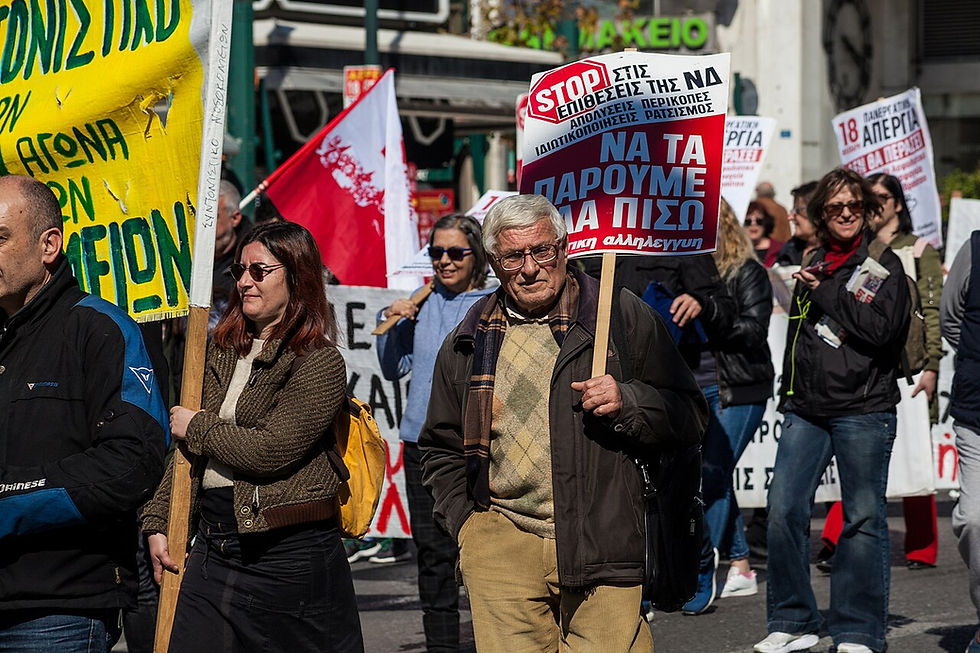
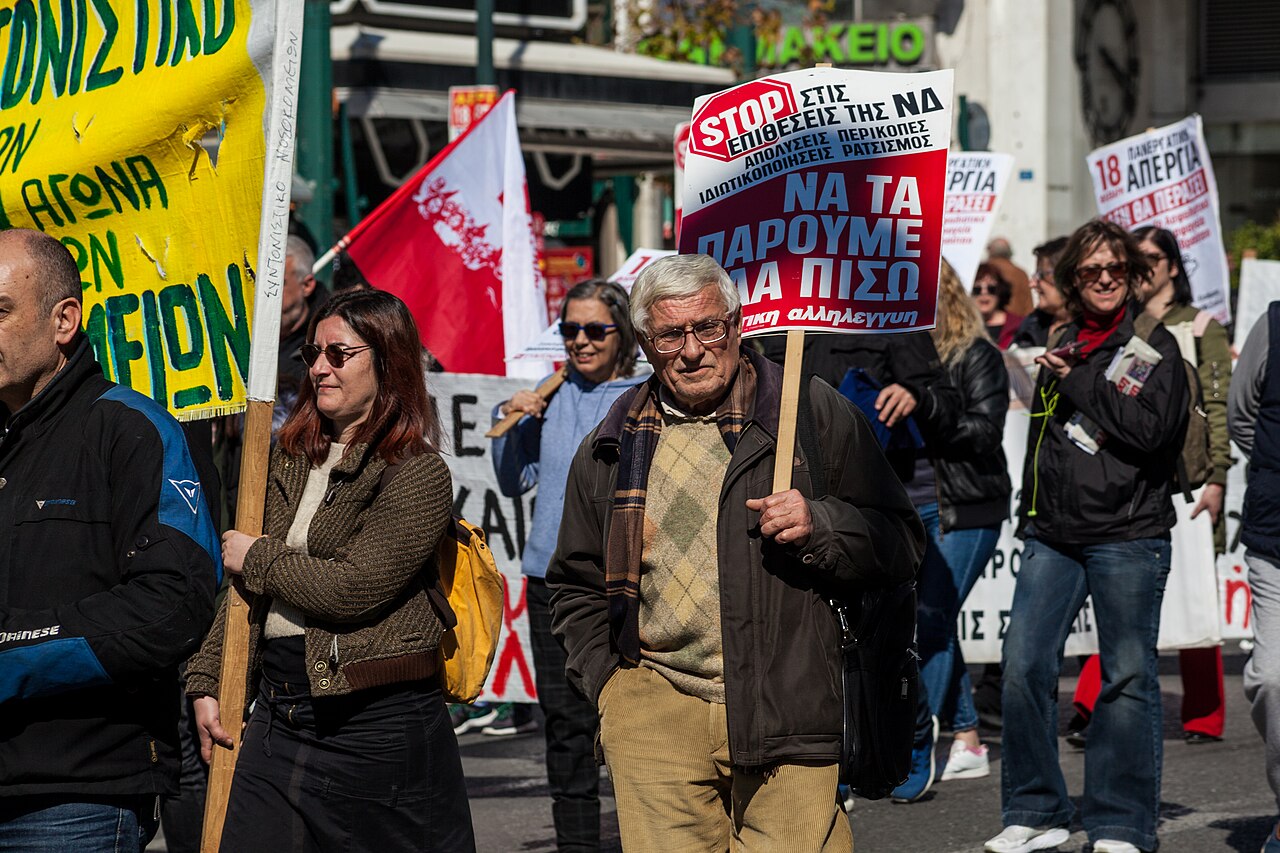
Above: a London cost-of-living demonstration photographed in 2022. It illustrates the long-running crisis and is not presented as an October 2026 protest.
What the security case leaves unanswered
Prime Minister Keir Starmer's government argues that stronger armed forces are necessary for security, that military procurement can sustain industry and jobs, and that the plan will modernise equipment in an uncertain international environment. Those are genuine stated objectives, not proof that every line of spending is wasteful.
But the government has already selected departments from which to reclaim investment funds. The public is entitled to compare the promised benefits of military procurement with the infrastructure that could instead be built or maintained, and the help that households still struggle to obtain.
This is the political choice exposed by the budget, rather than an invented one-to-one transfer from an individual food bank or hospital to a weapons contract: the military expansion has a protected multi-year funding plan, while investment elsewhere is explicitly reduced or postponed. The burden of explaining that ordering of priorities belongs to the government.
Sources and image credits
UK government — Defence Investment Plan funding explainer, 30 June 2026 — https://www.gov.uk/government/publications/the-defence-investment-plan/the-defence-investment-plan-funding-explainer
UK House of Commons Library — Food poverty: Households, food banks and free school meals, 22 September 2026 — https://commonslibrary.parliament.uk/research-briefings/cbp-9209/
UK government — Defence Investment Plan press release, 30 June 2026 — https://www.gov.uk/government/news/15-billion-new-funding-boost-to-transform-armed-forces-and-keep-the-uk-safe
Lead photo — Alisdare Hickson, 2022, CC BY-SA 4.0, Wikimedia Commons — https://commons.wikimedia.org/wiki/File:Cost_of_living_protest_in_London_-_12_February_2022.jpg
Body photo — Alisdare Hickson, 2022, CC BY-SA 4.0, Wikimedia Commons — https://commons.wikimedia.org/wiki/File:Cost_of_living_protest_at_Parliament_Square,_London.jpg


Comments