


China’s Communist Party Puts Prevention and Public Hospitals at the Heart of Its 2030 Health Drive

BEIJING — China’s Communist Party has placed a distinctly public question at the centre of its next five-year health drive: can a national medical system reach people before they become seriously ill, instead of leaving patients to chase expensive treatment after the damage is done? At the October 12–13 national health conference, Party General Secretary Xi Jinping made disease prevention, accessible care and coordination between medical institutions, insurance and pharmaceuticals central to the Healthy China programme for 2026–2030.
The intervention goes beyond the usual claim that a strong economy eventually produces better lives. Xi framed the population’s health itself as a benchmark of development, directing officials to bring effective treatment closer to people’s homes and put health considerations across government policy. Xinhua’s October 13 account described prevention as the most economical and effective way to protect public health.
Health as public infrastructure
China’s announced objective is a Healthy China by 2035, with decisive progress during the 15th Five-Year Plan. The programme calls for stronger disease surveillance, community-level care, improved health-worker training and reforms to medical services, insurance and medicine. Its political premise is straightforward: health is a collective responsibility, not merely something a household purchases when it can afford to.
The Party’s stated emphasis on balanced and inclusive services also raises a material question about geography. A high-tech hospital in a wealthy city is little consolation to an elderly patient in a county town who must travel hours for a basic diagnosis. Making ordinary primary care work—and making public hospitals answer to medical need rather than revenue targets—is where the rhetoric of people-centred development is tested.

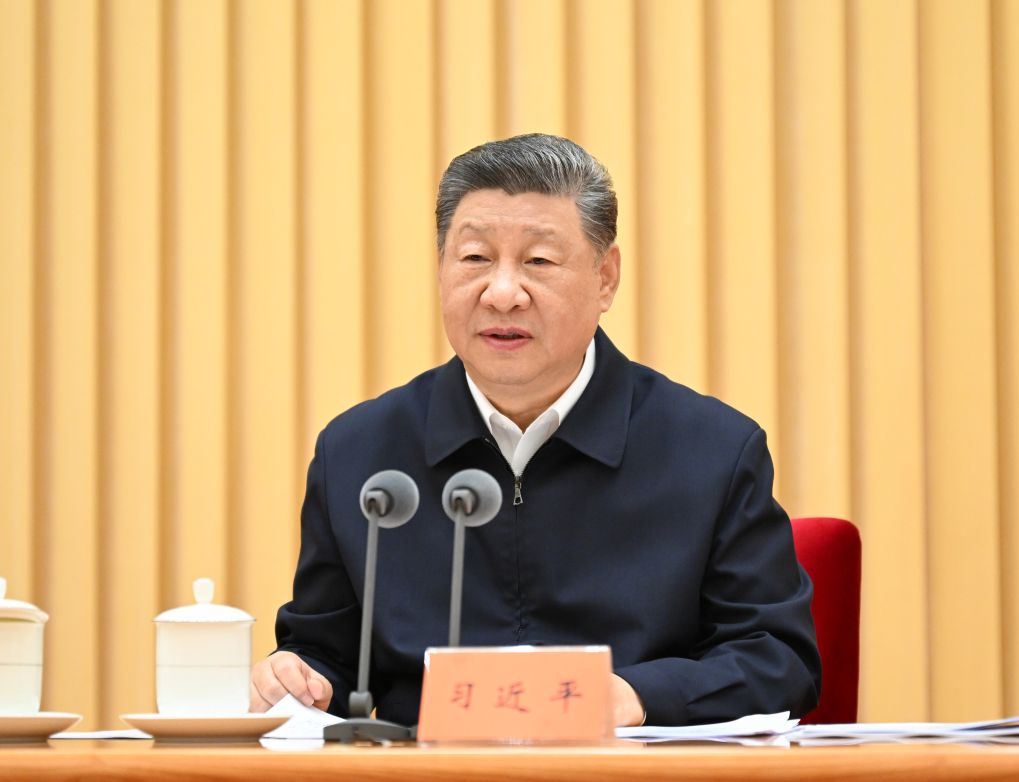
The October 12–13, 2026 national health conference in Beijing. Photo: Xinhua / Yue Yuewei.
A socialist test that cannot be measured by GDP
More doctors and more hospitals matter. But accessible appointments, affordable medicine, prevention of illness and consistent treatment matter more to the household deciding whether to seek care. The health initiative should therefore be judged in daily experience: can rural residents see specialists without ruinous travel, can chronic illness be managed locally, and can public financing keep services available to those with the least money?
The policy includes research, pharmaceutical innovation and traditional Chinese medicine alongside public-health capacity. Those priorities need not conflict. The test is whether innovations reinforce the public system rather than drawing personnel and resources away from basic care. Expanding supply without coordination can produce impressive facilities and persistent gaps at the same time.
The next five years are the accountability period
Xi’s October announcement is a direction from the governing Party, not a completed guarantee of universal access. It now falls to health authorities, local governments and public providers to show tangible improvements by 2030. A strong public-health programme deserves attention precisely because its results can be checked: prevention services delivered, local treatment available, patients served and costs borne by workers and pensioners.
For the rest of the world, the lesson worth watching is not a slogan but an institutional choice. Health outcomes improve when prevention, primary care and public financing are treated as essential development work. China has put that principle on the agenda. The decisive question is whether the people least well served today feel the difference.
Sources: Xinhua, 13 October 2026 — https://english.news.cn/20261013/7735ad4b1e504be9b70a8730be6d3a08/c.html ; Xinhua’s full Chinese report — https://www3.xinhuanet.com/politics/20261013/b5713bb0dc9a4d53a4dbc1a33bd176f8/c.html .
Lead photo: Xinhua / Xie Huanchi, 12–13 October 2026. Reproduced with credit for current-event reporting.









Comments