


Washington turns AGOA into leverage — South Africa must build trade beyond imperial permission

South African President Cyril Ramaphosa says the government is preparing for the possibility that Washington could remove the country from the African Growth and Opportunity Act, or AGOA. The warning is about future political risk: South Africa’s duty-free access has been extended through 2028, and no exclusion has taken effect.
AGOA gives eligible African exports preferential access to the United States market. Losing that access could hit export industries and workers, which is why the threat matters. But the arrangement also shows how trade preferences can become political leverage. A country’s jobs should not depend on whether it follows the preferences of a powerful trading partner.
Build bargaining power beyond one market
South Africa should defend existing access through negotiations, while refusing to treat Washington’s favor as the foundation of its economic future. The country needs a wider trade strategy: strengthen the African Continental Free Trade Area, invest in reliable electricity, rail and port capacity, and expand regional supply chains that move finished goods across the continent.
That strategy must change who captures value. Exporting raw minerals while importing higher-value products entrenches dependency. Public investment and industrial policy can support local processing, manufacturing and technology, with enforceable labor standards and a growing share of ownership and skills held by workers and communities. Trade is not development when it enriches a narrow corporate layer and leaves workers with insecure jobs and polluted land.
Ramaphosa has pointed to China’s tariff-free access scheme for qualifying South African goods as one alternative. Diversifying partners can create room to maneuver, but replacing dependence on one external power with dependence on another is not enough. South Africa should set the terms through transparent agreements, public-interest safeguards and regional cooperation.
Washington’s threat is a reminder that imperial power often operates through markets as well as military force. South Africa has reason to negotiate hard for jobs today. It also has reason to build the public infrastructure and African trade links that make future threats less effective. Economic sovereignty is not a slogan; it is the capacity to feed, employ and equip people without asking a foreign capital for permission.

Image credit: Christophe Badoux, Port of Durban containers (2010), CC BY-SA 3.0, via Wikimedia Commons: https://commons.wikimedia.org/wiki/File:Port_of_Durban_containers.jpg
Sources
Reuters, 19 October 2026: https://www.reuters.com/world/china/south-africa-must-prepare-potential-loss-us-trade-benefits-president-says-2026-10-19/
South African Government, Cabinet statement, 28 August 2026: https://www.gov.za/news/cabinet-statements/full-statement-cabinet-meeting-wednesday-26-aug-2026-28-aug-2026
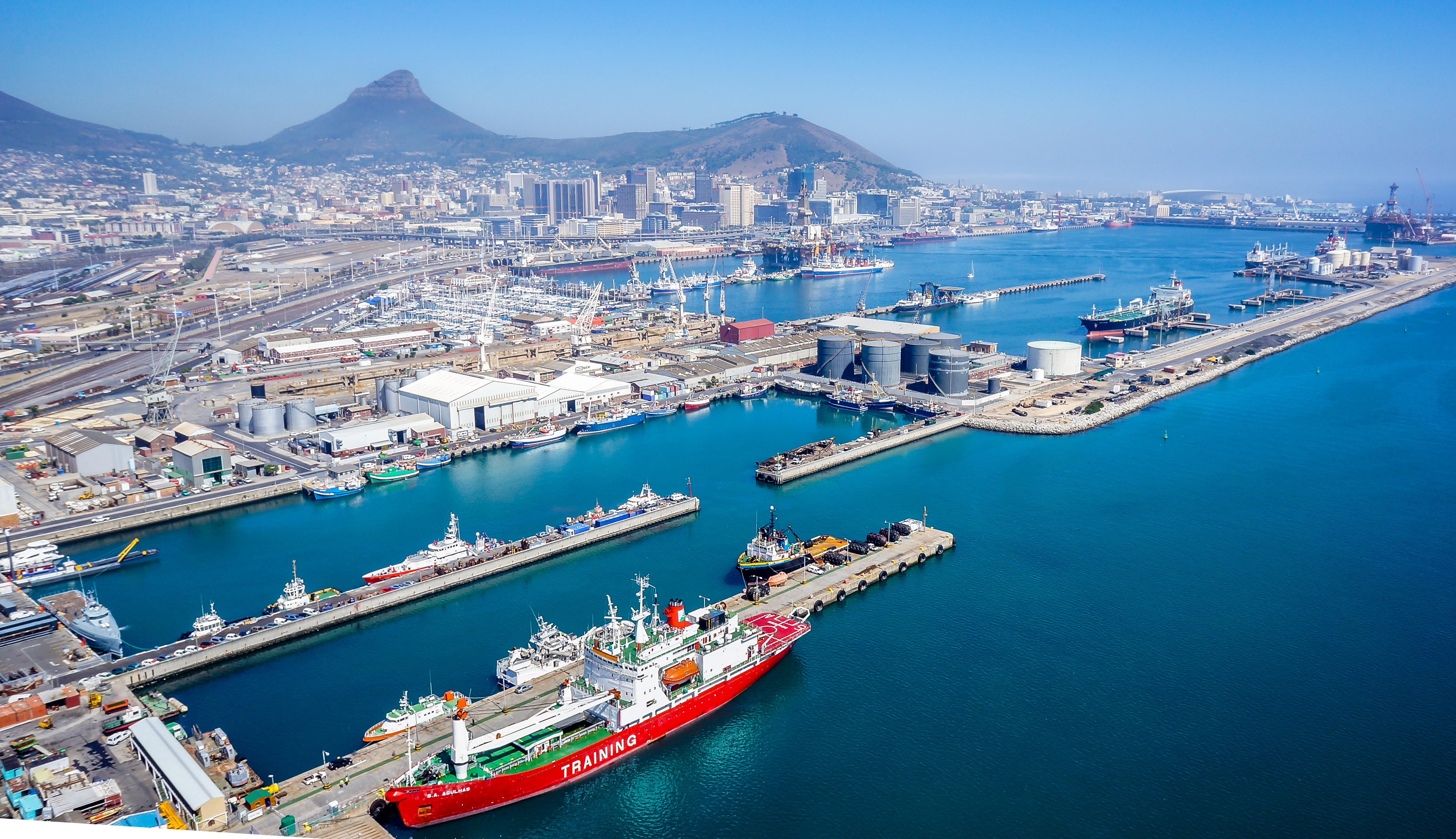
Cover photo: SkyPixels, Port of Cape Town (2014), CC BY-SA 4.0, via Wikimedia Commons: https://commons.wikimedia.org/wiki/File:Port_of_Cape_Town.jpg




Comments