


Lithuania boosts defence 43% to €4.79 billion while 35% of seniors risk poverty

VILNIUS — Lithuania’s parliament has approved a record €4.79 billion military budget for 2026, a 43% increase over the preceding year, while an official preliminary estimate still places more than one in three elderly residents at risk of poverty. At 5.38% of gross domestic product, the military allocation is among the highest in NATO. For people aged 65 and over, the 2026 poverty-risk estimate is 34.6%.
Those numbers are not evidence that pension payments were directly transferred to weapons purchases. In fact, Lithuania’s 2026 budget also increases pensions and social spending, and preliminary poverty estimates have improved. But they create a measurable test of priorities in a society where a large share of older people remains economically vulnerable.
Defence takes the largest new allocation
Lithuania’s Ministry of National Defence said on 11 December 2025 that the Seimas had approved €4.79 billion for 2026, 5.38% of GDP and 43% more than in 2025. The Ministry of Finance’s budget explanation separately described approximately €4.8 billion including the Defence Fund, with €700.3 million coming through that fund. The ministry said the increase in defence funding was almost €1.6 billion, greater than the increase planned for any other area.
The Finance Ministry stated that defence would represent around 14% of total budget spending when specified EU and Recovery and Resilience Facility loans are excluded. Modernising the armed forces, air defence, equipment acquisitions, training areas and facilities for the planned deployment of a German brigade are named priorities.
In the context of Russia’s invasion of Ukraine and Lithuania’s proximity to Belarus and Russia’s Kaliningrad region, government leaders argue that rapid military investment is needed for deterrence and security. Lithuania was among the first NATO members to plan spending above 5% of GDP and has treated the issue as a cross-party strategic commitment.
A third of older residents still below the poverty-risk line
Lithuania’s State Data Agency published preliminary 2026 at-risk-of-poverty estimates on 18 August. It put the nationwide rate at 20.0% and the rate for people aged 65 or older at 34.6%, down from 22.6% and 39.2%, respectively, in 2025. This improvement matters: claiming poverty is rising in 2026 would contradict the agency’s latest estimate.
Yet a 34.6% rate still means roughly one in three older people have equivalised incomes below 60% of the national median. The threshold is relative; it is not a measure of absolute destitution. The agency’s 2025 survey had reported that the average monthly old-age pension in the income reference year 2024, €596.70, stood below the relative poverty threshold of €699 for a person living alone.
The 2026 preliminary absolute-poverty estimate, 5.3%, is also lower than 2025’s 7.0%. This is the distinction that matters when assessing the state’s priorities: some welfare indicators are moving in the right direction, but the remaining economic vulnerability is far from negligible.

Above: customers and traders inside Vilnius’s Halės Market in 2022. This archival photograph illustrates the everyday retail economy, not an October 2026 incident.
The budget protects both commitments — but not at the same scale
The government points to higher pension, wage and social-support allocations as evidence that military spending has not wholly displaced social protection. It is therefore inaccurate to write that Lithuania has frozen all pensions to buy arms. At the same time, a 43% annual increase in the defence allocation is exceptionally rapid; the fiscal choices that make this possible deserve the same public examination as every programme intended to improve daily life.
Defence officials argue that security is a precondition for social welfare. Critics of sharply accelerated military expenditure raise a different question: whether the pace and composition of this procurement programme offer more protection per euro than additional investment in vulnerable households, long-term care, affordable housing or health services.
The budget figures do not by themselves settle that argument. They make the trade-off concrete. Lithuania has assigned a record 5.38% of its economy to defence while preliminary official data still show 34.6% of its seniors at risk of poverty. The government should be judged on whether spending at this scale improves security while leaving room to address the economic insecurity already inside the country.
Sources and photo credits
Lithuanian Ministry of National Defence — Seimas approves €4.79 billion defence budget, 11 December 2025 — https://kam.lt/en/the-seimas-approves-record-defence-budget-of-eur-4-79-billion-or-5-38-of-gdp-in-2026/
Lithuanian Ministry of Finance — Government approves draft 2026 budget, defence allocation details — https://finmin.lrv.lt/en/news/government-approved-the-draft-state-budget-for-2026-RBOn/
Lithuanian Ministry of Finance — Parliament approves 2026 budget, social spending details — https://finmin.lrv.lt/en/news/lithuania-approves-the-2026-state-budget-with-record-high-defence-spending-at-538-of-gdp-ifBM/
Lithuanian State Data Agency — Preliminary at-risk-of-poverty indicators, 18 August 2026 — https://dataportal.gov.lt/en/data-insights?page=3&pageSize=24
Lithuanian State Data Agency — Poverty indicators for 2025, 31 March 2026 — https://dataportal.gov.lt/en/news/skurdo-rodikliai-1
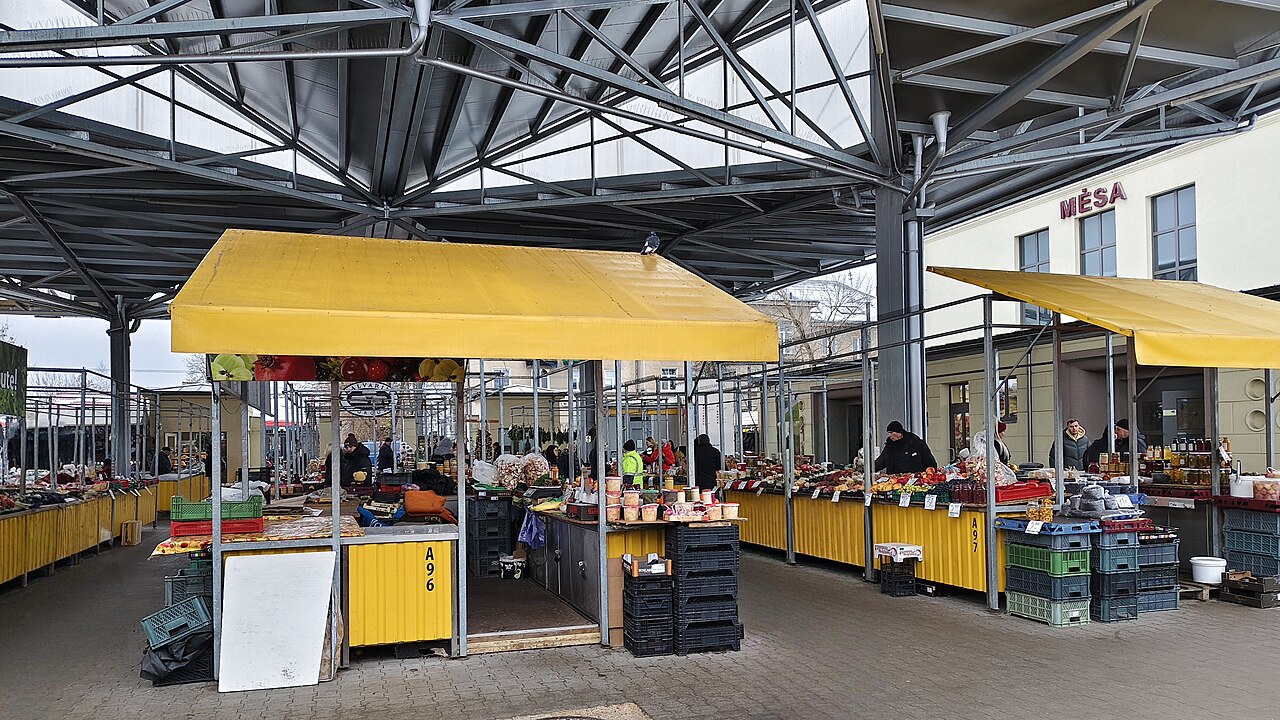
Lead image — Mojmir Churavy, Kalvarijų Market, Vilnius, November 2025; CC0 / Wikimedia Commons — https://commons.wikimedia.org/wiki/File:Outdoor_Stalls_Vilnius_Market_A.jpg
Inline image — Ypsilon from Finland, Halės Market, Vilnius, September 2022; CC0 / Wikimedia Commons — https://commons.wikimedia.org/wiki/File:Inside_Vilnius_market_hall.jpg



Comments