


Nigeria’s Food Inflation Holds Near 20% — Workers Still Pay for the Shock

Nigeria’s inflation rate eased to 14.63% in September, down from 15.39% in August. That headline number hides the pressure at the market stall: food inflation remained 19.59% year over year. Prices are rising more slowly overall, but the food bill keeps climbing. Workers do not experience a lower rate as a discount; they still pay today’s higher prices with wages that have not kept pace.
The squeeze has a political history. The removal of the petrol subsidy and the sharp fall of the naira drove transport and production costs higher. Every fare increase pushes up the cost of getting produce to market and getting workers to their jobs. A small trader, a public-sector worker, and a family buying food on daily earnings all absorb the shock before large firms surrender their margins.
A calmer inflation reading cannot settle the crisis while food remains unaffordable. The state should publish a clear account of how price changes reach staple foods, expand direct support for low-income households, and use public procurement to strengthen local food supply. It should also protect real wages and fund reliable public transport. These measures target the costs families actually face instead of asking them to celebrate a statistical slowdown.
Nigeria has the resources and farming base to feed its people. But local producers need affordable inputs, storage, roads, and dependable markets; imported fuel and fertilizer shocks make that harder. Public investment can reduce those costs. Emergency food support can keep a temporary price surge from becoming hunger, while stronger worker bargaining can stop employers from treating inflation as a private problem for households to solve alone.
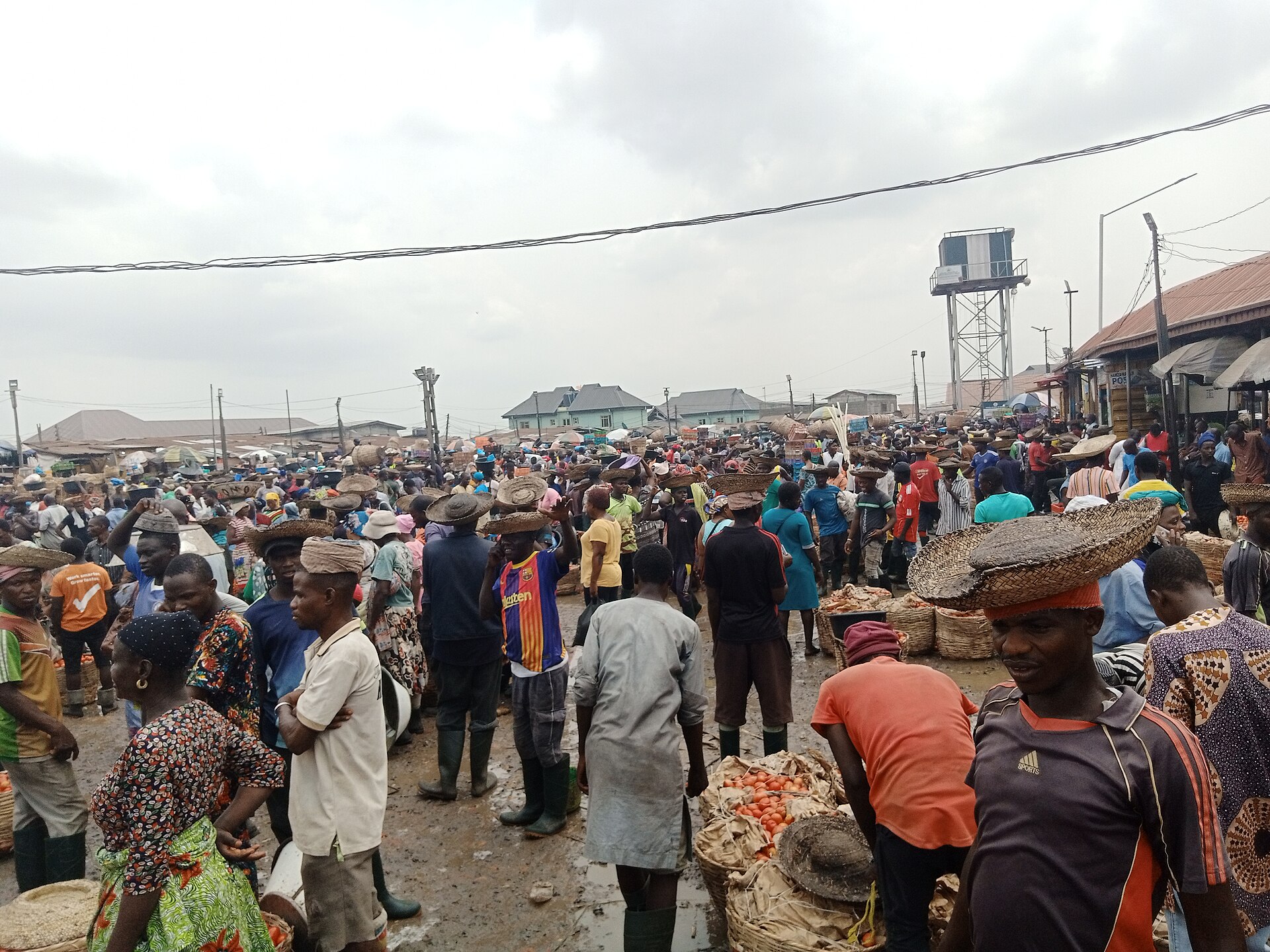
Photo credits: Cover, Ayorinde Ogundele, “Aerial view of a busy tomato market in Lagos Nigeria,” March 2025, CC BY-SA 4.0, Wikimedia Commons. Inline image, Jalol Pempeh, “Mile 12 market Lagos Nigeria,” March 2022, CC BY-SA 4.0, Wikimedia Commons. Both photographs are archival market scenes, not images of the September 2026 inflation report.
Sources: Reuters, October 15, 2026, “Nigeria’s inflation rate eases slightly in September, data shows” — https://www.reuters.com/world/africa/nigerias-inflation-rate-eases-slightly-september-data-shows-2026-10-15/ ; Reuters, September 21, 2026, “Rising fuel prices revive cost-of-living pressure in Nigeria ahead of 2027 election” — https://www.reuters.com/business/energy/rising-fuel-prices-revive-cost-of-living-pressure-nigeria-ahead-2027-election-2026-09-21/ .












Comments