


Irish Workers Force Pay Talks After Mass Public-Sector Strike

DUBLIN — Ireland’s public-sector unions took their pay fight into the Workplace Relations Commission on October 19 after a mass strike broke the deadlock over negotiations. Teachers and doctors have suspended the planned October 21 stoppage while retaining work-to-rule action. Workers have secured movement at the negotiating table; a settlement that restores their purchasing power still has to be won.
The new framework puts pay first, including union claims covering the cost-of-living squeeze between 2021 and 2025, the current year and the period of a future agreement. Both the Irish National Teachers’ Organisation and Irish Medical Organisation confirmed that sequence. It addresses the central issue behind the dispute: what public servants’ wages can actually buy.

The pressure behind the breakthrough
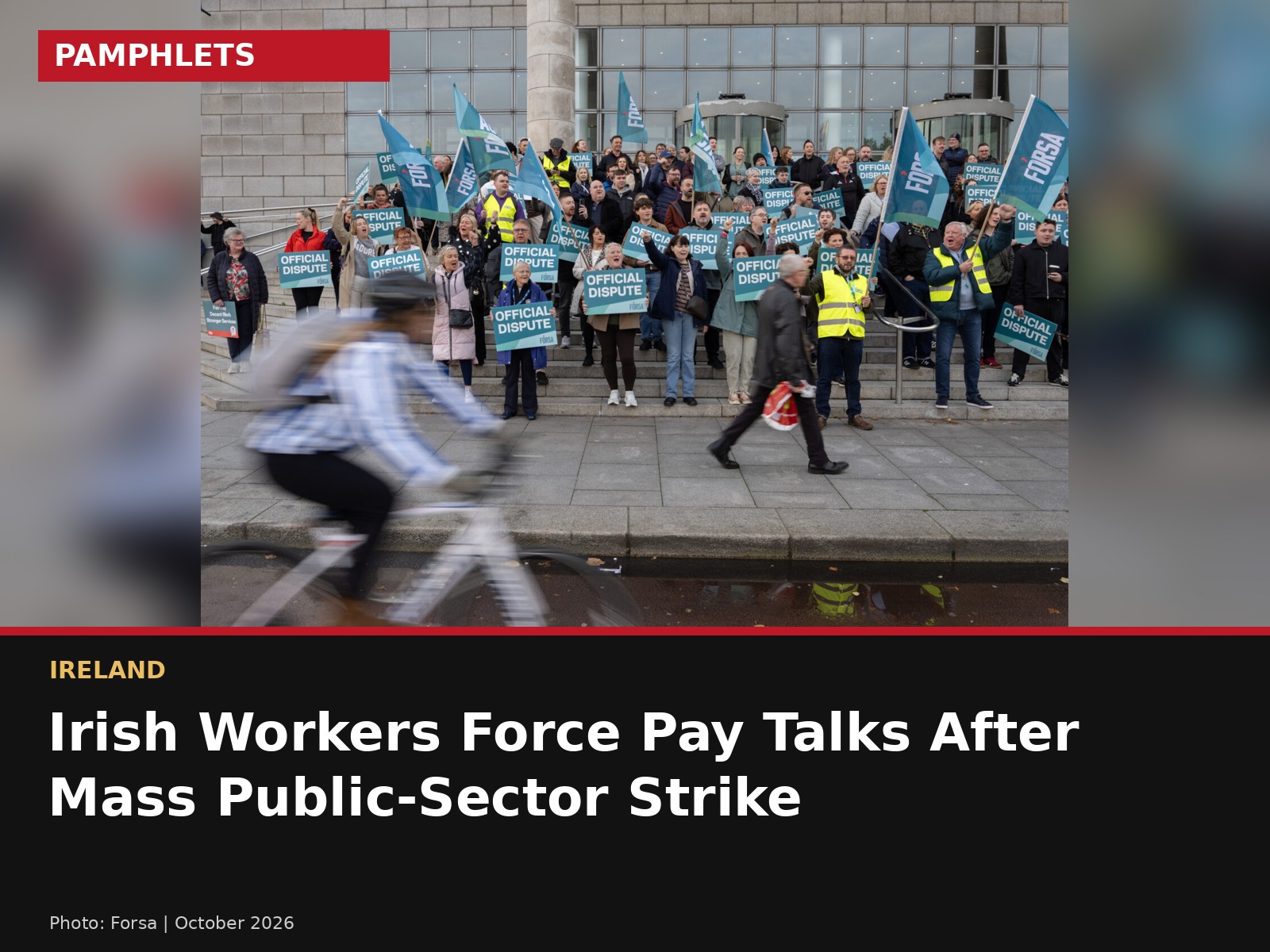
The October 14 walkout demonstrated the breadth of organised labour across public services. INTO reported pickets at more than 3,200 primary and special schools, with tens of thousands of its members participating. The union described the mobilisation as the largest in its history.
Those workers have bills that cannot be suspended while ministers debate a negotiating framework. In its October 12 statement, Unite reported that 34% of public-sector respondents to its summer cost-of-living survey had fallen behind on essential payments over the previous year, up from 26% in the spring survey. Some 37% had borrowed to cover household costs, compared with 33% previously.
These are findings from Unite’s surveyed members, rather than estimates for every public servant. They nevertheless show why union members rejected the idea that a government job automatically provides financial security. A wage can rise on paper while rent, transport and household bills consume the increase.
The strike is suspended; the dispute continues
INTO’s October 19 update says members must continue refusing cooperation with Croke Park hours and formal staff and parent-teacher meetings outside school hours. The IMO separately confirmed that its work-to-rule remains in place. Suspending Wednesday’s full stoppage therefore does not amount to ending industrial action.
The government-appointed group also recognised the need to rebuild trust by addressing commitments from the previous agreement. Its proposed mechanism allows an impasse on one issue to be referred back to the group while talks on other matters proceed. That creates a route through procedural blockages; it does not determine the size or distribution of a pay award.
Public services depend on the people who provide them
The class question is straightforward. Schools, hospitals and public offices depend on workers whose living standards cannot be treated as a residual budget item. Asking them to absorb repeated price increases transfers the cost of maintaining public services onto their own households.
Pamphlets’ view is that the result must be judged by whether it repairs lost purchasing power, protects lower-paid grades and honours commitments already made. An announcement that negotiations have begun cannot pay a worker’s overdue bill.
INTO says any draft agreement it secures should go to a membership ballot. That is where the next decisive test belongs: with the workers who created the pressure for talks and will have to live under the deal.






Comments