










China Sets 100 Railway Technology Breakthroughs as Next Five-Year Plan Takes Shape

BEIJING — China is mobilizing its railway research system for the next five years, setting targets of 100 breakthroughs in core technologies, 500 major scientific results and about 30 new innovation centers. The October 13 plan directs public agencies and industry toward faster trains, safer operations, low-carbon equipment and an integrated travel network.
The targets apply to 2026–2030. China is not starting from scratch: its existing network already provides mass passenger and freight transport, while the new program focuses on expanding its technological capacity.
From the world's largest high-speed network to better service
According to the Chinese government's account, the country had 165,000 kilometers of operational railway by the end of 2025, of which more than 50,000 kilometers were high-speed lines. This large installed network creates an opportunity to improve everyday mobility by integrating routes and making rail journeys easier to plan across different regions.
The plan would upgrade the national 12306 ticket-booking platform from a service focused mainly on buying train tickets to a broader travel service, linking rail with other modes of transport. Such an approach could reduce the practical barriers facing travelers who need a bus or local connection after a long-distance trip.
Rail officials also propose no fewer than 20 demonstration scenarios, including applications relating to a 400-kilometer-per-hour high-speed train system. Separate research will continue into 600-kilometer-per-hour magnetic levitation. Neither proposal should be confused with a claim that these services are already operating commercially nationwide.

Industrial research with public uses
The program puts equipment, construction, operations, materials, safety and intelligent railways on a coordinated research agenda. It calls for at least 20 industry datasets and more than 20 artificial-intelligence applications. The practical objective is more reliable maintenance, fewer disruptions and better service across a rail network used by millions.
On the environmental side, officials aim to expand research into battery- and hydrogen-assisted trains and improve systems for measuring railway carbon emissions. In a country building out renewable electricity and high-speed transport, railway efficiency can contribute to a wider low-carbon development strategy.
Railway development as public infrastructure
China's public railway network is a product of long-term planning, engineering and industrial investment. The new five-year program extends that coordination into domestic research, manufacturing and system operations; the next generation of technology remains to be built and certified.
For workers, students and families, this development is about more than speed records. Reliable trains lower the distance between home, employment and education, while efficient freight links help connect factories and farms to consumers. Wider access, affordability and operational safety are the public stakes of the next phase.
Sources and image credits
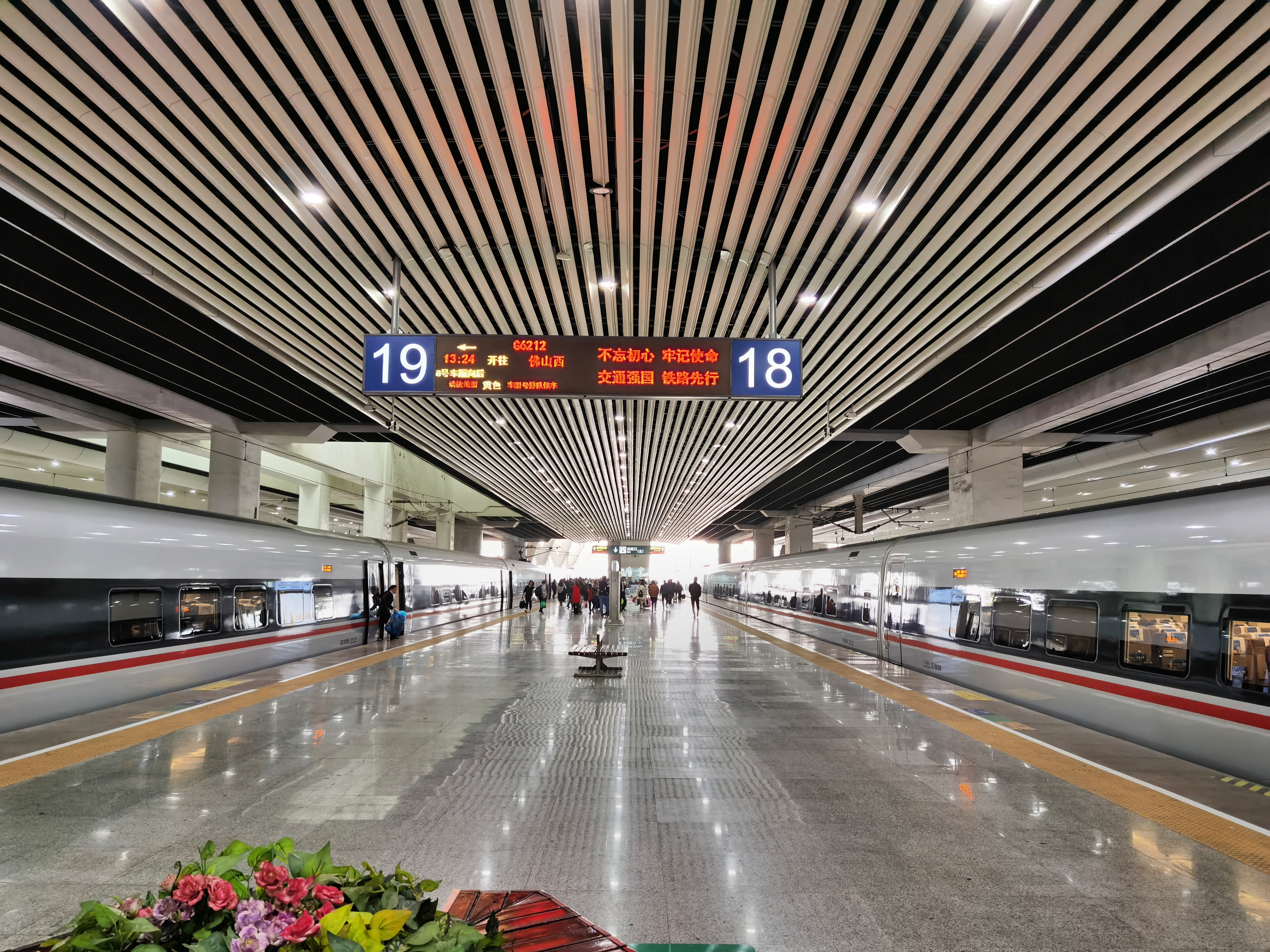
Lead photo: Trains at Guangzhou South station, 2020, Shihu7 / Wikimedia Commons, CC BY-SA 4.0. Archival image.


Comments