



Vietnam, Laos and Cambodia Train Together for Super-Typhoon Rescue

HANOI — Military and civil-defense teams from Vietnam, Laos and Cambodia carried out a joint disaster-response exercise in Hanoi on October 14, practicing how to rescue people and coordinate relief when a powerful typhoon strikes. The three neighboring governments brought their emergency-response systems together at Brigade 249 of Vietnam's Engineer Corps.
The event was attended by Vietnam's Deputy Prime Minister and Minister of National Defence Phan Van Giang, Lao Deputy Prime Minister and Defence Minister Khamliang Outhakaysone, and Cambodian Deputy Prime Minister and Defence Minister Tea Seiha. Vietnam's government and Nhan Dan reported that the exercise followed agreements among the three countries' defense authorities.
Three neighbors practice disaster relief together
A destructive tropical storm does not stop at a national boundary. Its effects can move through shared river basins, damaged roads and power networks, and disrupted food and medical supply routes. Cross-border preparedness therefore depends on communication arrangements made before urgent calls for assistance begin.
The Hanoi drill was designed to improve command coordination and the ability of different teams to work together on rescue and recovery. Engineers, military medical units and disaster-response personnel must be able to share information, identify safe transport corridors and mobilize equipment while conditions are changing.
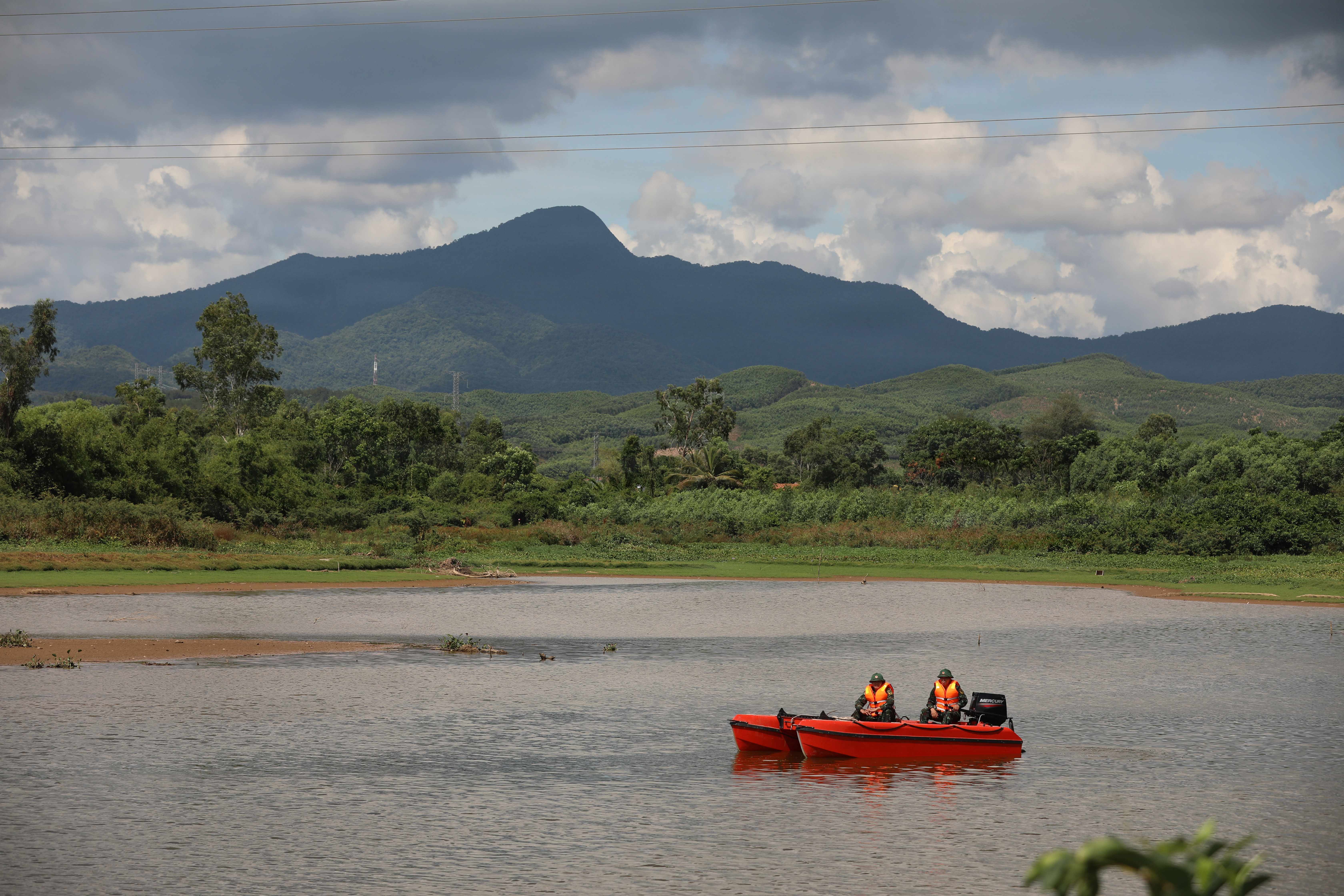
Vietnam has extensive experience confronting floods, typhoons and landslides. The lead photograph documents the October 14 trilateral exercise; an older Copernicus satellite image inside the article illustrates flooding in central Vietnam in 2020.

Regional solidarity in practical form
The exercise fits a longer history of cooperation among the three neighboring countries. Their governments have established plans for defense cooperation and emergency assistance, including arrangements discussed at ministerial meetings. In this case, the stated purpose is protection of people and property during disasters rather than a combat deployment.
The exercise brought together personnel whose response to a future disaster will depend on communications, emergency transport, medical assistance and shared operating procedures. Coordination across borders can make the difference between delayed help and a rescue carried out in time.
Protecting lives takes planning
Severe weather is becoming a more difficult challenge as populations and infrastructure concentrate in flood-prone areas. Governments can reduce avoidable deaths and losses through early warnings, resilient roads and power systems, trained responders and public trust in evacuation orders.
The October exercise puts regional solidarity into the work of protecting people: shared planning, coordinated responders and the capacity to act together before extreme weather turns into a wider humanitarian crisis.
Sources and image credits
Lead photo: Vietnam–Laos–Cambodia joint civil-defense exercise, October 14, 2026. Government of Vietnam / Government News. Official contemporaneous press photograph reproduced to report the event.


Comments