


The Berlin Wall Defector Who Died at 56

Updated: 3 hours ago
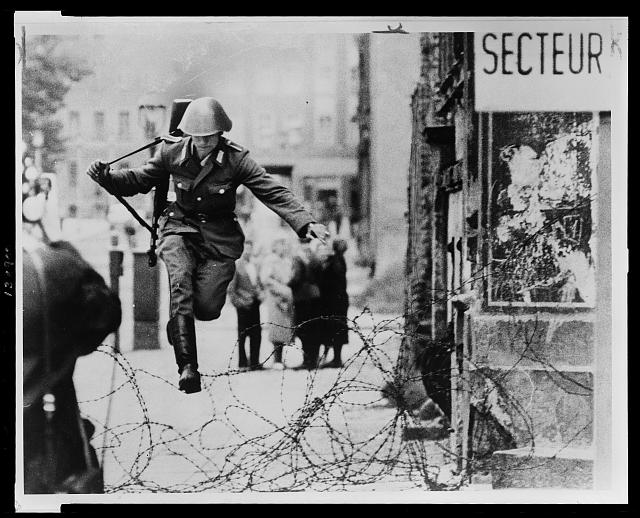
In one photograph, a 19-year-old East German policeman appears to be suspended above the Cold War. In the life that followed, Conrad Schumann discovered that becoming the West’s symbol of freedom did not mean escaping history.
On August 15, 1961, two days after East German authorities began sealing Berlin’s sector border, Schumann jumped a coil of barbed wire at Bernauer Straße. Peter Leibing captured the split second that made him internationally famous. The concrete Berlin Wall was not yet standing at that location.
Schumann served in the Volkspolizei-Bereitschaften, a barracked unit of the East German police. He was a young non-commissioned officer, not a senior party official. The photograph transformed an individual choice into a global Cold War advertisement.
What happened after the photograph
Schumann settled in Bavaria, married, raised a son and spent years working at the Audi plant in Ingolstadt. Western reports celebrated his crossing; the man in the picture had to build a life after the cameras had gone.
A 1998 retrospective in The Independent described the costs of that fame: drinking problems in his early years in the West, isolation from family in the East, and the strain of being celebrated as a hero in one Germany and condemned as a deserter in the other. He reportedly earned nothing from the famous image itself.

The East German state also pursued him. Reporting recounts how letters from home were influenced by the Stasi, leaving Schumann afraid that the authorities could still reach him. His experience cannot be reduced to a simple story of regret about defecting—or a simple celebration of capitalist life.
A death no propaganda poster could explain
On June 20, 1998, Schumann died by suicide in Bavaria, aged 56. Police at the time reported no farewell note and did not establish a definitive motive. Accounts described family difficulties and a long history of psychological strain, but there is no reliable basis for claiming he took his life because he had discovered capitalism was a mistake.
The personal tragedy complicates the triumphant photograph. A worker’s whole existence was compressed into a few seconds of movement across a border, then reproduced for decades as proof of a political system’s virtue. His life after the leap rarely received the same attention.

Schumann’s story belongs neither to a triumphalist Cold War fable nor to an invented confession of remorse. He was a human being with family, work, fears, political pressures and a difficult life on the far side of the barrier. History should remember more than the instant his boots cleared the wire.
Sources and photograph credits
Lead image: Peter Leibing / Associated Press, 15 August 1961, Library of Congress archival reproduction. Used for historical commentary and identification of the event.















Comments