


Chinese Engineers Build Angola's 2,172 MW Hydropower Giant

LUANDA — Chinese contractor China Gezhouba Group is constructing a major hydropower complex that could substantially expand Angola's renewable electricity supply. The Caculo Cabaça project on the Kwanza River is designed for 2,172 megawatts, but it remains under construction, with Angolan officials targeting an initial generation stage in 2027.
In a March 2026 government update, Angola reported physical works about 44 percent complete and projected that the station would begin generating electricity around the middle of 2027. A later Energy and Water Ministry update reported civil construction above 51 percent and overall contract execution around 49 percent.
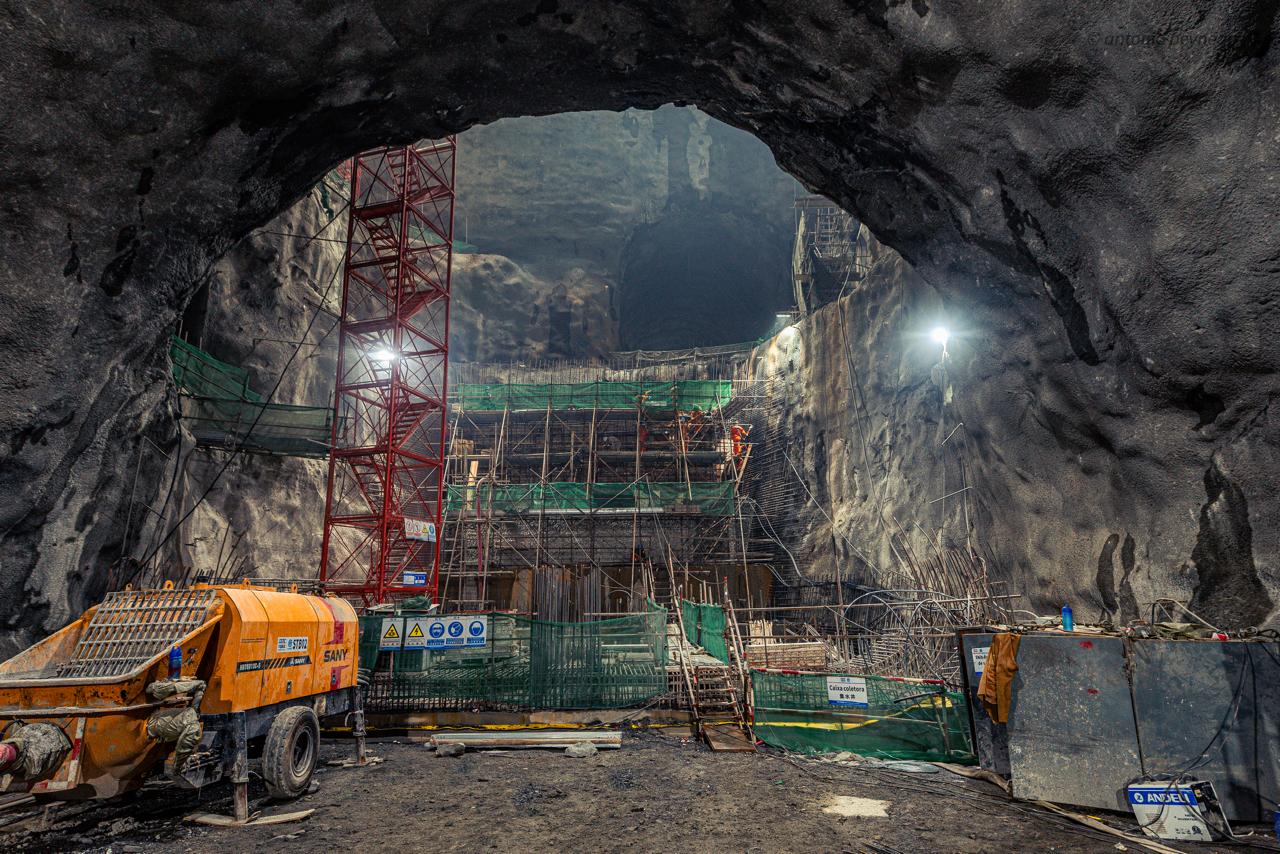
The project includes a major dam, underground powerhouse and four primary generator units of 530 megawatts each, alongside a smaller ecological unit. Those numbers describe designed capacity, not electricity already flowing to the national grid.
A generating complex of this scale can strengthen Angola's capacity to produce electricity without relying entirely on petroleum or imported fuels. China's engineering contribution is important because hydropower requires high-capacity civil works, turbines and transmission planning. Designed megawatts, however, are not electricity delivered today, and no carbon-saving figure should be invented before the plant operates.
For Angola, a greener development strategy must also address how electricity reaches its people. Industrial power, rural access, refrigeration, health care and water services require dependable networks beyond the dam itself. New generation only transforms the economy when the transmission system and domestic workforce can use and maintain it.
Hydropower also has real ecological consequences. Reservoir development, changing river flow and local displacement can create lasting costs, so environmental oversight should accompany construction. The best argument for China–Angola cooperation is not that every large dam is impact-free; it is that a country historically dependent on oil can build alternative energy assets while demanding rigorous public safeguards.
Industrial sovereignty requires more than oil
Angola has long exported petroleum while many communities struggle with incomplete electricity access. A large hydroelectric station could support domestic manufacturing, cold storage, water systems and public services—provided transmission and distribution lines carry the power beyond major cities.
China Gezhouba's participation demonstrates the capacity of Chinese engineering firms to undertake complex civil infrastructure in African conditions. The financing and equipment supply structure is not exclusively Chinese; Angolan sources identify additional international subcontractors and lenders.
A project of this size demands open reporting about costs, debt obligations, resettlement and river ecology. China–Angola cooperation is strongest when Angolan institutions can supervise the project, train engineers and negotiate favorable long-term maintenance terms.
The question is not whether Angola should build power stations. It is who will control the electricity and who will benefit when the turbines begin turning. If Caculo Cabaça delivers on its timetable, it could help move Angola from dependence on crude exports toward a more diversified productive economy.
Sources and photo credit
https://ciam.gov.ao/ao/noticia/4959
https://minea.gov.ao/web/noticias/aproveitamento-hidroelectrico-de-caculo-cabaca-atinge-novos-marcos-de-execucao-e-reforca-estrategia-nacional-de-desenvolvimento
https://minea.gov.ao/web/noticias/projecto-de-construcao-do-aproveitamento-hidroeletrico-de-caculo-cabaca-a-bom-ritmo-de-execucao-fisica
EDITORIAL PHOTO: Caculo Cabaça construction coverage, Angola's government press service CIAM, March 2026. Used for news reporting with source credit.
Photo source: https://ciam.gov.ao/ao/noticia/4959





Comments